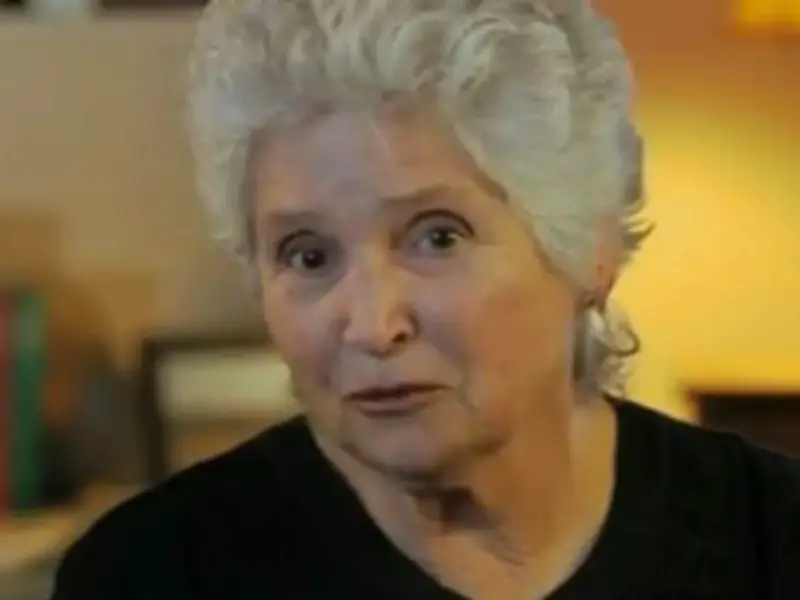
Margaret Howe Lovatt, who took part in a NASA-funded experiment in the 1960s, ended up having a sexual relationship with a dolphin named Peter. The project was set up to see whether dolphins could be trained to understand and speak English, with the aim of improving communication with other intelligent life forms.
How Margaret joined the dolphin project
In 1963, Margaret was living on the Caribbean island of St Thomas when her brother-in-law mentioned a secret lab at one end of the island where dolphins were being researched. Margaret, then 20, drove out to look and was welcomed by Gregory Bateson, the lab's director, who was taken with the young woman.
Although Margaret had no scientific training, she had a talent for identifying animal communication patterns. Bateson allowed her to observe the dolphins and document everything she noticed. She recalled meeting three dolphins: Peter, Pamela, and Sissy. She described Sissy as the biggest, pushy and loud, Pamela as shy and fearful, and Peter as a young male coming of age and a bit naughty.
Living with the dolphins
The lab, established by neuroscientist Dr John Lilly, had been studying large-brained marine mammals for years. Dr Lilly obtained NASA's financial support, believing the experiment would enhance understanding of intelligent life forms that communicate differently. An ordinary home was transformed into a co-living space by flooding the downstairs with water, allowing researchers to observe the animals 24 hours a day.
As Margaret spent more time with the creatures, she formed closer bonds, especially with Peter. She explained that Peter would rub himself on her knee, foot, or hand, and she allowed it. She said it was easier to incorporate that into her studies and let it happen, describing it as precious and gentle.
Separation and Peter's death
Margaret claimed the relationship became a regular part of her studies. She said it was sexual on Peter's part, though not on hers, but sensuous perhaps. However, when the experiment's funding dried up, the pair were separated, and Peter was transported 1,000 miles to a small lab in Florida.
Peter died just a few weeks later. Dr John Lilly called Margaret himself to tell her that Peter had committed suicide. The lab's vet, Andy Williamson, attributed the death to a broken heart, saying that when Margaret left, Peter could not rationalise it. Ric O'Barry from The Dolphin Project supported the description of Peter's death as suicide, explaining that dolphins are not automatic air-breathers and if life becomes unbearable, they take a breath and sink to the bottom.
The experiment, which began as an innocent project, became mired in controversy by the time it was shut down. There were also whispers that the dolphins had been mistreated when they were given LSD.