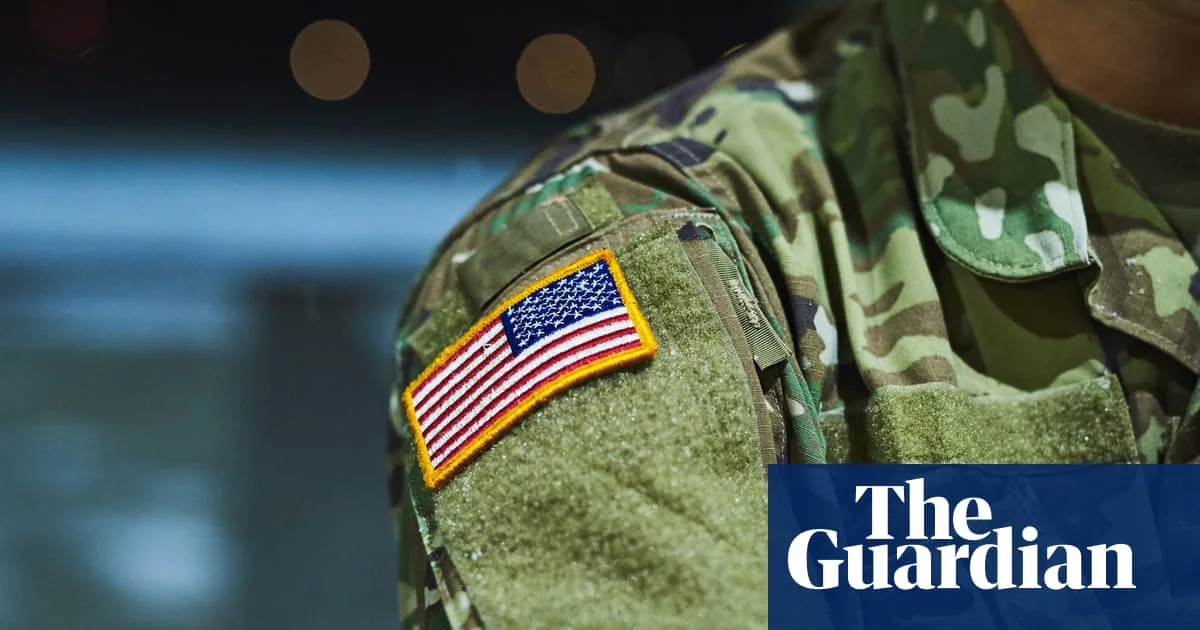
Artificial intelligence researchers have warned that online content creators are fabricating people—particularly women in military contexts—to generate profit and serve as effective propaganda. These AI-generated avatars, often sexualised images of women in camouflage, have attracted significant audiences and helped create an idealised image of political figures such as Donald Trump.
Daniel Schiff, assistant professor of technology policy at Purdue University and co-director of the Governance and Responsible AI Lab (Grail), said: “We are blending the lines between political cartoons and reality. A lot of people feel like these images or videos or the stories they convey, feel true.” Since the start of 2025, Grail has catalogued more than 1,000 English-language social media posts featuring fake images or videos of prominent political figures and politically important issues—compared with 1,344 such incidents in the previous eight years combined.
Sam Gregory, executive director of the human rights organisation Witness, noted that generative AI has made it “trivially easy to generate a scene that looks pretty realistic and to place real individuals into scenes”. However, the fake avatars—which mimic ordinary people rather than known figures—are a different matter. In December 2025, an Instagram account for Jessica Foster, an AI-generated blond woman often depicted in US military uniform, went live and drew more than 1 million followers. The posts linked to an OnlyFans account where visitors could buy foot photos supposedly from Foster.
Such tools can also serve political purposes. During the war in Iran, social media saw a flood of videos featuring fake female Iranian soldiers saying: “Habibi, come to Iran”—despite Iran prohibiting women from serving in combat roles. An AI-generated female police officer on TikTok, with more than 26,000 followers, posted a video with the text: “President Trump deported over 2.5 million people out of the country. Is this what you voted for? Yes.” It received more than 200 likes and comments including “absolutely yes.”
Since 2024, Trump and the White House have shared at least 18 deepfakes on social media, according to Grail. California governor Gavin Newsom has also shared deepfakes aimed at Trump, including one showing the president smiling at a hologram of Jeffrey Epstein. Researchers say political deepfakes can still be persuasive even if consumers know they aren’t real. Gregory observed: “People aren’t necessarily looking for things that are real; they are looking for things that represent their beliefs.”