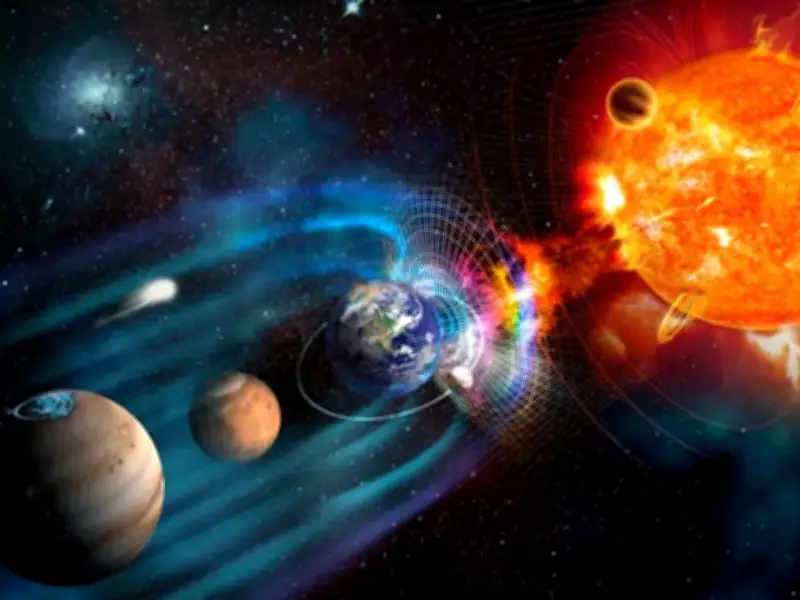
A supercomputer has forecast that life on Earth will end in the year 1,000,002,021. The prediction stems from research indicating that the sun's rising temperatures will gradually push the planet beyond its habitable threshold.
The findings, published in Nature Geoscience Research by Kazumi Ozaki and Christopher T. Reinhard in 2021, reveal that Earth will ultimately lose the oxygen levels required to sustain life. The researchers wrote: "Earth's modern atmosphere is highly oxygenated and is a remotely detectable signal of its surface biosphere."
"However, the lifespan of oxygen-based biosignatures in Earth's atmosphere remains uncertain, particularly for the distant future. Here we use a combined biogeochemistry and climate model to examine the likely timescale of oxygen-rich atmospheric conditions on Earth," they added.
Oxygen loss and its implications
Employing a combined biogeochemistry and climate model, the experts investigated the probable timeframe of oxygen-rich atmospheric conditions on Earth. The team, featuring members from NASA and Japan's Toho University, explained that maintaining adequate oxygen in the atmosphere is not a "permanent" condition for a planet.
Despite the disturbing nature of their findings, they hold "important implications", highlighting the pressing need for the "search for life on Earth-like planets beyond our Solar System" as a vital measure for humanity's future.
Supercontinent formation and extreme heat
This follows research by scientists at the University of Bristol who employed computer modelling to predict what lies ahead for our planet. Global warming will escalate to catastrophic levels, forcing the continents to merge once more, forming a fresh supercontinent called Pangea Ultima.
During the Pangea Ultima period, Earth will become scorching and arid, with frequent volcanic activity expected. The extreme temperatures will trigger the mass extinction of numerous species, including humans and mammals.
Dr Alexander Farnsworth, the study's lead author and senior research associate at the University of Bristol, explained: "The newly-emerged supercontinent would effectively create a triple whammy, comprising the continentality effect, hotter sun and more CO2 in the atmosphere, of increasing heat for much of the planet."
"The result is a mostly hostile environment devoid of food and water sources for mammals," he added. Widespread temperatures of between 40 to 50 degrees celsius (104 to 122 degrees fahrenheit), and even greater daily extremes, compounded by high humidity levels, would ultimately seal our fate. Humans and many other species would expire due to their inability to shed this heat through sweat, cooling their bodies.