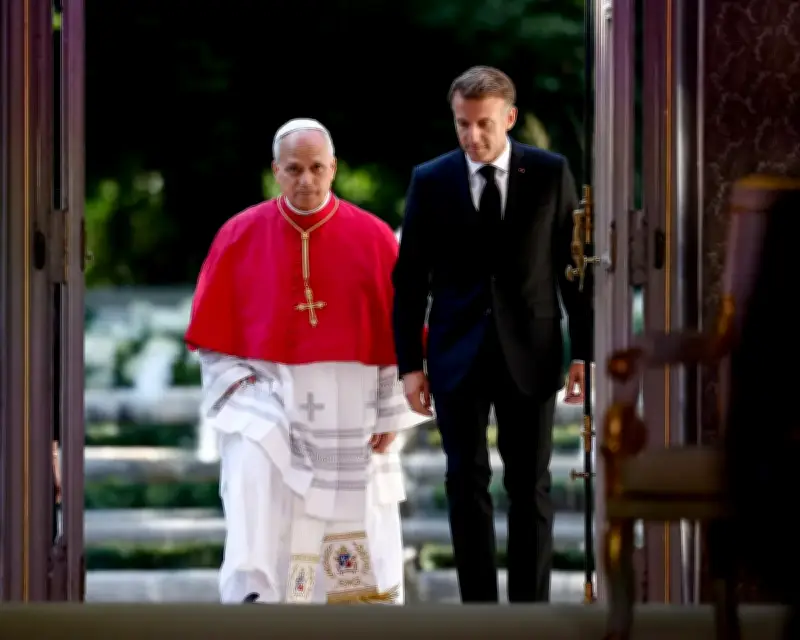
Pope Leo has warned that new technologies must remain at the service of the human person, rather than becoming instruments of domination and injustice. In his deliberations on what it means to be human, he said “we are all born naked and in need; poor by birth, in need of bread, and words, and words of care and affection.”
Humanity at risk of being betrayed
He cautioned that only through becoming adult, “we risk forgetting it,” with people’s “humanity betrayed or cast aside, exploited or deceived.” “Life is no longer understood as a gift, but as a commodity. It is no longer viewed as a summons to care and responsibility, but as a product to be exploited.”
He said “to be human is to be free by nature,” and to “recognise [life’s] grandeur” and “immense potential.” But he added that “to be human … implies a responsibility before history,” as “the human being is one who grows, learns, and works with both hands and mind.”
Lessons from the second world war
He spoke about the tragedy of the second world war, when “humanity had come to realise that scientific progress, when severed from wisdom, can turn into a weapon of destruction.” He said 80 years later, the founding charter of Unesco – built on that recognition – still stands.
Warning on artificial intelligence
Turning to technology, he said “our efforts in this domain must ensure that new technologies remain at the service of the human person, rather than becoming yet another instrument of domination and injustice.”
In a strong passage, he warned: “Over the centuries, many tasks once performed by human beings have been entrusted to machines whose capabilities and applications have continued to expand. More recently, certain artificial systems have even been given the name of our human faculty of thought intelligence. At the same time, however, our ideas and relationships risk being impoverished by a process of dehumanisation. The paradox has become increasingly evident. While intelligence is attributed to computational systems, we struggle to recognise the inalienable dignity of human persons whose lives are judged according to the criterion of efficiency and, when deemed no longer productive, the rejected and discarded.”