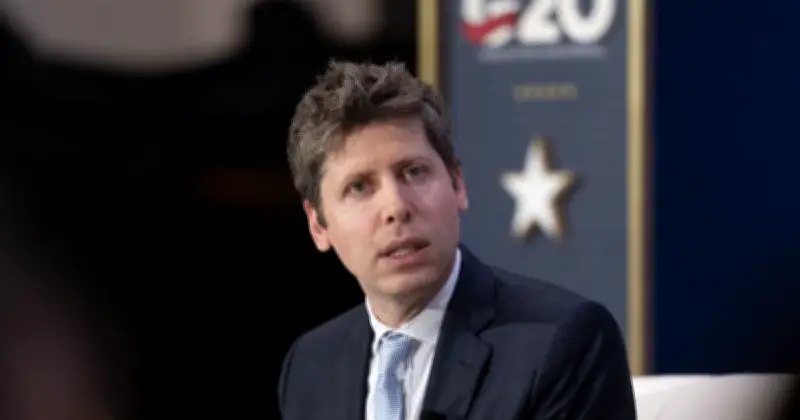
Sam Altman, the boss of ChatGPT creator OpenAI, has responded to claims that artificial intelligence could end civilisation by 2036. The tech leader issued a 324-word statement after Nobel Prize winner Geoffrey Hinton, known as the 'Godfather of AI', made the warning last week.
Hinton's warning
Speaking to BBC Newsnight, Hinton said: "It would be foolish to say there's a one percent chance. Nobody knows how to estimate it. A 10 percent chance seems not unreasonable to me." He added: "If it's much smarter than us there are so many ways I do not think it's worth speculating."
His comments followed the resignation of British AI software engineer Jacob Coxon from OpenAI competitor Anthropic in protest, who made similar statements.

Calls for regulation
The debate has led Altman and Elon Musk, who has developed AI agent Grok, to agree with Anthropic CEO Dario Amodei that external 'auditors' should be installed at 'frontier' AI firms. However, US President Donald Trump said 'a lot of negative forces' are 'bringing up things that won't happen' when asked about new regulations.
Altman has now gone further, publicly welcoming regulation and calling on competitors to introduce new safety checks in the meantime.
Altman's statement
Posting on X early on Monday morning, Altman wrote: "The world deserves confidence that American companies developing increasingly capable AI will act responsibly, especially as the trajectory of progress has steepened. Every frontier lab must deliver on this, and there is no reason any of us should come to work if we cannot."
He added: "We welcome a federal framework that sets consistent safety requirements for frontier AI. But we do not believe we need to wait for an anti-trust exemption or legislation to begin the work of providing this confidence. Consistent rules to manage frontier risk so that we can maximize the benefits are a good idea (and we are excited by ideas like independent auditors)."
Altman said he hoped 'other companies will learn from our approaches and propose their own', but added development would not stop. He continued: "When we talk about 'pacing', we do not mean 'stopping'. Progress has been rapid and will continue to be. But it should be slower than it otherwise could be; interventions like safety cases and monitoring have significant costs. Pacing will be well worth this cost; no amount of American competitive pressure should justify recklessness, or let capabilities get ahead of alignment and monitoring."
UK government response
In the UK, top government figures said they are 'pleased [AI] companies are also talking about the threats' in response to the warnings. Housing Secretary Angela Rayner described the UK as "world leaders" in AI security, adding: "We have put robust systems in place here in the UK, like the AI Security Institute, to make sure we're building resilience so that we get the benefit as well as really understand and protect against any risk."