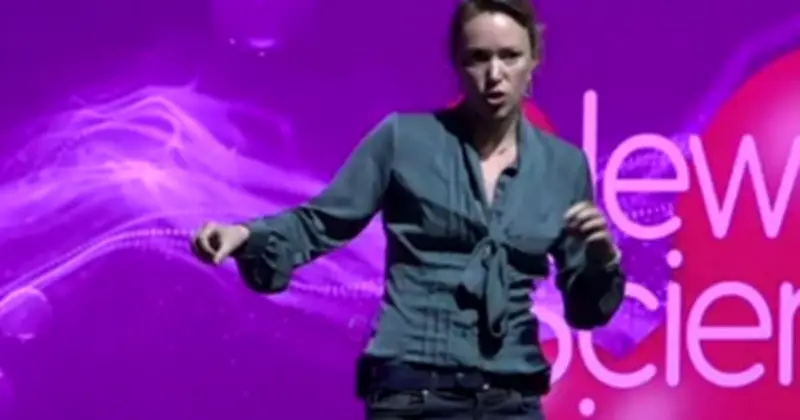
Dr Hannah Critchlow, a neuroscientist, has criticised US President Donald Trump's push to rebrand artificial intelligence as "super intelligence" or "SI", calling the characterisation "worrying" and "unhelpful". Speaking ahead of her appearance at New Scientist Live at London Excel on October 12, she said the term could encourage people to rely on AI more than their own brainpower.
AI as a tool, not a replacement
Dr Critchlow, whose research examines how the human brain generates complex behaviour, said AI is the latest in a long line of human inventions that amplify rather than replace organic intelligence. She said: "I am more of an optimist than a pessimist. I think artificial intelligence has largely been developed as a result of understanding of how our own human intelligence arises, how our neural circuitry is put together, how it's evolved, and how it operates in order to create very complex behaviour. And that knowledge has helped to create this new tool of artificial intelligence, which is a tool that can be used by our own organic human brain."
She drew a parallel with the calculator, which sparked fears in the 1970s that students would stop learning basic maths. Instead, she said, the education system raised expectations, allowing students to solve more complex problems. She said she hopes the same will happen with AI and large language models.
Positive uses and the risk of over-reliance
Dr Critchlow listed concrete gains already delivered by AI. She cited scientists at MIT using it in 2020 to develop a new antimicrobial antibiotic that showed no antimicrobial resistance. She also mentioned Tim Guilliams, founder of Healx, who has spent 10 years using AI to develop drugs for rare diseases, with new drugs now in clinical trials at a fraction of the cost.
On the risks of over-reliance, she said: "We've got to use these tools wisely, intelligently, and thinking about the long term." She noted that some scientists see a deeper pattern, describing a possible "massive evolutionary transition to creating something akin to an organic hive mind", where AI helps analyse vast global datasets as part of a "hyperconnected biological supercomputer".
Consciousness, individuality, and regulation
Asked whether AI could develop consciousness, Dr Critchlow called the term "woolly" and said: "Is AI able to feel? I don't know, it's motivated to follow a goal, isn't it? Because it's coded to feel that way, it's coded to behave in that way." She argued that human individuality is biologically distinct, based on genes, experiences, and environments, creating a unique connectome in each brain. What machines cannot replicate, she said, is collaborative human cognition, including "empathy and collaboration".
On regulation, Dr Critchlow said the technology is advancing far faster than previous digital shifts, and that "mechanisms need to be in place or a mandate needs to be signed up to by people to take this seriously now". More than a year ago, leading figures including Elon Musk and Steve Wozniak called for a pause, which she said "hasn't been heeded, hasn't been listened to". She said: "I think there should be global mandates with very clear outcomes of what happens if people break the agreed mandates. And I think these policies across the world need to come in pretty quickly."
Regarding Trump's rebrand, Dr Critchlow said: "Calling it super intelligence could worryingly help people to think that actually they can rely on it much more than their own organic human brainpower. And so that's actually… that's worrying."