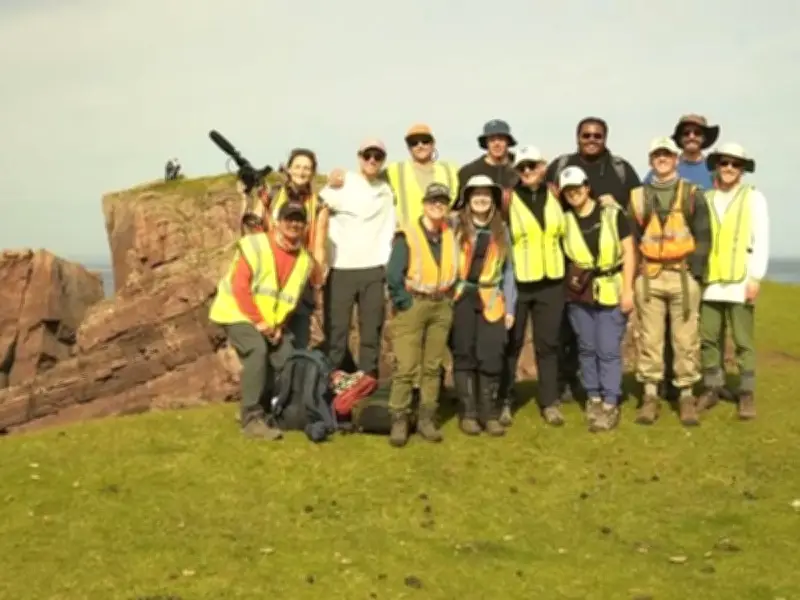
A team of NASA scientists has travelled to the Scottish Highlands to analyse ancient rocks, hoping to uncover the secrets of life on Mars. The fieldwork team visited Clachtoll in Assynt, a village in the north-west Highlands around 100 miles from Inverness, to study environments that bear similarities to ancient Martian lakes and rivers.
Reduction spots found on Mars
Last year, NASA's Perseverance rover found reduction spots on Mars' Jezero Crater. These are signs of a chemical reaction that suggested microbial life may have existed there millions of years ago. While Mars is now a dry planet, its landscape has been shaped by a history of flowing water, much like Earth. Both planets have layers of mudstones and siltstones packed with clay minerals.
The rocks and cliffs of the Stoer formation in the Highlands formed in environments similar to ancient Martian lakes and rivers. They hold evidence of microbial life from 1.2 billion years ago, making the site ideal for NASA to interpret the Perseverance rover data.
Fieldwork in the Highlands
The scientists from the Goddard Instrument Field Team, based at Goddard Space Flight Center in Greenbelt, Maryland, hiked the cliffs of Clachtoll with their instruments. They were supported by experts from the University of Glasgow and the University of Cambridge. The team had to navigate Scotland's coastal climate, ensuring they accessed sites outwith high tides and avoided wet and dangerous rocks.
The Goddard team used handheld instruments to check mineral and chemical compositions at investigation spots, while searching for clues about the environment. They collected samples that have since been returned to NASA's base in the US for further analysis.
Future analysis and implications
NASA said: "With the samples safely home, the story continues to unfold. This research was inspired by questions raised when the Perseverance rover found reduction spots, telltale signs of a chemical reaction that could point to ancient microbial life, in Mars’ Jezero Crater."
The team's work is also expected to help fill gaps in knowledge of Earth's geologic record. In labs across the United States and beyond, an interdisciplinary coalition of scientists is preparing for deeper analysis of the chemical and mineral traces of ancient life left in Stoer's rocks. NASA added: "Follow-on work is designed to advance our understanding of data from Mars, help mission teams plan new rover investigations, and prepare the science community for potential Martian sample analysis in the future."