Most Scots fear the use of AI to find instant answers means people are thinking less for themselves, a survey has found. The study of 1,002 Scottish adults, commissioned by Scottish Bridge, found that worries about the effect of technology on our ability to remember key information rises to more than half among 18 to 29-year-olds (52%) and people in their 30s (53%).
Survey findings on AI and memory
The survey was carried out by Find Out Now in mid-September. More than two-thirds of Scots (70%) agreed that “I worry that using AI to find instant answers means people are thinking less for themselves”.
Respondents were also asked about the impact of technology on memory and cognition. Half of respondents (50%) said they are concerned their memory is not as good as it used to be. Roughly one in four (26%) feared that somebody they know uses technology so much that it affects their memory, concentration or ability to hold a conversation.
More than four in 10 Scottish adults (41%) worry that relying on technology has made their memory worse, rising to more than 50% for younger adults.
Academics warn of eroding skills
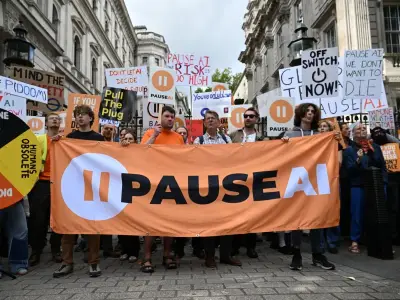
Academics warned that artificial intelligence could erode critical skills in society and push humans “out of the loop” in the forging of their own memories.
Sarah Gunn, chairwoman of Scottish Bridge, said the card game offers people a fulfilling mental challenge and is increasingly being taken up by people looking for offline social activities. She said: “Bridge develops memory, concentration, problem-solving and teamwork skills, while also giving people the opportunity to socialise and spend quality time with others away from screens.
“It’s a game that challenges the mind, rewards strategic thinking and brings people together around a table.
“Technology brings enormous benefits, but when devices remember everything for us and provide instant answers, there are fewer opportunities to exercise our memory and work through problems ourselves.
“We’re increasingly hearing from people who want a reason to switch off, meet new people and do something that genuinely holds their attention. Bridge offers exactly that.”
Experts on AI’s broader impact
Professor Ana Basiri, director of the University of Glasgow’s Centre for Data Science and AI, said fears over the technology are “striking, but not surprising”. She said: “We’ve seen this pattern in previous technologies too, with calculators, GPS and smartphones each quietly retiring some skills we used to have, but AI is the next step, on a much bigger scale and dimension.
“It’s not just memorising facts and directions being outsourced, it’s also judgment, first-draft thinking, and problem-solving skills too.
“There’s also a quieter social cost and self-isolation concerns, as more people turn to chatbots rather than a friend, colleague or stranger, partly because it’s anonymous and carries less risk of embarrassment.”
She said AI should not be seen as a “pure villain” but safeguards are needed to ensure the benefits outweigh the risks.
Andrew Hoskins, professor of AI, memory and war at the University of Edinburgh and author of a book titled Memorybot: AI And The End Of Human Memory, said: “With the digital era of the smartphone and social media, we have moved from a history of human reliance on tech for memory, to one of dependency.
“However, with generative AI, humans have been pushed out of the loop in the making of memory.
“The rapid spread since 2022 of AI agents – software systems that can use AI to pursue goals and complete tasks on behalf of users – forge a new kind of memory of you.
“This hampers people’s ability to think and to remember for themselves.”
He said the idea of a “machine superintelligence”, which stems from science fiction, had long promised to give people more control of their lives. Prof Hoskins added: “But this control is a fantasy.
“Generative AI may promise superintelligent vision through opening a doorway into a world of memories and data, previously undiscovered, unimagined, unseen.
“Yet, in regenerating former lives and through mining and sharing present ones, it hollows out the human soul, contorting the past and repurposing memory for an array of ends.”