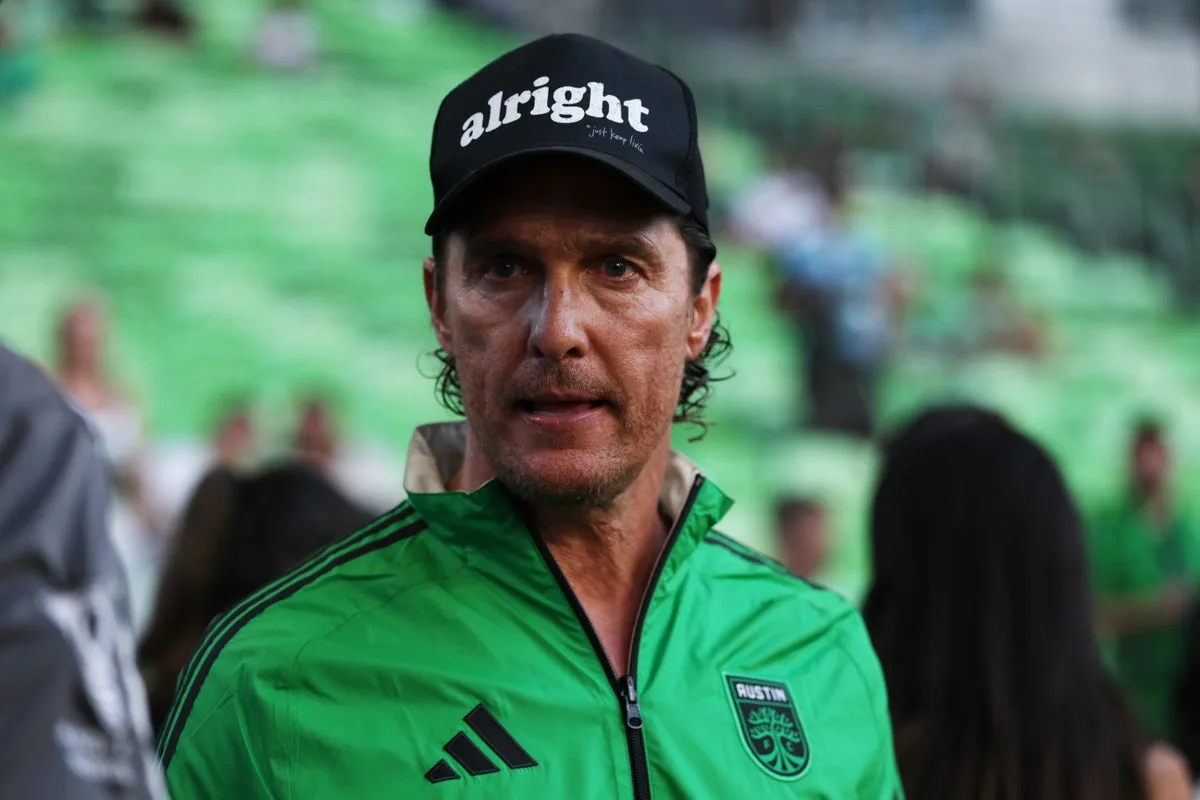
Matthew McConaughey has secured eight trademarks, including his signature catchphrase “alright, alright, alright,” as part of a wider effort to protect his likeness from unauthorised use by artificial intelligence. The 56-year-old actor first improvised the phrase in Richard Linklater’s 1993 comedy Dazed and Confused, and has now moved to formalise ownership of it.
The trademark registration, filed by entertainment law firm Yorn Levine, describes the mark as a man saying “ALRIGHT ALRIGHT ALRIGHT,” with specific pitch variations in each word. The application was submitted in December 2023 and approved by the US Patent and Trademark Office in December 2025. Other approved trademarks include a clip of McConaughey saying, “Just keep livin’, right? I mean, what are we gonna do?” as well as a three-second video of him sitting by a Christmas tree and a seven-second clip of him standing on a porch.
While state consumer protection laws already prevent celebrities from being replicated to sell products, McConaughey’s federal trademark strategy gives him grounds to sue over any “misuse” of his image or voice on the internet, even if the AI-generated content is not directly commercial. This broadens his legal recourse beyond existing protections.

Kevin Yorn, founder of Yorn Levine, said in a statement: “We embrace AI, invest in it, and actively support its evolution. Progress, however, should have boundaries. Protecting individual voice, image, and intellectual property is essential to building a future that works for everyone.” McConaughey told the Wall Street Journal: “My team and I want to know that when my voice or likeness is ever used, it’s because I approved and signed off on it. We want to create a clear perimeter around ownership with consent and attribution the norm in an AI world.”
McConaughey has previously embraced AI for creative purposes, partnering with ElevenLabs in November to create a synthetic Spanish-language version of his voice for his weekly newsletter, Lyrics of Livin’. His trademark action comes amid growing concern over deepfakes, with politicians such as Alexandria Ocasio-Cortez pushing for legislation to ban non-consensual AI-generated imagery.