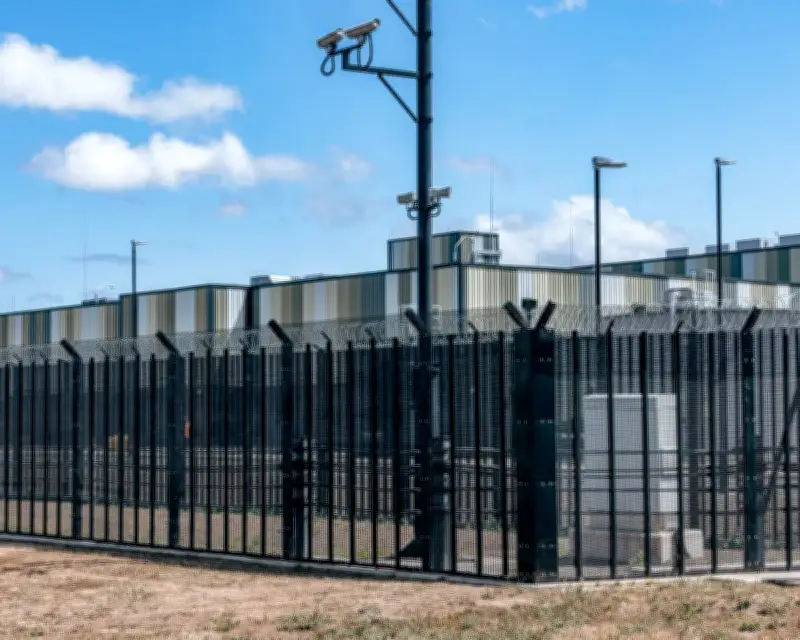
This summer, datacentres have become targets of resistance across the world. Ever since the arrival of ChatGPT, big tech has been lobbying for the creation of enormous new facilities. Many governments claim they’re essential in any country that wants to cash in on AI.
Campaigners argue datacentres drain resources and exacerbate the climate crisis. The Scottish National Party has backed a moratorium on new developments; so has the Greens. The boom has been immense, and so has the backlash.
Local opposition in east London
In August, campaigners and councillors in the east London borough of Tower Hamlets met to discuss a 5,200 sq ft datacentre approved by the government on the site of an old brewery off Brick Lane. The meeting, held on a sunny Monday evening, went on for three hours, in a stifling hall so packed that organisers had to create an overflow room.

The new east London datacentre won’t be anywhere near as large as the “hyperscale” datacentres that power AI, which are typically 10,000 square feet or more. Neither is it the first to be built in the area (there are already three similarly sized developments nearby). But attenders shared the same concerns as other campaign groups globally. They worried about the amount of energy the building will consume (5.2MW, according to a local campaign group, which is enough to power 15,000 homes), about its use of water (projections for this haven’t been released), and about the noise and heat it could emit.
The IMF estimates that by 2030, datacentres will consume more energy than all but the world’s three largest state emitters (China, India and the United States). They are already driving up electricity prices: one analysis found that wholesale electricity prices rose 267% over five years in locations near datacentres in Virginia. And although the industry argues that technology in newer AI datacentres consume less water than older facilities, not even the Environment Agency knows how much water datacentres use.
Democratic oversight questioned
Much of the anger centres on how the east London project was approved. Despite fierce opposition from local residents and Tower Hamlets council, which wants the site to be used for hundreds of homes, housing secretary Angela Rayner intervened, overruling the council to approve the application, citing its creation of 44 homes (only six of which will be socially rented) as a “significant” public benefit.
“When you have Andy Burnham talking about devolution and democracy, this feels like a slap in the face,” Henna Khanom, a Tower Hamlets resident, told the Guardian. “To me, it feels like many of these are springing up in places where low-income, ethnic minority communities just don’t have the power to resist these changes.”
Globally, the number of “hyperscale” datacentres has nearly tripled since 2018. The UK had 52 datacentres in 2000, and today there are an estimated 520, roughly 48 of which are “hyperscale”, though it’s impossible to get exact figures, since nobody (not even the government) knows the total number that have been built. In the US, where local governments have signed NDAs with tech companies, information is shielded from scrutiny. In the EU, Microsoft and other American tech companies successfully lobbied to conceal the environmental impact of their developments.
Because developers can wait years for an electricity grid connection, many are now opting to build their own gas-fired power plants instead. In the UK, more than 100 datacentres intend to burn gas to generate their electricity. It’s possible that some may do this permanently. Several weeks ago, police in Scotland warned one developer that public anger over these buildings was so great it now poses a security risk.
Government strategy and future concerns
The Starmer government tended to proselytise about the benefits of big tech. In documents outlining the UK’s AI strategy last year, it argued that datacentres were “the engines of the AI age”, and set out its plans to accelerate construction. Last week, Burnham rejected the Green party’s proposal for a moratorium on new developments, arguing this would “send investment and good jobs abroad”.

Since the start of this year, the government has allowed datacentres to opt into Nationally Significant Infrastructure Projects (NSIPS), where the secretary of state rather than local councils make planning decisions, enabling developers to bypass local scrutiny. Two of the first datacentres to opt into the NSIPs scheme are applying to build new private gas power stations to fire up their operations, which will together be responsible for more than 4.5m tonnes of carbon emissions.
With all the recent attention on datacentres, it’s worth noting many have existed for years, quietly whirring away and processing information you need to send emails or read newsletters. Clearly, we need some datacentres. The question is whether we need the “hyperscale” variety. There has been lots of noise among policymakers about the UK being an “AI maker, not an AI taker” that can’t afford to be left behind in the AI “race” or lose its AI “sovereignty.” But nobody seems to agree on exactly how datacentres achieve these vague aims. Will they rejuvenate post-industrial areas with shiny new jobs? Probably not. Will they help the UK “shape the AI revolution”? It’s hard to see precisely how, when US tech companies building many of the datacentres on UK soil retain control over infrastructure, IP and profits.