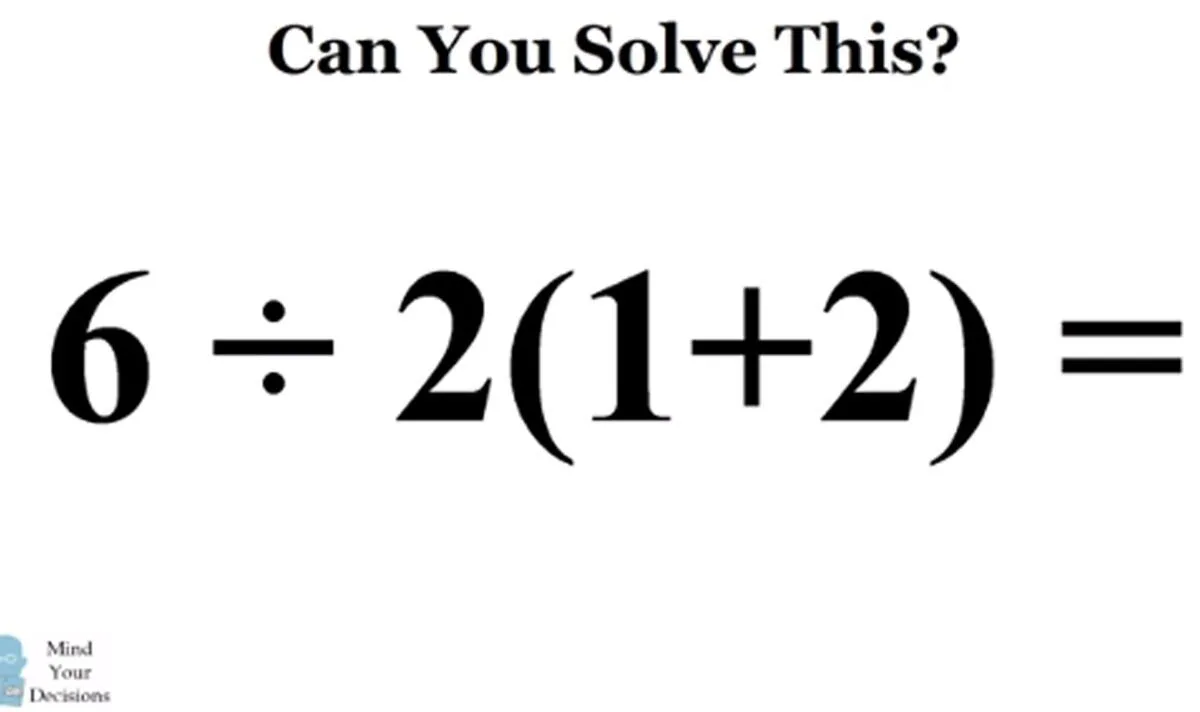
A seemingly simple maths problem has left the internet divided, with two different answers emerging depending on the method used. The equation, 6 ÷ 2 (1 + 2), has sparked debate among maths enthusiasts and even experts, with some arguing the answer is 9 and others insisting it is 1.
According to the YouTube channel MindYourDecisions, whose host studied Mathematics and Economics at Stanford, the correct answer comes down to which order of operations you follow. The modern PEMDAS method (Parentheses, Exponents, Multiplication/Division, Addition/Subtraction) solves the parentheses first, giving 6 ÷ 2 x 3, then division from left to right: 6 ÷ 2 = 3, then 3 x 3 = 9.
However, an older historical method, dating back over a century, also solves the parentheses first but then treats the division symbol (obelus) as dividing everything on its left by everything on its right. This leads to solving 2 x 3 = 6 first, then 6 ÷ 6 = 1.

The generational divide has been highlighted in comments, with some recent graduates claiming they were taught the older method. One commenter wrote: 'Just graduated and I was legitimately taught that 'historical way' all through school.' Another said: 'In France, I've been taught it in a way, that this equation equals 1.'
The problem continues to confuse online users, with many questioning which method is correct. The ambiguity arises from the lack of a clear multiplication sign between the 2 and the parentheses, leading to different interpretations of the order of operations.