Artificial intelligence is widely regarded as one of the defining technologies of our time. Like the steam engine, the harnessing of electricity and the internet before it, it has the potential to transform how we work, live and interact.
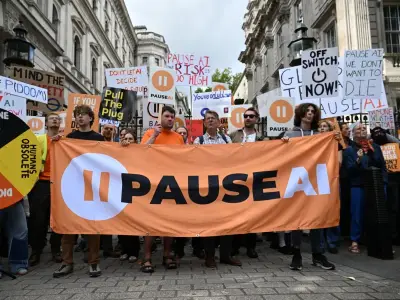
But every technological revolution brings challenges as well as opportunities. As AI systems become more capable, people are asking legitimate questions. How can AI remain safe, accountable and under human control? How should its development be governed? How can its benefits be shared more widely?
World AI Conference 2026 in Shanghai
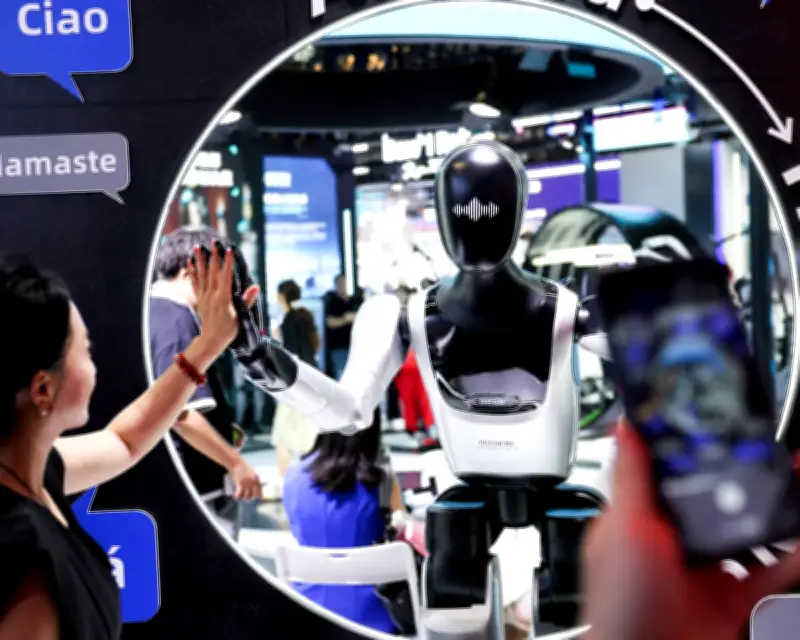
These questions were at the heart of the 2026 World AI Conference, held last week in Shanghai. Representatives from more than 100 countries and international organisations gathered to discuss how AI could better serve humanity, and how a more inclusive and effective global governance framework could be built. The UK also sent a delegation to the conference.
China’s president, Xi Jinping, delivered an important address calling on all countries to “boost innovation-driven development”, in a spirit of openness and mutual benefit, to strengthen risk-awareness and ensure that AI is secure and controllable. He stressed the importance of improving global AI governance together.
China’s AI initiatives and open-source models
To further support global AI development, China has announced that in the next five years it will provide developing countries with 5,000 opportunities in AI training and seminar programmes. It will also develop international AI-application cooperation centres with the Association of Southeast Asian Nations, the League of Arab States, the African Union, the Community of Latin American and Caribbean States, the Shanghai Cooperation Organization, and fellow Bric countries. Thirty nations will also be able to use the AI-powered, early-warning weather system, Mazu.
China’s own experience reflects this approach. Through the AI Plus Initiative, AI is being integrated into manufacturing, healthcare, logistics, energy and consumer services. In 2025, China’s core AI industry exceeded 1.2tn yuan (about £130bn) and a large number of AI companies are growing rapidly.
Another notable feature is China’s emphasis on open-source and open-weight models. The success of models such as Qwen, DeepSeek and Kimi demonstrates that advanced AI capabilities can be developed at lower cost and made accessible to a much wider community. Lowering barriers to innovation allows more countries, researchers and smaller enterprises to participate in the AI revolution.
Complementary strengths of China and UK
Zheng Zeguang, the Chinese ambassador to the UK, wrote that no country has a monopoly on innovation. Different nations bring different strengths to AI development, and lasting progress will depend on how well those strengths complement one another rather than compete in isolation.
The UK has a competitive edge in frontier research, life sciences, financial services and AI innovation. China has well-recognised strengths in advanced manufacturing, engineering and large-scale industrial deployment, plus one of the world’s largest markets for AI applications. These advantages are highly complementary.
In healthcare, combining British strengths in biomedical research with China’s capacity to deploy AI at scale can accelerate drug discovery, improve medical imaging and enhance healthcare delivery. In manufacturing, pairing British innovation with China’s industrial capabilities can speed up the adoption of smarter, cleaner and more efficient production. Joint research can also contribute to internationally applicable standards for AI safety, testing and evaluation.
Call for enhanced cooperation
Policymakers, researchers and business leaders from China and the UK need to increase exchanges and translate dialogue into joint research, commercial partnerships and closer cooperation on AI governance. For China, for Britain and for the wider world, cooperation is not simply desirable. It is the right way forward to ensure that AI develops in a way that benefits us all.