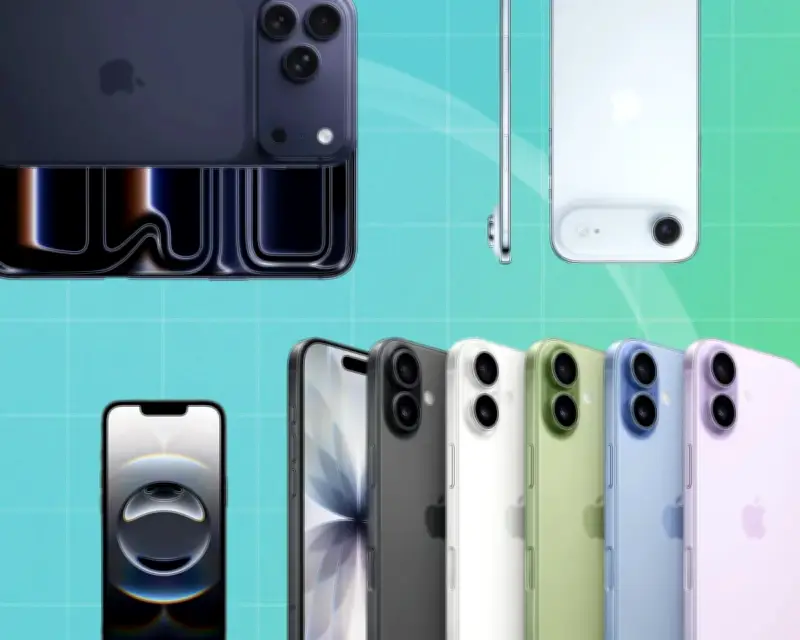
The best iPhone may be the one you already own. There’s generally no need to buy a fresh phone just because new models have been released, as hardware updates are broadly iterative, adding small bits to an already accomplished package. But if you do want a replacement handset, whether new or refurbished, here are the best devices of the current crop of Apple smartphones.
Many other smartphones are available besides the iPhone, but if you’re an Apple user and don’t fancy switching to Android, there are still a few choices to make. Whether your priority is the longest battery life, the best camera, the biggest screen or simply the optimal balance of features and price, there’s more to choose from in the Apple ecosystem than you may expect.
Apple recently announced the iPhone 18 Pro and Pro Max, which are direct replacements for the previous Pro models and will be available from 18 September. They feature faster chips and a variable-aperture main camera for more creative photography options. It also unveiled its first folding phone, the iPhone Duo, which adopts a squat, passport-like shape with a 5.4in screen on the outside and a 7.6in tablet screen on the inside when you open it like a book. The iPhone Duo will be available from 23 September.

It did not announce a regular iPhone 18, leaving the iPhone 17 as Apple’s standard model for now. It also took the unusual step of adding £100 to the price of every model, including older iPhones still on sale, as RAMageddon continues to drive up component costs. This guide will be updated once the new iPhones have been thoroughly tested.
How I tested
We combine real-world testing with various tools, such as benchmarking systems that perform standardised tasks. These help us evaluate a phone, measure its performance, confirm that it works as expected and compare it with its competition and predecessors.
We use the phones at different times and in various environments, from firing off emails on packed commuter trains to weekends spent shooting photos in national parks, and everything in between. We do everything a typical smartphone user would, such as messaging, browsing, using apps, listening to music, watching videos, playing games and navigating the real world. That gives us a good impression of how a smartphone handles the rigours of day-to-day life – plus, it shows us how long the battery lasts and the strength of its wireless performance.
The findings from our general use of the phones are combined with the results from specific tests for things such as the camera zoom, video playback and charging, to inform the reviews and help us rank the devices.
Why should you trust me?
I have been reviewing consumer electronics for 18 years, with more than a decade spent as the Guardian’s gadget expert. In that time I’ve seen all manner of tech fads come and go, smartphone giants rise and fall, the cutting edge morph into the mainstream, and have poked, prodded and evaluated more than 1,000 devices – sometimes to destruction.
Best iPhone for most people: iPhone 17
The base-model iPhone has been the best for most people for years, but the iPhone 17 is closer to the Pro models in features than ever before, making it an instant recommendation.
While it may not look that different from its predecessor, the iPhone 16, the screen has finally been upgraded to bring it up to par with the Pro iPhones. It is a 6.3in super-bright OLED with a 120Hz refresh rate – double previous standard iPhones – and ensures day-to-day scrolling and animations are smoother and more fluid than ever before. The screen’s glass is stated as being three times tougher than previous models, while the always-on display mode shows the time, notifications and music when idle – another feature that was Pro-only until now.
The rest of the iPhone 17 is fairly standard. It has the rapid A19 chip, but with twice the starting storage at 256GB of its predecessor – which should be more than enough for most people. The battery lasts just shy of two days between charges, and it fast-charges via USB-C or MagSafe/Qi2 wireless charging.

The phone is still relatively light and compact for a modern smartphone, with aluminium sides and a glass front and back, and it arrives with an IP68 water-resistance rating (down to depths of six metres for up to 30 minutes). Along the edge of the device you’ll find the recently added action and camera control buttons, as well as the standard power and volume buttons.
Sporting main and ultra-wide options, the iPhone 17’s dual 48MP rear camera shoots great photos and videos across a range of lighting conditions, including automatic portrait capture and a fun macrophotography mode for closeups. It lacks a telephoto camera, however, and is limited to a 2x crop zoom on the main camera with digital zoom on top.
An 18MP Centre Stage selfie camera on the front has some fancy tricks. It can automatically pan and zoom to fit everyone in group shots, and can shoot landscape selfies while being held in portrait orientation.
The iPhone 17 runs the same iOS 27 as the rest of the iPhone family, which includes a refinement of Apple’s glass-like design and faster app launches. A totally revamped Siri AI begins to bring Apple back up to par with rivals on AI features, too.
Why should you buy it? The iPhone 17 offers almost everything that’s great about Apple’s Pro phones, including 256GB of storage, solid battery life, a fancy screen and rapid performance, but in a lighter, cheaper package.
Buy if: you want a great iPhone experience. Don’t buy if: you want optical zoom on your camera.
Screen: 6.3in Super Retina XDR (120Hz OLED). Processor: Apple A19. Storage: 256 or 512GB. Camera: 48MP main+UW; 18MP front-facing. Dimensions: 71.5 x 7.95 x 149.6mm (WDH).
Best iPhone for camera: iPhone 17 Pro
The iPhone 17 Pro takes all the good bits from the standard iPhone 17 and slaps them into a more modern design.
It shares the same super-bright, 120Hz 6.3in OLED screen as the iPhone 17, but in an aluminium unibody with smoother edges. A camera “plateau” covers the full width of the top quarter of the phone’s rear, with a glass panel inlaid below it for wireless charging and magnetic accessories. Dark blue and bright orange colour options help it stand out, and despite its 204g weight, the 17 Pro remains pretty compact for a phone this capable.
Housing Apple’s A19 Pro chip with a cooling system to allow it to run at peak performance for longer, the Pro is great for games and other intensive tasks. Basic storage starts at 256GB, and the battery lasts about 42 hours between charges with general use. It fast-charges to 70% in 30 minutes via USB-C and supports 25W Qi2 wireless charging.
The biggest feature upgrade over the regular iPhone 17 is the Pro’s camera system. It’s made up of three 48MP sensors, including a larger main camera and a 4x telephoto camera, which offers a 2x crop zoom to hit an effective 8x optical zoom to close the distance to objects. Combined, they capture excellent photos across a range of lighting conditions and environments. On the front, you’ll find the 18MP Centre Stage selfie camera for easy group shots.
Why should you buy it? This is the best Apple phone I’ve tested, with an aluminium unibody design and powerful camera, all in a device that’s still easy to fit in a pocket.
Buy if: you want the best iPhone you can get right now, and you don’t want to wait for the iPhone 18 Pro line. Don’t buy if: you want the latest and greatest Apple tech, as the brand just released its new models for 2026.
Screen: 6.3in Super Retina XDR (120Hz OLED). Processor: Apple A19 Pro. Storage: 256, 512GB or 1TB. Camera: 48MP main + 48MP UW + 48MP 5x; 18MP front-facing. Dimensions: 71.9 x 8.75 x 150mm (WDH). Weight: 204g.
Best iPhone for battery: iPhone 17 Pro Max
The iPhone 17 Pro Max is Apple’s biggest and most expensive model from 2025. Super-sizing the regular 17 Pro, it has a massive 6.9in OLED screen on the front and a huge battery in the back.
Design-wise, it sports the same aluminium unibody and 2025’s top-performing A19 Pro chip as the other iPhone 17 Pro models, and a glorious screen that makes it excellent for gaming. It comes with at least 256GB of storage with options up to 2TB, great for those who want to use its triple rear camera for movie-making.
Standout, though, is the Pro Max’s battery life, which – at about 55 hours of general use – will see the phone last well into a third day without needing a top-up.
The result of that extra capacity is that the 17 Pro Max is both huge and heavy. It would definitely benefit from using a Popsocket, handle, lanyard or other strap to help keep hold of it.
Why should you buy it? Apple’s longest-lasting, largest phone – at least until the 18 Pro Max is available to buy – the 17 Pro Max comes packing a powerful camera, top performance and everything good from the regular-size 17 Pro.
Buy if: you want super-long battery life and a massive screen. Don’t buy if: you want a smaller, lighter or cheaper device.
Screen: 6.9in Super Retina XDR (120Hz OLED). Processor: Apple A19 Pro. Storage: 256, 512GB, 1TB or 2TB. Camera: 48MP main + 48MP UW + 48MP 5x; 18MP front-facing. Dimensions: 78 x 8.75 x 163.4mm (WDH). Weight: 231g.
Best thin and light iPhone: iPhone Air
The iPhone Air is a bit of a wildcard in the Apple phone lineup. Built to be the thinnest and lightest iPhone ever made, the bulk of the body is just 5.64mm thick, although it feels even thinner thanks to its rounded titanium sides.
It weighs only 165g – 12g lighter than the already light iPhone 17 – but it also has a large, bright and 120Hz-smooth 6.5in OLED screen. It’s the kind of device that deserves to be used without a case, immediately feeling special the moment you pick it up.
On the rear, the camera plateau that stretches across the top of the device is also home to the phone’s components, with the rest of the body dedicated to the battery. It still has a version of Apple’s A19 Pro chip from 2025, at least 256GB of storage, and runs iOS 27 with all the features.
The super-slender frame creates three downsides for the Air. First, its battery lasts about 40 hours of general use, which isn’t terrible, but it’s shorter than other iPhones.
Second, it doesn’t have a nanoSim slot, relying entirely on downloadable eSims for connection to a phone provider. While most of the major networks support eSims, not all in the UK do, especially the more budget-friendly providers.
However, the biggest compromise is that it only has a single 48MP camera on the rear, with no ultra-wide or telephoto options. While it still takes excellent photos, if you can’t walk back and forth to zoom in or out from your subject, you won’t be able to get the shot. You still get the 18MP Centre Stage selfie camera as the rest of the iPhone 17 line, though.
Why should you buy it? The iPhone Air is an exquisite piece of hardware that offers a big screen without the bulk or weight.
Buy if: you want thinness above all else. Don’t buy if: you want long battery life and multiple cameras, or you can’t get an eSim.
Screen: 6.5in Super Retina XDR (120Hz OLED). Processor: Apple A19 Pro (5-core GPU). Storage: 256, 512GB or 1TB. Camera: 48MP rear; 18MP front-facing. Dimensions: 74.7 x 5.64 x 156.2mm (WDH). Weight: 165g.
Cheapest new iPhone: iPhone 17e
The cheapest new smartphone sold by Apple is the iPhone 17e, which is the latest in the company’s mid-range “e” line. It replaced the iPhone 16e with a similar look but bonus features, and it won’t be replaced by an iPhone 18e.
It has the older design from 2022’s iPhone 14 with an aluminium body, a slower 6.1in OLED screen with a notch at the top and a glass back. It is relatively small and light for a modern smartphone and has the same IP68 water-resistance rating as Apple’s other phones. The 17e added MagSafe magnets in the back for charging and accessories compatible with the Qi2 standard, similar to all modern iPhones.
The glass on the front has also been upgraded to the latest Ceramic Shield 2, which makes it significantly more scratch- and crack-resistant.
The 17e has the A19 chip from the regular iPhone 17, with a decent 256GB of storage and the option to buy a 512GB version, which should be enough space for most with additional iCloud backup. The battery life is great, lasting a little more than two days between charges with general use, and it has a USB-C port for power and accessories.
However, the mid-range model lacks a few common iPhone features, including the Camera Control button, the Centre Stage tech for the selfie camera, wifi 7, and a handful of other specs. A bigger deal-breaker might be the single 48MP camera on the back, which is good, but it lacks any ultra-wide or telephoto options.
Despite costing about 22% less than the regular iPhone 17, the 17e isn’t remotely cheap, so better options can be found refurbished for similar or less money.
Why should you buy it? The 17e offers the modern iPhone experience with a fast chip, Face ID and USB-C, but with features such as a dual camera removed to hit a lower price.
Buy if: you want the cheapest new iPhone from Apple. Don’t buy if: you are at all into photography.
Screen: 6.1in Super Retina XDR (OLED). Processor: Apple A19. Storage: 256 or 512GB. Camera: 48MP rear; 12MP front-facing. Dimensions: 71.5 x 7.8 x 146.7mm (WDH). Weight: 170g.
Other iPhones still on sale at Apple
The iPhone 16, released in 2024, sports the same design as the iPhone 17, but misses the Pro-grade screen and Centre Stage selfie camera. The rear camera is slightly lower grade, and the storage capacity is smaller too. It was good on release and will continue to receive about five years of software support – but it’s fairly expensive at an RRP of £799 (128GB), so look for refurbished models or deals.
Replace or spruce up?
If your iPhone is running slow or the battery doesn’t last as long as it used to, there may be something you can do. Check your battery health in settings. If it’s past its best, a replacement costs £65 to £119 from Apple, or cheaper through third parties, and will give your iPhone a new lease of life. To speed things up, check that you have enough free storage and clear out any unused apps or content, off-loading photos and videos to the cloud and deleting music. Aim for at least 2GB of free space.
If your phone is worn out, broken beyond repair, or no longer receives crucial security updates, it’s time to upgrade. The latest software, version iOS 27, supports devices back to 2019’s iPhone 11, so anything older should be replaced soon – though some older models may still receive occasional security updates from Apple.
What to look out for in a refurb
Buying refurbished phones is better for the planet and your wallet. The iPhone makes for an excellent refurbished phone, typically staying responsive for years and being supported with software updates for about seven years from release, or longer in some circumstances. That means you can use an older model for several years before it will need replacing.
There are broadly two types of refurbished iPhone available: those refurbished and sold directly by Apple that come, essentially, as new, and those refurbished by third parties that come in various grades or condition – but cost less.
Several third-party retailers offer refurbished phones, including the UK high street chains CeX and Game and online stores such as musicMagpie and Envirofone. Marketplaces like Amazon and eBay and refurb specialist Back Market also have a wide range. And some phone operators, including O2, giffgaff, EE and Vodafone, sell refurbished iPhones.
The condition of the phone is among the most important things to consider before parting with any cash. This is graded as follows:
- Grade A – virtually identical to a new phone on the outside, usually with the original box and accessories. These are often customer returns rather than trade-ins and are the most expensive.
- Grade B – in full working order but typically with light scratches, dents or nicks, and may come with original accessories.
- Grade C – in full working order but visibly worn and typically sold without original accessories.
- Grade D – also known as “for spares and repairs” or similar. These are broken devices sold for people to fix or gut for parts.
Once you’re satisfied with the condition of the phone, be sure to also size up the device’s:
- Battery health – batteries wear out, typically only maintaining up to 80% of their original capacity after 500 full-charge cycles (about two to three years of nightly charging). Has it been replaced?
- Charging port – check for signs of damage, as these are among the first parts to break.
- Buttons – do they all work without pressing too hard? Broken buttons make phones difficult to use and can be expensive to fix.
- Fingerprint scanner – is the fingerprint reader functioning as it should? Scratches or repairs can cause them to be faulty.
- Network locks – check the phone works with the provider of your choice, as some are originally sold locked to certain networks and must be unlocked before being used on another.
- Unauthorised parts – not all repairs are done by the manufacturer or using certified parts, which can affect performance.
- Check it isn’t stolen – check the phone’s 15-digit IMEI (International Mobile Equipment Identity) number against a database of stolen devices through a service such as CheckMEND or similar.
- Warranty – what kind of warranty does the retailer offer on its refurbished phones?
Do not buy
Any model older than an iPhone 14, because you won’t get many years of software support before you’ll have to replace it. For more, read how to make your smartphone last longer, the best phone straps and the best Android phones.