Artificial intelligence is already causing death and destruction, from Gaza to Iran to US communities, according to two Microsoft employees and activists who argue that the dangerous future warned about by tech leaders is already here.
AI in Warfare: Gaza and Iran
Israel's military used AI to identify people to kill, generating 12,000 targets that were bombed in the first month of the war on Gaza, with little to no meaningful human oversight, as documented in an investigation by Oscar-winning Israeli journalist Yuval Abraham. His film NAZA includes testimonials from soldiers involved.
Earlier this year, the US military launched an AI-involved airstrike that hit Shajareh Tayyebeh Elementary School in Minab, Iran, killing 156 children, teachers and other civilians. The strike, which caused what is almost certainly the worst incident of civilian casualties in the war, was most likely the result of a “targeting mistake” that relied on faulty data.
AI in US Surveillance and Law Enforcement
The Department of Homeland Security is using AI tools, including Microsoft's Azure, to monitor, arrest and deport immigrants at a massive scale. Law enforcement agencies nationwide are deploying facial recognition technology despite evidence of algorithmic bias that has led to the wrongful arrest and incarceration of Latino and Black Americans.
The NYPD partnered with Microsoft to build its Domain Awareness System, using Azure to connect to 18,000 security cameras, creating a mass surveillance system that has expanded to Georgia, Brazil and Singapore. Datacenters powering AI are being built in rural and low-income neighborhoods, where residents face health threats from air pollution.
Political Responses and Calls for Action
Rightwing government leaders are shutting down dissent, with Donald Trump calling AI risks a “hoax” and House Republicans blaming Chinese disinformation for public opposition to datacenters. Israel's culture minister, Miki Zohar, has threatened to revoke the citizenship of NAZA film-makers Yuval Abraham and Rachel Szor, accusing them of “treason against the state”.
US policymakers have proposed the Frontier Act to embed third-party evaluators within tech companies, and the Ban Artificial Superintelligence Act to stop building uncontrollable AI. These bills are a good starting point, but they could take years to pass and don't address the devastation already being caused.
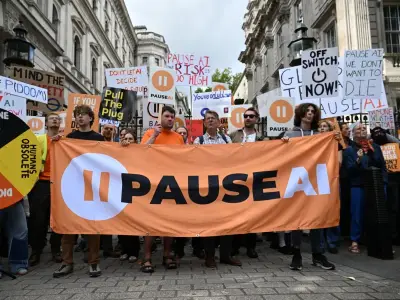
Frontier AI companies and governments must act now to ban the selling and use of AI technologies in military targeting, autonomous weapons systems, and mass surveillance, as employees from Anthropic, OpenAI and Google DeepMind are calling for. Clear guardrails are needed now to shape the future of AI so that it protects everyone, not just a privileged few.