Near Sony Pictures' historic Culver City studio, a new tech-powered rival, Promise, has emerged this summer, using AI to create films without traditional studio infrastructure. Backed by Google, venture capitalists, and Disney, Promise is one of several AI film studios taking root in Hollywood, making sound stages and financing less necessary.
AI on set: filming Touch Grass
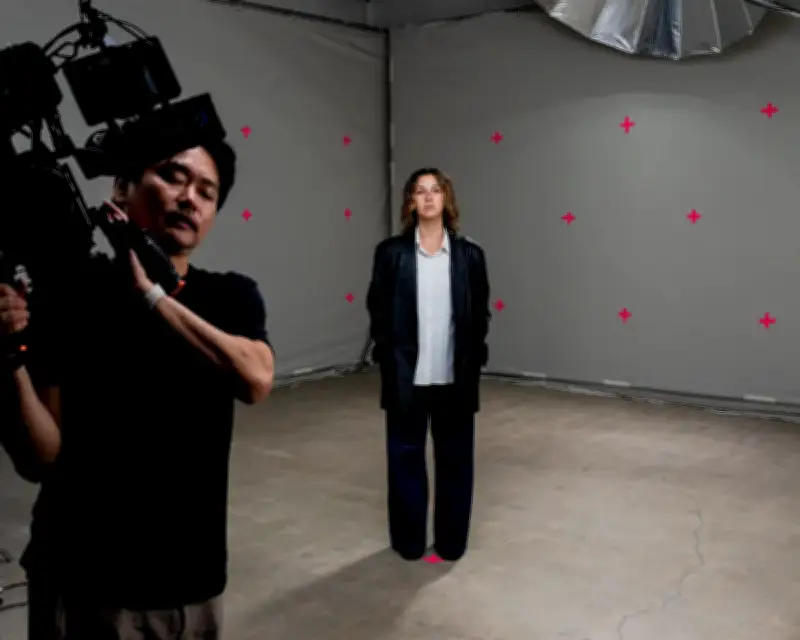
At Promise's base, actor Tori Thomas filmed a chase scene for the AI-enabled horror film Touch Grass, with a budget in the low millions. The sound stage was a corner of an office hung with white sheets. A camera followed Thomas, and AI superimposed her movement in real time onto a field of swaying grass generated by the Chinese AI model Seedance 2.5, released this month. Whole scenes were instantly visible on the director's monitor, with the backdrop easily replaced, such as by a nightmarish underground cavern.
Promise is not alone. Netflix said it used AI in 300 of its 1,000 titles in 2026. Director Ron Howard is set to release an AI-enabled animated documentary about prisoners of war in Vietnam, working with the AI studio Obsidian. Brad Pitt said AI could help mid-budget films ($40m to $90m) get made.
Creative renaissance or job threat?
Kavan “the Kid” Cardoza, 37, who set up Phantom X studio, predicted a creative renaissance circumventing studio giants, similar to breakthroughs by Quentin Tarantino and Spike Lee. The Promise shoot involved veteran film-makers including Joel Hynek, an Oscar winner who worked on Predator. “When we went from optical to digital film, we thought we’d gone to heaven,” he told the Guardian. “It’s like that again. So many things are easy to do. I am an embracer of AI. Some people are wary of it, a little afraid of it, but I see the incredible promise.”
Others, like Christopher Nolan, have voiced concern. “I’ve never seen a technology advancing so rapidly, so completely rejected by the public,” he has said. There has been backlash against an AI resurrection of the late actor Val Kilmer and the AI “actor” Tilly Norwood, with Emily Blunt calling it “really, really scary” and pleading to stop taking away human connection.
Cost savings and industry impact
Dave Clark, director of Touch Grass, said with “great dialogue and backstory”, AI-generated characters could become interesting. George Strompolos, co-founder and CEO of Promise, estimated hybrid AI films would be 20% to 50% cheaper than conventional production. “We’re at the beginning of a golden era of independent, highly empowered creative companies – call them small studios, micro studios – that will lead to more creative risk-taking,” he said.
Joanna Popper, a producer and AI adviser, said the positive view was that AI “empowers anybody with a talent and a discipline for storytelling to be able to go make what they want to make”. But she added: “The concern is … if five tech companies suck all of the financial gain out of the industry.” Imagine, the studio run by Howard and Brian Grazer, has partnered with Obsidian to make The Code, an AI-enabled animated feature based on drawings made by US prisoners of war in Vietnam. D Ryan Reeb, an executive producer at Obsidian, estimated the technology delivered a 30% to 40% cost saving, and predicted all top production companies would use it. He compared AI in Hollywood to plastic surgery: “It’s 100% like that.”
Cardoza, who makes films in his spare bedroom, has reached 28m YouTube views for his Chronicles of Bone series. He believes AI film-makers attract audiences because their direct authorial voice has greater authenticity. “I’ve had meetings with studios where [they say] a horror movie has to have X amount of jump scares … Why can’t I just write the story? And if there’s two jump scares, there’s two. If there’s 10, there’s 10. Why are we hitting markers? That’s not creativity – that’s manufacture.” He said the growth in AI-led film-making reminds him of the 90s era with Tarantino and Rodriguez. Cardoza rates Chinese models highly, saying they are “smoking everybody on everything”. He opposes a ban on Chinese open-source AI models, saying he would “move to China. I’m not even lying.”