A British man has become the first patient in the world to have a brain tumour removed in a surgery assisted by artificial intelligence (AI), stopping him from going blind.
Rhys Hibbert had a tumour on his brain's pituitary gland, a part of the brain where blood vessels and nerves controlling vision are tightly packed together. Medics said "going a millimetre wrong can make a critical difference".
New technology colour codes brain structures
Surgeons operated on the 48-year-old using new technology that helps identify miniscule anatomy in the brain by colour coding, or segmenting, important structures to help surgeons recognise them safely.

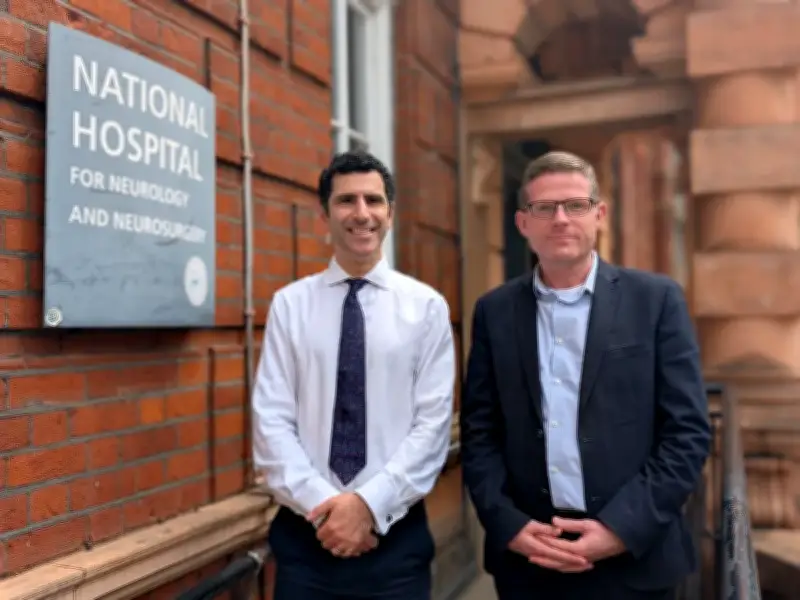
Medics at the National Hospital for Neurology and Neurosurgery (NHNN), part of University College London Hospitals NHS Foundation Trust, had been using the technology as a research tool for some time, but the operation on Rhys was the first time it has been used on a patient.
Patient's sight saved
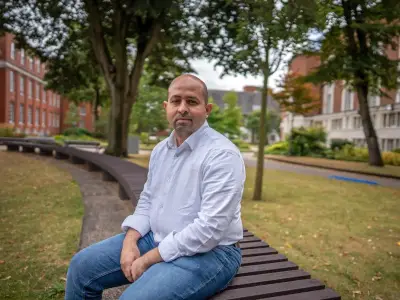
Rhys, from Bedfordshire, said the operation saved his sight and he is now back at work as a customer services manager and a community volunteer. Without it, the tumour could have caused him to be blind.
During the operation, the AI analysed the live surgical feed in real time to highlight structures of the brain. The technology highlighted which areas to avoid while removing the tumour.
Surgeon thanks trial participants
Rhys, who was diagnosed in 2024, said: "The National Hospital for Neurology and Neurosurgery was founded in 1859… and was the world's first dedicated neurosurgical hospital."
"So to me, it seems very fitting that the same hospital should also be the world's first to carry out an AI-assisted neurosurgery. I'm very pleased to have had the opportunity to be cared for in the hospital… I'm also very humbled to have been asked if I'll be prepared to be the world's first patient in this research."
Hani Marcus, consultant neurosurgeon at the NHNN, UCLH and a professor of neurosurgery at the UCL Queen Square Institute of Neurology who performed the surgery, said: "Huge thanks to the trial participants and to the team committed to improving patient outcomes by taking this important first step globally and using UK homegrown AI to help reduce risk during these delicate surgeries."
The AI was developed "in house" at the UCL Hawkes Institute and was trained using hundreds of videos of brain surgeries.
Earlier AI use at St Mark's Hospital
Earlier this summer medics at St Mark's, the National Bowel Hospital, became the first outside of a research setting to use a new AI tool which colour codes different parts of the body during live operations.
The tool, which is used alongside robotic or laparoscopic surgery, highlights different parts of the anatomy in real time on a screen, helping surgeons as they protect or dissect certain parts of the body during their operations. For instance, connective tissue could be highlighted as turquoise or nerves could be highlighted in green, and other parts of the anatomy can be highlighted with other colours.