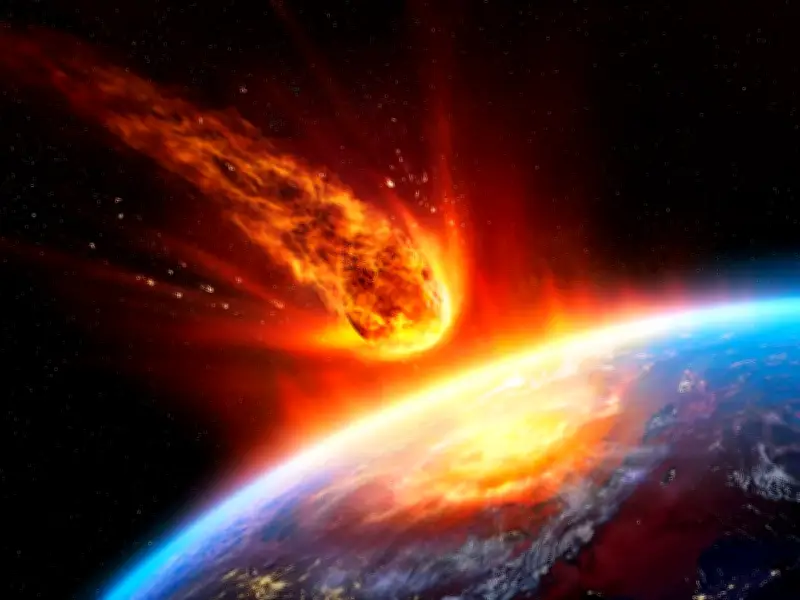
Astronomers have catalogued the 40,000th Near-Earth asteroid, and nearly 2,000 of these space rocks have a non-zero chance of impacting Earth within the next century, according to the European Space Agency.
The milestone highlights the scale of the threat posed by asteroids that orbit close to Earth, with more potential colliders being discovered all the time thanks to advances in telescopic technology.
Rising Discovery Rates
Near-Earth asteroids (NEAs) range from a few feet to several miles wide and travel on orbits that bring them within 28 million miles of the planet. They are rocky remnants left over from the Solar System's formation over four billion years ago.

Luca Conversi, manager of the European Space Agency's Near-Earth Object Coordination Centre, said: “The number of discoveries is rising exponentially from one thousand at the beginning of the century to 15,000 in 2016 and 30,000 in 2022.”
“As the next generation of telescopes enter operation we expect the number of known NEAs to continue to grow at an even higher pace,” he added.
Milestone Discoveries
The first Near-Earth asteroid to be discovered was 433 Eros in 1898 by German astronomer Carl Gustav Witt at the Urania Observatory in Berlin. It is 20 miles wide, seven miles deep and currently 180 million miles from Earth in the constellation of Libra, according to live tracking data.
Orbital studies suggest gravity might shift it into an Earth-crossing orbit in one to two million years. Since its discovery, experts have identified thousands more.
Tracking and Impact Risk
Once a discovery is made, scientists study the asteroid's path. Computer software is then used to predict its orbit years, decades or centuries into the future, revealing whether it is likely to hit Earth. Increased observations can refine the predicted trajectory, either increasing or decreasing the probability of impact.
Most of the nearly 2,000 asteroids with a non-zero chance of impacting Earth are small, but experts say the largest – up to one mile wide – would cause global damage if they hit. Scientists are confident the vast majority of the biggest asteroids have been discovered and are being monitored, and they are now focused on identifying mid-sized asteroids between 300ft and 900ft across, which are harder to spot but could cause regional damage. Current predictions suggest only 30% of them have been spotted.
New telescopes, including the Vera C Rubin Observatory in Chile and the European Space Agency's Flyeye telescopes with wide insect-like fields of vision, will reveal even more potential threats.
Iain Todd, of BBC's Sky at Night magazine, said: “Since that discovery of Eros humanity has catalogued a vast number of known near-Earth asteroids.”
“As scientists detect more and learn more about these nearby space rocks it gives us a greater picture of the potential threat to our planet from space, and how to keep ourselves safe,” he added.