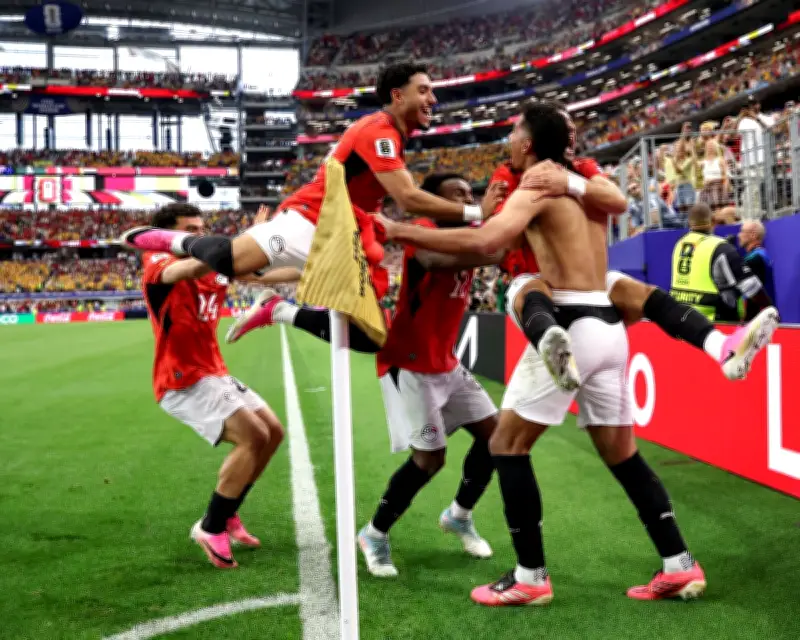
Egypt reached the World Cup last 16 for the first time since 1934 after a dramatic penalty shootout victory over Australia in the round of 32. Hossam Abdelmaguid scored the winning spot-kick after Mohamed Salah had converted a Panenka, sparking emotional scenes as players, staff, and fans celebrated a historic achievement.
The match, played in Dallas, was scrappy and largely formless, but penalties seemed probable from the moment Mohamed Hany headed into his own goal 10 minutes into the second half. Australia's goalkeeper gamble backfired as Patrick Beach, who had played the entire match, was replaced by Mathew Ryan specifically for the shootout, but the former Brighton keeper did not save any of Egypt's penalties.
Emotional Victory Dedicated to Palestine
Egypt coach Hossam Hassan, in tears after the win, dedicated the victory to the Palestinian people. “My heart and soul are with the Palestinian people. I thank them and dedicate this victory to them. We succeeded in making Arab people proud. I wanted to win for the sake of the good people. God is honouring us because of the good people who are here,” he said.

Hassan occupies a curious place in Egyptian football. A legendary striker and three-time Africa Cup of Nations winner, he has been heavily criticised as a coach, notably by former teammates Ahmed Hassan and Essam El-Hadary. Many dislike his alignment with President Abdel Fatah al-Sisi, and even supporters acknowledge he is more motivator than tactician. Yet he has guided Egypt to the last 16, a feat not achieved since 1934 when the tournament featured only 16 teams and Egypt lost 4-2 to Hungary.
Emam Ashour Opens Scoring
Egypt took a 13th-minute lead through Emam Ashour, who has had a remarkable year. Playing centrally behind the front two at the Africa Cup of Nations, the 28-year-old Al Ahly forward was deployed on the right in this tournament. He scored his first international goal against Belgium in the group stage, and against Australia, he lingered at the back post to head in after Karim Hafez returned a cleverly worked free-kick into the middle.
There was remarkably little time-wasting or spoiling from Egypt, in part due to the no-nonsense approach of Uruguayan referee Gustavo Tejera, who seemed able to diagnose non-injuries from 20 yards while jogging backwards. Australia's lack of creative spark limited their chances, with most opportunities coming from half-cleared set plays. The equaliser came from a dead ball: Aiden O'Neill's free-kick was headed into his own net by Hany.
Pre-Match Incident Overshadows Buildup
Egypt's buildup was overshadowed by a clash between team director Ibrahim Hassan, the coach's twin brother, and a Dallas police officer at the team hotel the day before the game. Footage appears to show the officer intervening with needless aggression to prevent a player posing for a photograph with a child. Hassan, known for his confrontational style, squared up to the officer, and Trezeguet intervened to de-escalate the situation. The officer reportedly reached for handcuffs before both backed down.
A federation source dismissed the incident as “a minor altercation” but criticised local security’s “poor handling” and the “harsh demeanour” of police officers. Dallas Police later acknowledged the incident, blaming individuals for not displaying credentials properly.
Historic Win and Next Steps
Egypt will now travel to Atlanta to face either Cape Verde or world champions Argentina in the last 16. The victory marks Egypt's first World Cup knockout win, a milestone that has sparked jubilation among players and fans alike. Mohamed Salah, who converted a Panenka in the shootout, was in tears, and the entire team celebrated wildly after Abdelmaguid's decisive penalty.