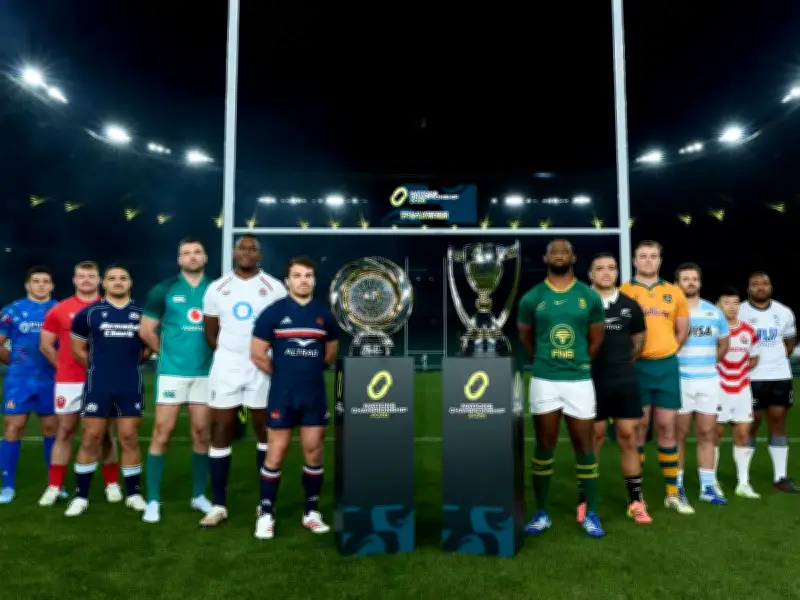
The six traditional Six Nations rivals will put their fierce rivalries to one side this weekend as they unite for the first time in a bid to land a new international rugby trophy. Wales will join forces with England, Ireland, Scotland, France and Italy in an attempt to get one over on the southern hemisphere during the inaugural Nations Championship Finals Weekend.
The three-day event at Allianz Stadium, Twickenham, will feature a Ryder Cup-style battle between the two hemispheres, with the northern nations teaming up to take on South Africa, New Zealand, Australia, Argentina, Japan and Fiji.
Hemisphere Shield up for grabs
There is a trophy on the line, with the newly-created Hemisphere Shield going to whichever side collects four points from the seven matches taking place across the weekend. Despite the northern hemisphere performing better in the group stages, those results will not count towards the final outcome of the Hemisphere Shield, with the battle effectively starting again at Twickenham.
The five ranking matches will each be worth one point, while the headline Nations Championship final between South Africa and France will carry double points, with two available. That means the northern hemisphere will need four points to claim the shield.
Deciding the contest
There is even the possibility of the contest being decided before Sunday's showpiece final. Four successive victories for Italy, Ireland, Wales and England would guarantee the shield for the north, while wins for Fiji, Australia, Japan and New Zealand in their respective matches would deliver the trophy to the south.
Scotland and Argentina meet in the penultimate fixture on Sunday, with the fourth-versus-fourth ranking match potentially having a significant bearing on the destination of the shield. France and South Africa will then bring the weekend to a conclusion in the Nations Championship final.
Extra time and draws
If matches are drawn, the available points will be shared after a 10-minute golden point extra time period has been played to try and find a winner. The big final is slightly different, with two 10-minute periods played until someone scores. If the match remains tied, the title will be decided by a place-kicking contest.
For Wales, the occasion offers a rather unusual prospect: joining forces with their oldest rivals in the hope of delivering a collective northern hemisphere success. The six nations that traditionally compete against one another in the Six Nations will instead be united by a common cause, with bragging rights between the hemispheres – and a new piece of silverware – at stake.