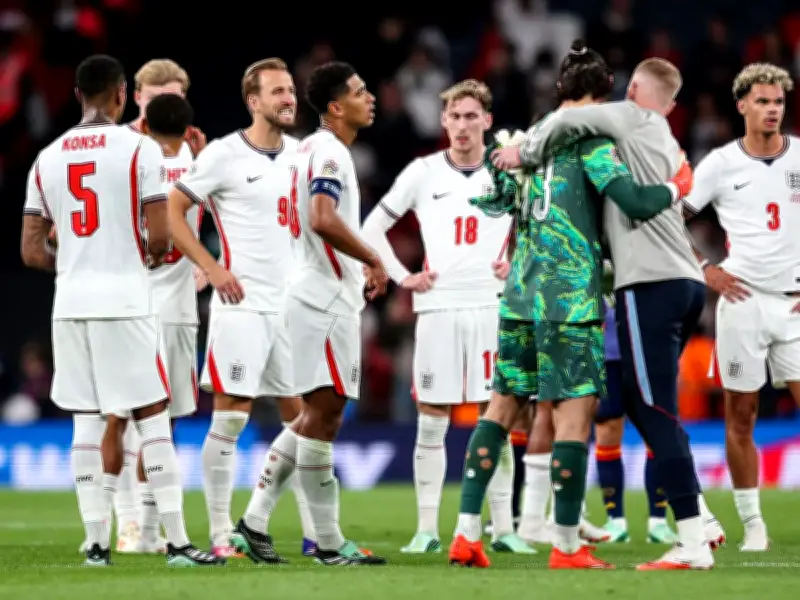
The new extended international break is certain to cause even more club versus country rows. England have started a run of four games across ten days, beginning with Spain at Wembley, followed by the Czech Republic in Prague, Croatia in Rijeka, and a return fixture against the Czech Republic at Wembley on Tuesday, October 6.
Player burnout fears grow
It is surely unthinkable that an England player will start all four games in the ten-day window. With five withdrawals before the squad even got together – Cole Palmer, Marcus Rashford, Kobbie Mainoo, Tino Livramento and Declan Rice – Premier League clubs are clearly anxious to protect their players from burnout. Rice and Palmer were both described as “load management,” with the Arsenal midfielder still suffering a hangover from the World Cup after a marathon season when he played 69 games for club and country.
While Rice’s absence is understandable, other clubs could think it unfair if some players get three weeks off while theirs are expected to play several games across the window. Arsenal forward Kai Havertz has already suffered a suspected hamstring issue while away with Germany, and Sunderland’s Holland striker Brian Bobbey went off with a similar issue in the same game. That has already got fans complaining about the new-look international break and its impact on their clubs.
Nations League format benefits
The idea is good in principle. It means two international windows for the Nations League rather than the previous three, which should reduce some disruption to the Premier League fixture list. This is the long window, whereas the November break is short – two games and only one lost weekend because the Premier League starts again straight afterwards. Players get proper time with their nations, and the Nations League does throw up some heavyweight fixtures, such as Holland against Germany.
By the end of the window, England will have played Spain, Croatia and the Czech Republic twice. England captain Harry Kane talked about wanting to play in all four games, and Thomas Tuchel has only ended up with 23 players, so it is unlikely you will get a complete 11 changes from game to game. Some players will get a lot of football and others not so much – that has always been the case, but this window seems to have compounded it.
Injury risks and fixture concerns
It is surprising that more Premier League managers have not publicly criticised this new-look international window. On the back of a World Cup, it feels wrong that players are being asked to play four intense games in the space of ten days. You are certain to get injuries, withdrawals and issues. England really need this campaign to work because dropping out of the top tier in the Nations League affects seeding, qualifying and the standard of games.
The Nations League is a brilliant invention – the best thing to happen to international football in a long time because you get competitive games rather than meaningless friendlies. There is no easy slot for the fixtures, and whether this new-look window is a success will probably be judged on who gets injured. England face two tricky away games, the second of which is played largely behind closed doors, which is so unfair on England fans. Croatia were banned from having fans in Rijeka by UEFA, yet there will be several thousand school kids and around 100 lucky England fans with a very limited number of tickets recently on sale. International football matters, but pitching it in the right way in the calendar feels so important.