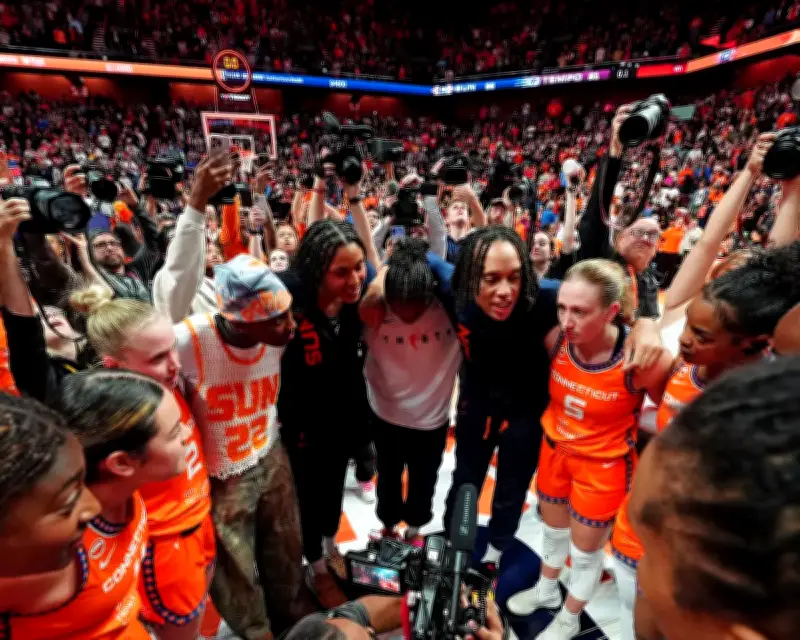
The Connecticut Sun played their final WNBA game last month, closing 24 seasons in Uncasville, Connecticut, with a mix of celebration and grief. The franchise was sold to a new ownership group in Houston, a process so controversial that the state of Connecticut is considering legal action. The departure leaves New England without a WNBA team.
The Sun joined the league in 2003, bringing professional women's basketball to Connecticut, a state that bills itself as the “Basketball Capital of the World”. The team was the first independently owned WNBA franchise and the first Native American-owned professional sports team, having been bought by the Mohegan Tribe in 2003.
Mohegan sovereignty and the team's roots
The Mohegan Tribe, whose ancestral lands lie along the Thames River in southeastern Connecticut, gained federal recognition in 1994 after applying in 1978. The following year, the state returned 240 acres of ancestral land to be held in trust for the tribe. The tribe has since acquired hundreds more acres and currently has more than 2,400 registered members.
The Mohegan Sun Casino and its arena sit on the tribe's reservation in Uncasville, named for Sachem (Chief) Uncas. The tribe pursued gaming to achieve economic self-sufficiency, opening the casino in 1996. Many tribal members work there, including the father of Haley Kerwin, a Mohegan tribal member and Sun fan.
“Before the casino was built, that land was also not ours,” Kerwin said. “It was ours, and then it was taken away, it was something that we had to fight to get back. The reason that we were able to open the casino there, the reason that my dad was able to get a job and start a family, is because of the work that the members of our tribe have done to not let us be erased.”
Investment in women's basketball
The Mohegan Tribe invested in the WNBA when it was not financially popular to do so. In 2002, the league restructured, and four teams folded or moved. The Orlando Miracle were bought by the Mohegan Tribe for $5m and became the Connecticut Sun.
Val Ackerman, the WNBA's president at the time, said the significance of the first Native-owned team was not a primary factor in awarding the franchise. The area was already a women's basketball stronghold, with UConn nearby, and the tribe had a built-in arena with just over 9,000 seats. “We saw [having the first Native-owned team] as a positive, but that wasn't why we did it,” Ackerman said.
From the start, the tribe shaped the team's identity. In 2021, the Sun's “Rebel Edition” uniforms highlighted Mohegan culture, with the word “KEESUSK” on the front, meaning “sun” in the Mohegan language. Symbols on the waistband represented the four dome directions, and dots along the neckline and shorts signified the “Trail of Life”.
Fan connections and cultural significance
Shea Vassar, a Sun fan and registered member of Cherokee Nation, chose the team because of its Native ownership. “Having that entry point to the Connecticut Sun just felt like magic,” she said.
Players were educated on Mohegan traditions, with members offering blessings at practices and games. Charlisse Leger-Walker, a Māori player of Te Whakatōhea and Ngāti Porou iwi, played her rookie season with the Sun this year. “It just really hits a different part of my identity and connects me back to my roots, without it actually being my roots,” she said.
Kerwin spoke with players Brittney Griner and Saniya Rivers during Indigenous Peoples Night and offered them wampum, beads of ceremonial significance. “Them already knowing and they remembered what it means, that's something that means something to them now, too,” Kerwin said.
The sale and its aftermath
The sale process drew criticism. The tribe sold the team to reduce debt and focus on gaming operations. A Boston ownership group's $325m deal was rejected by the WNBA, and the team was instead sold for $300m to a Houston group led by Tilman Fertitta, owner of the Houston Rockets and Donald Trump's ambassador to Italy. Some politicians called the sale “rigged” and called for antitrust investigations.
The Sun's final home game on 24 September was a triumph, as they defeated the Toronto Tempo 95-81. The team finished 11-33, second to last in the standings. Fans fear the rebrand in Houston, where the Comets identity will be resurrected, will erase 24 seasons of history.
“To me, it really harkens back to the fact that for Native people, land is so important and place is so important,” said Natalie Welch, a member of the Eastern Band of Cherokee tribe. “To have this team in this area and to see the success that they saw and build this fanbase and then completely leaving them with nothing. It's so tied to the continued erasure and displacement of Native people.”
Kerwin added: “That erasure of the Sun's history intertwined with the tribe's history is anxiety-inducing. If I'm being honest, I just don't want people to stop talking about them. I fear people are going to move on very quickly, and I will not be moving on any time soon, if ever.”