The Premier League's Key Match Incidents (KMI) Panel is a sign of the times - a worthless show which feeds the perpetual controversy cycle the division feeds off, according to Chief Sports Writer Andy Dunn.
A Panel With a Potted History
Football loves panels. Anyone remember the Pools Panel? Actually, it is still going and has Michael Owen and Rachel Brown-Finnis amongst its members.
The Pools Panel was not actually created by the game's authorities but by companies such as Littlewoods, Vernons and Zetters. A forerunner of fixed-odds betting on football, the pools was, essentially, about predicting results. The aim was to pick eight score draws.
During the Big Freeze of 1962-63, fixtures were decimated by the weather so the pools companies assembled a panel who 'decided' the outcome of fixtures.
The original panel consisted of six men - former England players Tom Finney, Tommy Lawton and Ted Drake, former Scotland defender George Young, former World Cup referee Arthur Ellis, and John Theodore Cuthbert Moore-Brabazon, 1st Baron Brabazon of Tara.
The Colourful Baron Brabazon
In his late seventies when joining the panel, Brabazon was a former Tory MP, who became the first person to qualify as a pilot in the United Kingdom.
In 1909, he put a small pig in a wastepaper basket and tied it to the wing of his biplane for a short voyage, proving that pigs could fly.
He was the first man to go up in a hot air balloon, was the first Commodore of the House of Lords Yacht Club, introduced the golf trolley to Britain, was captain of the Royal and Ancient Golf Club and won toboggan's Cresta Run Coronation Cup.
And also helped decide if the postponed Wolves v Manchester City fixture would have been a draw.
What Is the Point of the KMI Panel?
You can assume none of the five people on the Premier League's Key Match Incidents (KMI) Panel - and, presumably, those five people change from time to time - are as colourful as Baron Brabazon, but it would not matter a jot if they were.
What, exactly, is the point of the KMI Panel? In case you are unaware of its existence, it is - according to the Premier League website - an independent body used to review and assess major refereeing decisions and VAR interventions.
The panel typically consists of five members. Three former players or managers, one Premier League official and one official from Pro Ref (formerly PGMOL).
They look at contentious decisions and have a vote on whether or not the referee and/or VAR got it right or wrong. The result of that vote is announced. And that's it.
The Timber-Isak Verdict
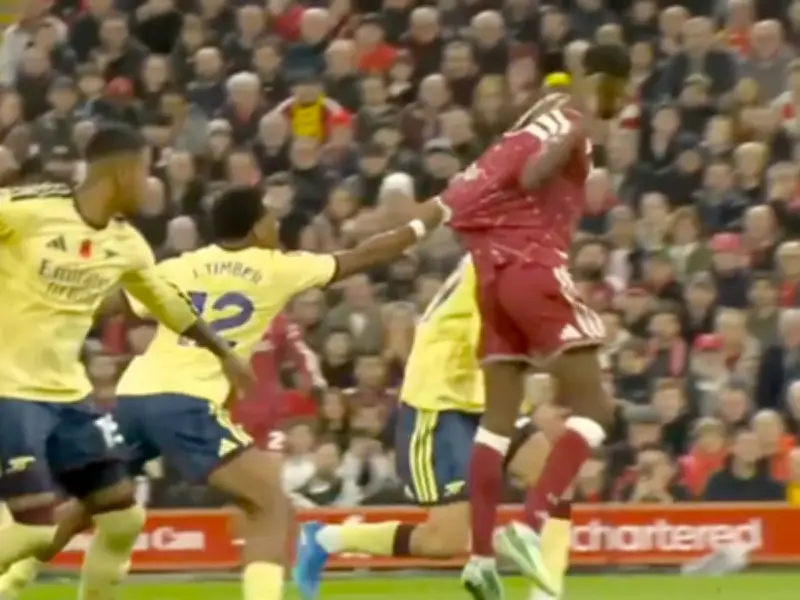
But the findings are announced some time after the incidents. Hence, on Wednesday - November 11 - we had the KMI panel's verdict on the Jurrien Timber-Alexander Isak incident, which took place in the Liverpool-Arsenal game on November 1.
And the verdict? Four members of the KMI panel believed on-field official Andy Madley should have given a penalty for Timber's shirt tug (was Baron Brabazon the fifth panel member?).
Three members believed video assistant referee Stuart Atwell should have intervened and sent Madley to the VAR monitor but two members believed he was right not to intervene.
To which there is one quick response. So what? It's like people agreeing and disagreeing in a bar. We all saw what happened.
Yet the shirt-pulling incident - which would have been a strictly minor one in pre-VAR days - is still newsworthy 10 days on.
And perhaps that suits the Premier League. Perhaps the Premier League - its officers and the 20 clubs and their executives who make up the private members club - are not bothered about the contentious elements of the game that have been exacerbated by VAR.
After all, Arsenal's 1-0 win at Anfield was a terrible watch. Three shots on target in a match between what are supposed to be two of the competition's blue-chip teams.
Thanks goodness for Madley, Atwell and VAR for giving us something to talk about. Perhaps that is how the Premier League saw it. And the KMI panel can keep the pot bubbling.
It is a conspiracy theory, for sure. But such is the drudgery of a lot of today's Premier League football that the competition has a vested interest in keeping VAR in the headlines. And their panel helps them do just that.