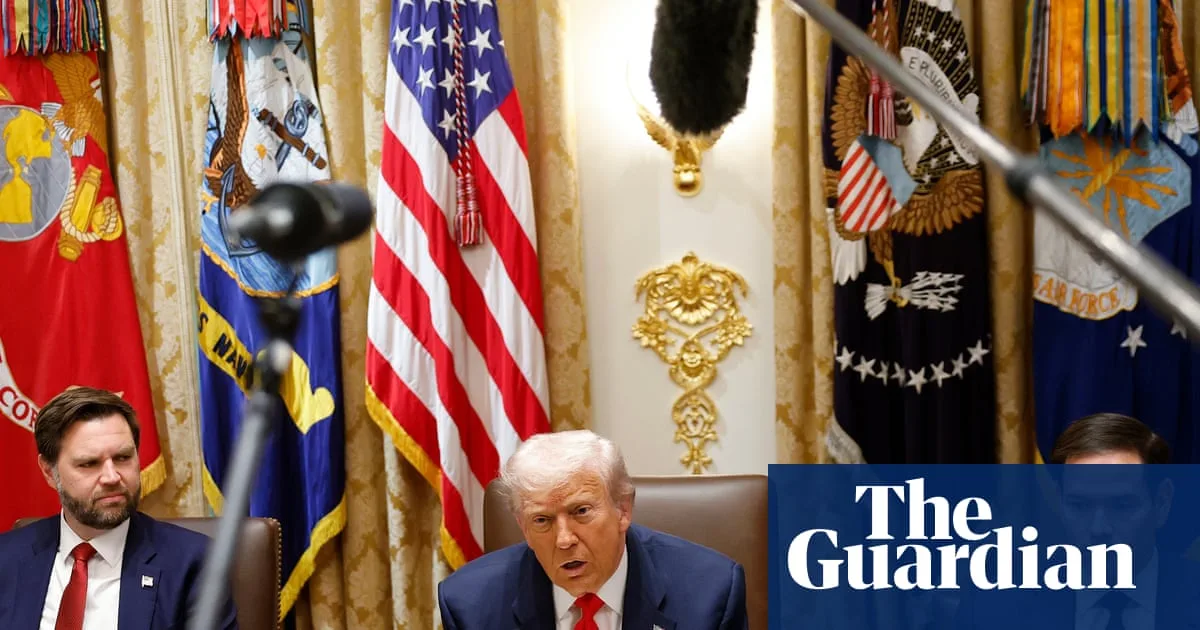
Donald Trump has again threatened to pressure Fifa into removing 2026 World Cup games from a host city based on its politics, with Boston becoming the third US city to receive such a warning. The US president also suggested he might take similar action against Los Angeles for the 2028 Olympics, citing potential safety issues.
Speaking at a press event with Argentinian President Javier Milei, Trump was asked about a recent “street takeover” in Boston where police officers were attacked and a police car set on fire. He responded: “We could take them away. Their mayor is not good … She’s radical left, and they’re taking over parts of Boston.” The games are scheduled to be held at Gillette Stadium in Foxborough, Massachusetts, about 22 miles south-west of Boston.
Trump said he would call Fifa President Gianni Infantino to request moving the games: “If someone is doing a bad job, and I feel there’s unsafe conditions, I would call Gianni … and say let’s move it to another location. And he would do that. Very easily, he’d do it.” Infantino has aligned himself closely with Trump, appearing at Oval Office events and accompanying him on trips, but Fifa Vice-President Victor Montagliani previously rebuffed similar threats, stating: “It’s Fifa’s tournament, Fifa’s jurisdiction, Fifa makes those decisions.”
Trump also criticised Los Angeles and California Governor Gavin Newsom over the handling of recent wildfires, saying: “If I thought LA was not going to be prepared properly, I would move it to another location if I had to. On that one I’d probably have to get a different kind of a permission, but we would do that.” The permission would need to come from the International Olympic Committee, whose president, Kirsty Coventry, has said she would like a sit-down with Trump.
Trump has no legal authority to directly remove host cities, but can apply pressure to the governing bodies. He previously threatened Seattle and San Francisco in September, calling them “run by radical left lunatics”. Street takeovers, which have occurred in several US cities since the pandemic, are generally not tied to any political ideology.