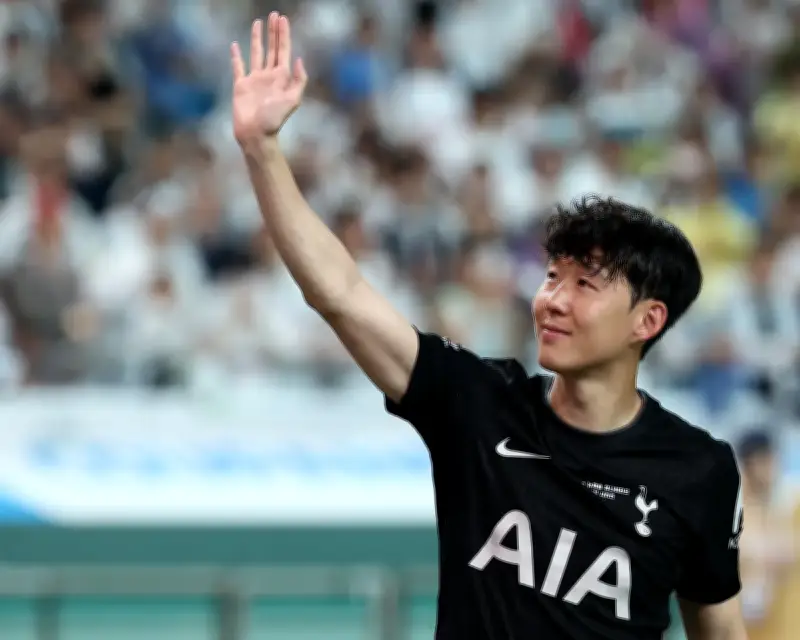
The English Premier League could be without a South Korean player for the first time since 2005, marking the end of an era that began with Park Ji-sung's move to Manchester United. Son Heung-min, who succeeded Park as the country's leading export, left Tottenham Hotspur for Los Angeles in 2025 after a decade that included becoming club captain and lifting the Europa League.
Korean presence dwindles
Hwang Hee-chan, the sole Korean in the league last season after Son's departure, was relegated with Wolves. While three Koreans remain on Premier League books—Yang Min-hyeok of Spurs, Brentford's Kim Ji-soo, and Park Seung-soo of Newcastle—they are expected to be loaned out again. Lee Kang-in, who was linked with a move to England, instead joined Atlético Madrid in July, taking Antoine Griezmann's No 7 shirt.
The decline follows a difficult period for South Korean football. The national team exited the World Cup after a 2-1 win against Czechia, followed by a 1-0 loss to Mexico and a 1-0 defeat to South Africa. The head coach and FA president resigned, and Park Ji-sung now leads a reform committee.
Japan takes the mantle
In contrast, Japan's presence in the Premier League is growing. Last season, Kaoru Mitoma impressed at Brighton, with Daichi Kamada at Crystal Palace, Takehiro Tomiyasu joining him at Selhurst, Ao Tanaka at Leeds, and Wataru Endo at Liverpool. This summer, Hull signed Hidemasa Morita, and Daizen Maeda became Ipswich's first Japanese player after a successful Celtic spell with five league titles.
Park has spoken of the need to follow Japan's long-term philosophy to close the gap with Asia's best team. Japanese players, historically heading to Germany first, increasingly want to play in England, with two promoted clubs recruiting Samurai Blue this season.
The shift is reflected in viewing figures. A 2022 report commissioned by Tottenham's shirt sponsor claimed 12 million Korean fans of the club, but one Korean TV executive says viewing figures for Spurs games are now nowhere near that level. Premier League interest in Korea has been largely player-driven, and with no Korean regulars, the league's appeal may fade.