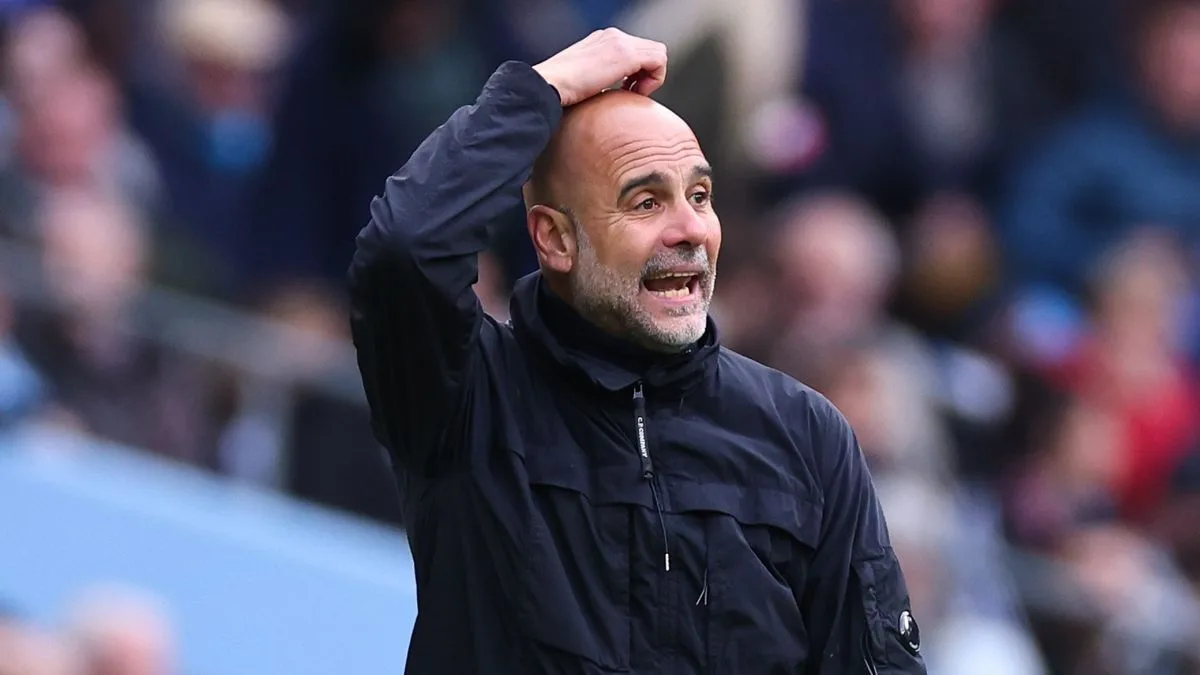
Pep Guardiola Is the Greatest Manager but He Has Ruined Football
Pep Guardiola Is the Greatest Manager but He Ruined Football

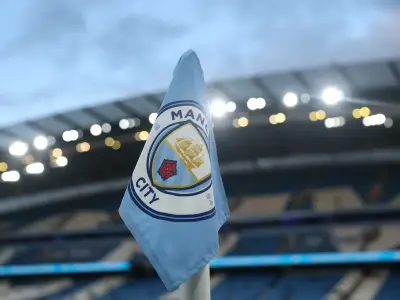
Pep Guardiola will step down as Manchester City manager at the end of the season, leaving behind a legacy that is more mixed than many realise. The tactical messiah is finally rolling up his blueprints and tidying away his stencils. After 10 years of tyrannical brilliance, revolutionary shape-shifting and a mountain of silverware, Guardiola is stepping down.

The Greatest Manager, but at What Cost?

The tributes will be predictably high-octane. We will be drowned in a sea of montages, win percentage statistics and glowing retrospectives, all pointing toward a decade of unparalleled dominance. And let us be honest: it should not be any other way. Guardiola is the greatest manager to ever draw breath. Alongside his spiritual forebear Johan Cruyff, he is arguably the most influential figure in the entire history of the sport, a weather-altering architect who looked at a standard rectangular patch of grass and saw a completely new dimension of geometry, time and space.

But as the Catalan genius prepares to pack his bespoke turtlenecks and exit the Premier League stage, a bit of necessary heresy needs to be spoken: Pep Guardiola has completely ruined modern football. He did not mean to do it, of course. Devastating visionaries rarely do. But Pep's ultimate crime was simple: he was too successful.

Wide Pickt banner — collaborative shopping lists app for Telegram, phone mockup with grocery list

The Tyranny of Control

He created a footballing blueprint so ruthlessly, overwhelmingly effective that it became the only currency that mattered. And in doing so, he built a glittering tactical prison that has spent the last decade suffocating the joy, the romance, and the glorious, chaotic adrenaline right out of the beautiful game. Guardiola's entire philosophy is anchored by one maniacal, all-consuming obsession: control.

Under Pep, the ball is not something to be played with - it is a hostage to be guarded as it is moved hastily between cell blocks. His Manchester City team - like his Barcelona and Bayern Munich teams - systematically suffocated their opponents, passing them into a state of compliance, retaining possession with a chilling, metronomic precision. It was beautiful in the way an expensive Swiss watch is beautiful - flawlessly calibrated, but entirely predictable and utterly devoid of a soul.

The Copycat Effect

The real tragedy, however, is not what Guardiola did to City. It is what his success did to everyone else. Because Pep won everything under the sun, the footballing world suffered a total, collective failure of imagination. Everybody wanted to play Guardiola-ball. From the high-sheen glamour of the Champions League down to the trenches of League Two, managers looked at his masterpiece and decided they had to copy it.

Suddenly, every centre back had to be a deep-lying playmaker. Every goalkeeper had to have the touch of a central midfielder. Every team, regardless of their resources or their players' actual talent, had to try and build out from the back under maximum pressure. Cue a joyless, decade-long descent into the aesthetic abyss.

The Death of Individual Brilliance

In this new Guardiola-ified landscape, risks are treated like a communicable disease. Individual brilliance has been systematically ironed out, sacrificed at the altar of the collective machine. We have entered the era of the microscopic manager, where everything is coded to an agonising degree. Players are no longer allowed to think, feel, or trust their instincts. Instead, they are paralysed by structured, heavily layered instructions. They are told precisely where to stand at any given micro-second, which zone to occupy in any given passage of play, and exactly how to angle their bodies when receiving a pass.

It is dull as dishwater. Immaculately pristine dishwater, perhaps - but dishwater all the same. Think back to the great, untamed mavericks of the past: Ronaldinho, Wayne Rooney, Paul Gascoigne - the street-fighters, the wizards, the agents of chaos who could turn a match on its head simply because the spirit moved them. They were not reduced to bloodless cogs in a machine. It was not about microscopic meticulousness or hyper efficiency. It was about magic, energy, pizzazz.

Pickt after-article banner — collaborative shopping lists app with family illustration

Under the modern, algorithmic curriculum, those players are a liability. They are too unpredictable. They represent an unnecessary variable in a manager's quest for total, risk-free domination. Where is the silky, fluid freedom? Where is the raw, stomach-churning terror of a player dropping a shoulder and taking on three defenders just for the sheer, unadulterated hell of it? It is gone. Vaporised. Scrubbed from the script. All to satisfy this modern, sterile lust for absolute containment.

A Colder, More Boring Game

We are watching a sport that has been so painstakingly pre-programmed, so ruthlessly stripped of individualism and human error, that it has lost its pulse. It is undeniably less fun to watch. You can admire the geometry, sure. You can marvel at the physical conditioning. But football rarely gets you off your seat anymore. It rarely coaxes that involuntary, guttural roar from your throat that a moment of pure, unplanned artistry used to ignite.

Pep Guardiola is an absolute genius who reshaped the footballing cosmos in his own immaculate image. He deserves every statue, every gold watch, and every rapturous monologue that comes his way over the next few weeks. But as he walks away from the kingdom he conquered, he leaves behind a sport that is colder, more rigid, and fundamentally more boring than the one he found. He mastered the game, but in his absolute obsession with controlling everything, he broke the very magic that made us fall in love with it in the first place.