Scottish Football Association head of refereeing Willie Collum has backed Nick Walsh's decision to award Rangers a penalty after James Penrice's controversial fall at St Mirren, and also stood by the choice not to send off Celtic's Colby Donovan against Dundee United.
St Mirren were angered earlier this month when Rangers received a spot kick after wing-back Penrice went down under pressure from midfielder Samuel Ramos. Former referee Steve Conroy criticised the call and claimed Penrice had "practised" his tumble in the box.
Collum explains penalty decision
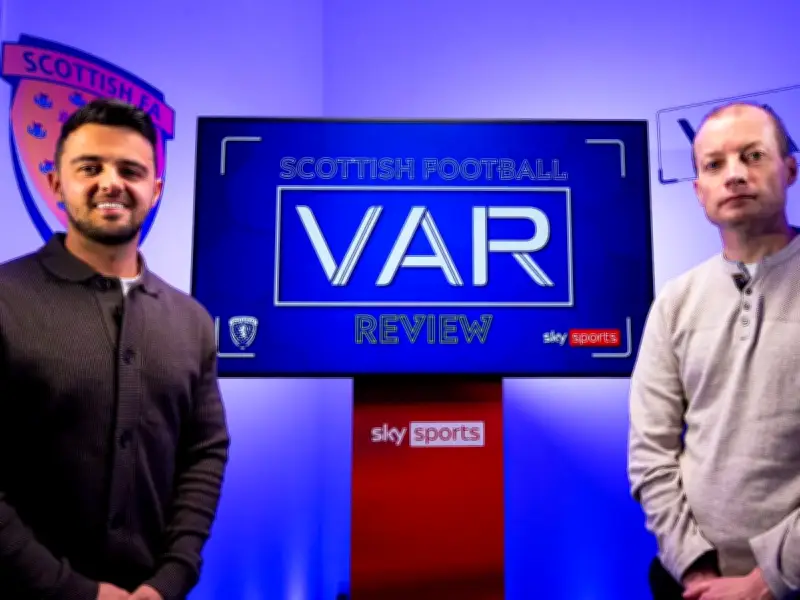
Speaking on the Scottish Football VAR Review show, Collum said: "The first thing I want to talk about is the referee's description. The referee is very, very close to the incident - best place as you could possibly be. He talks about the player making contact at a tripping motion - there is contact at the foot level and also particuarly higher up the leg at the thigh level."
He added: "People will debate about the contact but the player takes a huge risk. He goes in, challenges for the ball and doesn't touch the ball and makes contact with the opponent. As soon as the referee blows the whistle here, we fully support this decision. You're right to question, 'is there enough contact?'. But as soon as this is given on field, there's no doubt for us that the penalty kick is supported."
Collum continued: "I don't think there's a great deal of contact but I think there is contact. And also, I don't think the St Mirren player gets close to the ball. He takes a huge risk. Can we say this is not a foul? No."
VAR intervention threshold
Asked if the bar has now been set for similar incidents, Collum said: "It's a fair point. But when we're talking about the bar and setting a threshold, we also talk about that around VAR intervention and the appropriateness of whether the VAR would get involved. Here, regardless of the on-field decision, when you look at the footage, it's not one that VAR would touch. So if a referee here plays on and the on-field description is accurate, then we continue the game."
He added: "But in terms of refereeing on field, we don't want VAR to re-referee matches. So we need to allow referees to make decisions. What's clear for us here is that the referee is very well positioned; the check is then carried out. Is there contact? Does the communication from the referee match the images we see? And therefore, check complete."
Collum also said: "We've talked about careless contact and how we wouldn't look at that in the box. I suppose the key difference here is that Penrice would regain possession of the ball. So therefore the contact is impactful in that he's brought down and he can regain possession of the ball. If this had perhaps been a crossing incident, it would be less likely to be picked up as a foul. But there's impact there because you are retaining possession."
Penrice has been accused by some of being theatrical in winning the penalty, but Collum insisted the Scotland star's reaction played no part in the decision-making. He said: "Well here, the level of contact is judged by the referee to be a foul. So that's important for us. As soon as he judges that as a foul, we're not really looking at the reaction of the player. We're looking at the contact for him is enough for a foul, and therefore the penalty is correctly awarded."
Donovan challenge defended
Collum also defended the decision not to upgrade Celtic youngster Donovan's high lunge on Zac Sapsford to a red card. Donovan flew into a challenge on the United forward, who scored in the 2-2 draw at Parkhead. The flashpoint was reviewed by VAR Chris Graham and the team in Clydesdale House, but referee Steven McLean was given the green light to stick with his on-field decision.
Collum said: "I think the retraction of the leg. After winning the ball, there is contact but he's trying to withdraw out of that challenge. You could easily use criteria here on the height and say 'it's high up on the leg, therefore you could try and justify a red card'. Without a shadow of a doubt, you could say that. But we're also not in the business of finding every detail to try and red card players. We need to make sure that we meet the criteria and height is one criteria. You heard good use of criteria there - excessive force, brutality... does it meet those requirements? And if not, then the on-field decision is fully supported."
He concluded: "For us, this is more reckless than endangering so it's correct. But this is where we tell the referees on the field and on the VAR to make sure that what they're seeing on the pitch, they make good descriptions and that adds up to what we actually see when we look at the footage."