Former defence minister Tobias Ellwood has warned that Britain is entering an increasingly dangerous era, declaring that Donald Trump's actions have cast fresh doubt over whether Washington can be relied upon.
Mr Ellwood issued a blunt warning over the US President's decision to ease sanctions on Russian diesel amid rising fuel prices, saying the move undermined confidence in the transatlantic alliance. He said: "Buying diesel from our adversary removes any doubt that DC no longer has our back."
Poll shows shifting public attitudes
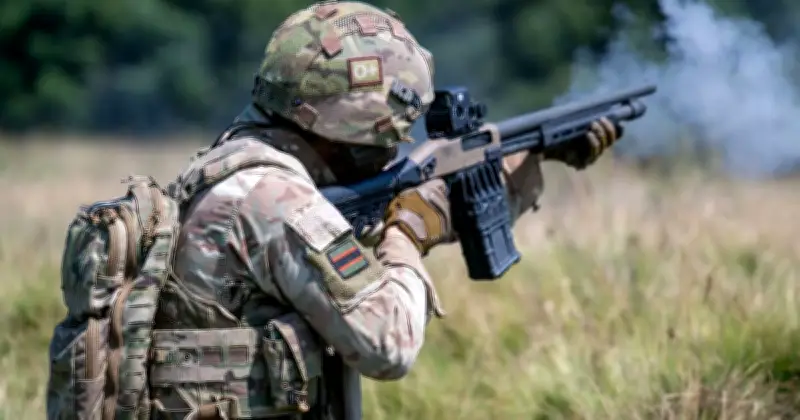
His intervention came as a new poll revealed that nearly half of Britons would refuse to take up arms for the UK under any circumstances, despite growing concerns over international security.
Mr Ellwood believes public attitudes towards national service are shifting as people become more conscious of the threats facing the country, with Mr Trump's behaviour potentially reinforcing the case for greater national preparedness. He said: "Two years ago the poll was 2/3 would not. So the dial is shifting as we all become aware of how dangerous our world is becoming.
"Conflict is growing on multiple fronts. If the Government were more honest about the true threats we face - the dial would shift further.
"Also there is a false stereotype of what modern national service would look like. Yes it's conventional strengths but also those areas I have highlighted before - improving our homeland resilience."
Poll findings on willingness to fight
The latest Ipsos survey, reported by Sky News, found that 48% of British adults believed there were no circumstances in which they would be willing to take up arms and go to war for Britain. Meanwhile, 36% said there were circumstances in which they would be prepared to fight.
The poll of 1,090 British adults was conducted online between September 29 and October 1, with the findings highlighting a divide between support for strengthening the Armed Forces and willingness to fight personally.
The proportion unwilling to take up arms was broadly unchanged from April 2025, despite growing concern about threats from foreign powers including Russia, China and Iran.
Support for increased defence spending
Yet there was significant backing for increased military spending. Some 51% supported raising defence spending, almost twice the 28% who backed an increase in June 2022.
However, the public was divided over how to pay for it. Among those supporting higher spending, 37% favoured cuts elsewhere in government spending, while 36% backed increasing the taxes they personally pay.
The most popular individual proposal for raising money was increasing income tax on people earning more than £125,000 a year, supported by 46%. The findings underline the challenge facing policymakers: persuading the public to accept the costs of preparing for a more dangerous international environment while encouraging greater willingness to contribute to national defence.
Mr Ellwood has argued that national service should not be viewed simply as compulsory military training. His vision includes strengthening the country's ability to withstand attacks and disruption, drawing on a wider range of skills to protect critical infrastructure and improve national resilience.
His warning over Mr Trump comes as relations between Washington and Kyiv have deteriorated following the US decision to ease Russian diesel sanctions and reports of disruption affecting Ukraine's use of Elon Musk's Starlink satellite communications system.
The UK Prime Minister, Andy Burnham, has meanwhile insisted Britain must continue working with the US to support Ukraine, despite the tensions. Mr Burnham said he wanted to "build that bridge" with Washington and ensure the allies continued working together, while accusing Russia of continuing to attack Ukrainian energy infrastructure despite calls for an energy ceasefire. Downing Street has declined to say whether the British military would review its use of Starlink, saying the UK relied on a range of satellite communications providers to ensure resilience.
Mr Ellwood, a former Conservative MP and former chairman of the House of Commons Defence Committee, sets out his concerns about the deteriorating international order in his book Ten Steps to Prevent World War Three, published in July 2026. The book examines the threats posed by growing international instability and sets out proposals to prevent regional conflicts escalating into a wider war.
His latest comments bring those concerns into the debate over national service, suggesting that the case for preparing the public for future threats could gain traction as confidence in America's commitment to its allies comes under pressure.