
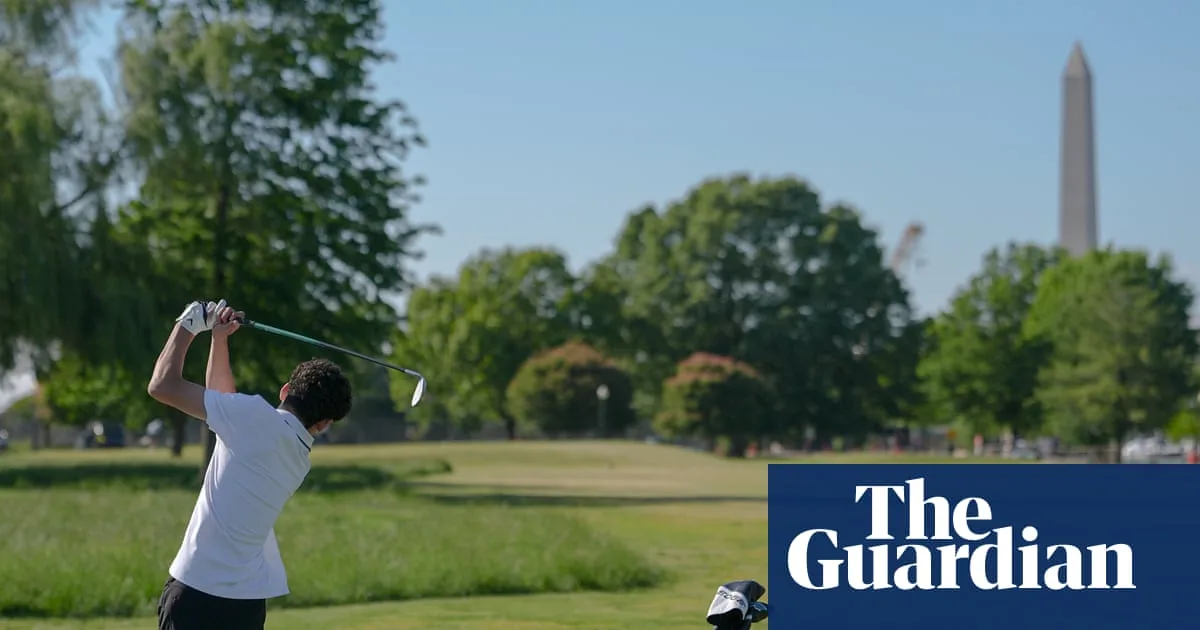
A federal judge has warned the Trump administration to proceed cautiously with plans to redevelop a historic Washington DC golf course, amid revelations that rubble from the demolished White House East Wing dumped there contains toxic metals. District Court Judge Ana Reyes likened the situation to an episode of the TV comedy Parks and Recreation during an emergency hearing on Monday, as the DC Preservation League sought a temporary restraining order to halt work at East Potomac Golf Links.
Reyes allowed maintenance to continue but cautioned of “serious consequences” if the administration rushed into major redevelopment. The Washington Post reported that a fundraising document revealed Trump’s intention to “dramatically remake parts of Washington’s waterfront,” including an exclusive championship course and a “national garden of American heroes.” The superintendent of the National Mall and Memorial Parks, Kevin Griess, denied imminent closure but admitted a “safety assessment” was underway.
Soil data published by the National Park Service showed that rubble from the East Wing demolition, which was dumped at the course, tested positive for lead, chromium, and other toxic metals above laboratory reporting limits. The toxic soil story was first reported by the podcast Pablo Torre Finds Out, which won a Pulitzer Prize on Monday for unrelated reporting.
The dispute began in December when Trump terminated a 50-year lease held by the non-profit National Links Trust, which denied claims of neglect. Trump confirmed to the Wall Street Journal his ambition to transform the courses, saying, “If we do them, we’ll do it really beautifully.” Golf Digest reported that renowned course designer Tom Fazio visited the site under an alias in late 2025, suggesting plans were advanced before the lease ended.
Judge Reyes noted, “Something is happening… when you have a pledge going out with pictures, asking people for money, we’re pretty far down the road.” The DC Preservation League, which sued in February, argued the course must remain public. Executive director Rebecca Miller said, “This is supposed to be open to the public… and we wanted to keep it that way.”




