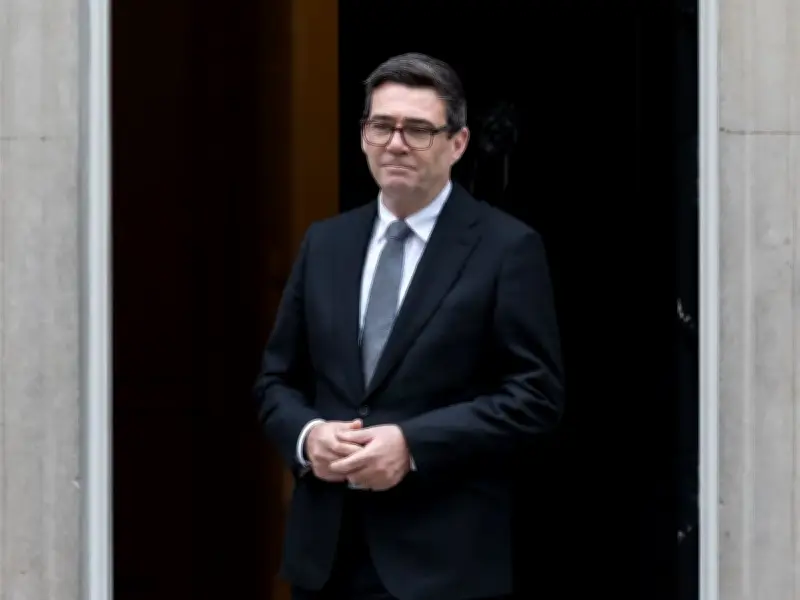
More than 3,000 people in England have been offered a bed or support as part of Prime Minister Andy Burnham's vow to get all rough sleepers off the streets for Christmas.
The former Greater Manchester mayor pledged as his "first instruction" on day one in No 10 to "finally end long-term rough sleeping across the UK at the earliest opportunity". Ending rough sleeping was one of the first priorities mentioned by the new PM as he spoke to the country from outside 10 Downing Street in London back in July.
First steps towards ending rough sleeping
He said: "I will soon go through that door behind me and issue my first instruction - to end rough sleeping in our country. It's about putting the right values and the right standards at the heart of government. I will put the care of people at the heart of everything I do. I will give this my all and I ask you all to pull with me."
His Christmas initiative is an attempt at repeating efforts during the coronavirus pandemic when the 'Everyone In' scheme resulted in thousands of rough sleepers across England being taken off the streets.
Data shows early progress
Data published by the Ministry of Housing, Communities and Local Government (MHCLG) on Friday showed 3,276 people sleeping rough had received at least one offer of a route off the streets across areas which had been given funding at the end of September as part of the Rough Sleeping Programme. A total of 4,251 offers had been made, with some people getting multiple offers.
Mr Burnham said the new figures "show early progress". He added: "I know it's a big task and I know not everyone will accept the first offer they're made. The offer of a bed and support will be there, and brilliant outreach teams will keep working with people to find something that's right for them.
"I'm incredibly grateful to everyone working to make this happen. These are important first steps towards our ambition to end rough sleeping for good."
Housing Secretary Angela Rayner said the Government had made a "bold pledge for this winter and it's encouraging to see progress already being made". She added: "That is what our action is about: backing councils and frontline services to get more people the offer of a route off the streets and into the support they need.
"We know there is much more to do and we will keep driving this work forward and backing local areas to deliver. It's not just about more bed spaces, but making sure people have the support they need to rebuild their lives."
Funding and targets
The department said that as of the end of October, there were 1,966 bedspaces reported as funded by the programme, a quarter of which were occupied. Around eight in 10 (82%) areas said they were confident that by December 1 they will be able provide everyone sleeping rough with an offer of a route off the streets, the MHCLG said.
Some £874 million of funding has been made available for the programme over three years, with local authorities receiving initial payments in September. It is expected data showing whether or not the Prime Minister's pledge for Christmas has been met will not be available until the new year.
The latest annual national statistics, published by the Government in February, estimated there were 4,793 people sleeping rough on a single night in autumn 2025 in England. This was a new record and the fourth annual increase in a row. The next snapshot, giving an estimate for the number of people sleeping rough on a single night in autumn 2026, is expected to be published in February.
Concerns over transparency
Lord John Bird, Big Issue founder and crossbench peer, said while "every effort to get people off the streets is welcome", data must be made available too on how many offers are being accepted. He said: "Let us count our achievements, rather than just our efforts. A rough sleeper refusing an offer of inadequate accommodation and choosing to stay on the streets is not a success story.
"The Government should be transparent about how many rough sleepers are accepting the offers being made or we risk failing to do the hard work of breaking down the real, entrenched barriers that stop rough sleepers from moving up and off our pavements."
Separate data published on Thursday showed the number of households in temporary accommodation has surpassed previous record levels for both households with and without children. There were 136,280 households in temporary accommodation – a form of homelessness which can include hostels, refuges and bed and breakfasts (B&Bs) – at the end of June, which is a rise of 3.0% from 132,340 from the same time last year. Almost two-thirds of these were households with dependent children – totalling 86,840 (63.7%), while 49,440 were adult-only households.
There were 178,690 children living in temporary accommodation at the end of June, which was a new record high. This was up by 3.7% from the same time last year when the figure stood at 172,370, and was branded a "shameful milestone" by housing charity Shelter as it was the 19th consecutive quarterly rise in child homelessness.