Betting Ads with Harry Kane and Erling Haaland Banned for Appeal to Under-18s
Kane and Haaland Betting Ads Banned for Under-18 Appeal

Two advertisements for the online betting platform Oddschecker featuring prominent footballers Harry Kane and Erling Haaland have been banned for their likely appeal to under-18s.

Details of the Banned Ads

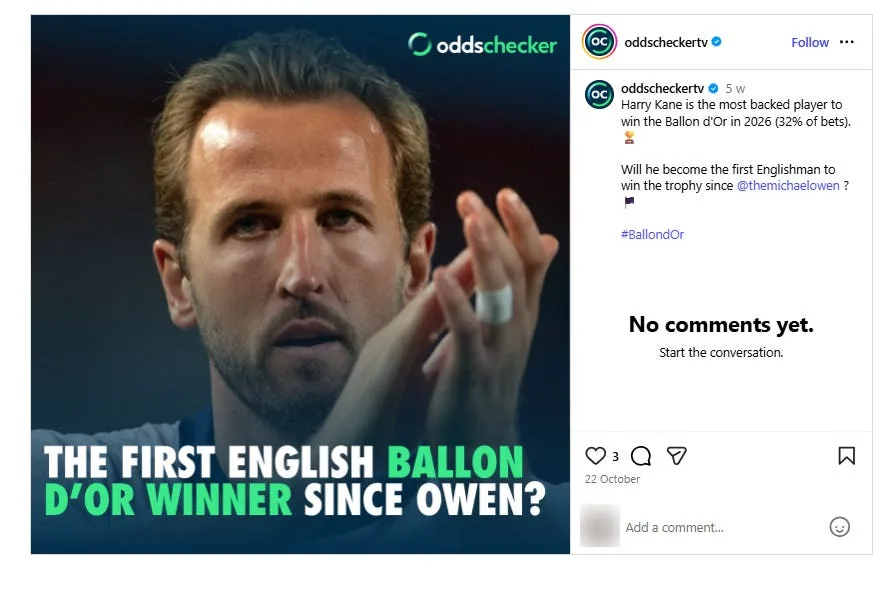
One Instagram post, seen in November, depicted Kane with the caption: "Harry Kane is the most backed player to win the Ballon d’Or in 2026 (32% of bets)," complete with a trophy emoji. A second ad featured Erling Haaland and the text: "In the last 24 hours, Norway to win the 2026 World Cup is the most-backed bet placed through oddschecker."

The complaint, lodged by a Bristol University researcher, challenged whether the ads breached gambling advertising rules by featuring individuals with strong appeal to under-18s.

Wide Pickt banner — collaborative shopping lists app for Telegram, phone mockup with grocery list

Oddschecker's Defence

Cyan Blue Odds Ltd, trading as Oddschecker, said the posts were “primarily editorial in nature, rather than ads.” They explained that this was why they did not include the age disclaimer and social responsibility message that would ordinarily accompany their direct gambling promotions. The firm said it recognised the heightened risk associated with featuring “top-flight” footballers and so had set the account to a minimum age of 18-plus.

ASA Ruling

Upholding the complaint, the ASA said a large proportion of under-18s used Instagram and it was likely there was at least a significant number of children who had not used their real date of birth when signing up. It said it considered both Kane and Haaland “to be a high risk of strong appeal to under-18s.” The ASA concluded: “For those reasons, we concluded the ads were irresponsible and breached the code.”

Separate Rulings

In a separate ruling, the ASA found that an Instagram post from Betway featuring an image of former Arsenal striker Thierry Henry did not break advertising rules because he was unlikely to be of strong appeal to under-18s.

Earlier this month, two ads promoting British beef and milk were banned after television presenter and environmental campaigner Chris Packham complained that they misled consumers about the products’ carbon footprints. Both ads for the Agriculture and Horticulture Development Board’s (AHDB) Let’s Eat Balanced campaign used the carbon footprint of British beef and milk to promote the products, firstly stating: “British beef not only tastes great, but has a carbon footprint that’s half the global average*.” The asterisk linked to text that stated: “Full lifecycle emissions of CO2 eq (carbon dioxide equivalent) per kg of beef.” The ad for milk stated: “British milk not only tastes good, but is also produced to world-class standards, and has a carbon footprint a third lower than the global average.” Packham complained to the ASA that the ads, and specifically the carbon footprint claims, were misleading as they did not reflect the full environmental impact of British meat and dairy. The AHDB said the ads’ mention of carbon emissions would be understood in relation to the environmental impact of beef and milk that occurred between the “cradle-to-retail” stages. But the ASA said the average consumer “being reasonably well-informed, observant and circumspect” would understand the claims to apply beyond the retail stage and include actions such as cooking and wastage.

Pickt after-article banner — collaborative shopping lists app with family illustration