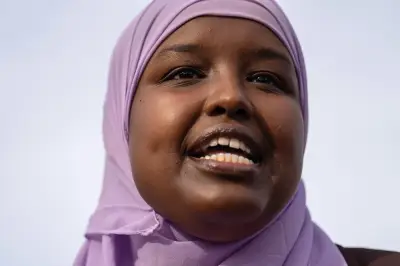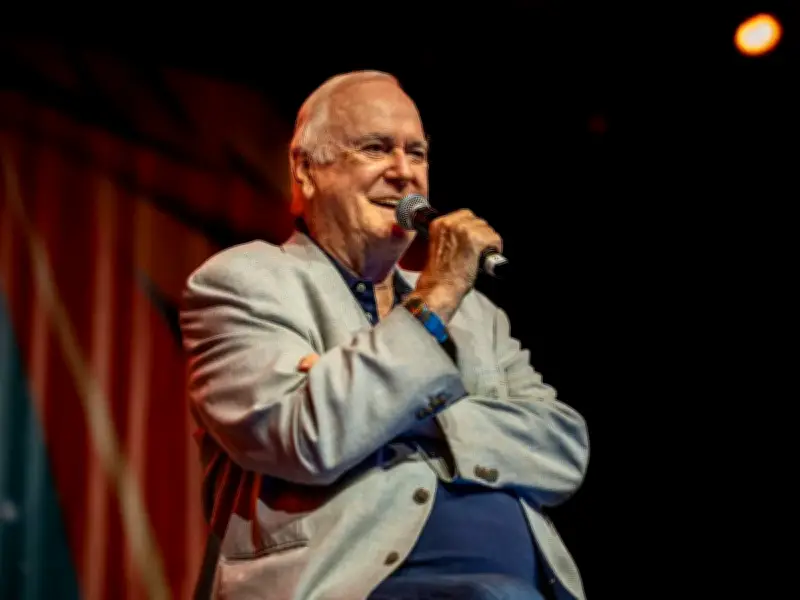
John Cleese, the Monty Python co-founder and former rector of the University of St Andrews, has urged students not to support Green MSP Q Manivannan in the race to become the institution's next rector. He accused the politician of trying to “understate the appalling psychological effects of rape”.
Comments re-emerge
Over the summer, comments from Manivannan re-emerged in which they spoke about the “demonisation of rape” and claimed rape existed on a “spectrum”. The remarks, made in a podcast last year, sparked outcry, and the Edinburgh and Lothians East MSP apologised for any hurt caused but said their comments had been “maliciously” edited.
Manivannan, who uses they/them pronouns, announced they would run in the race to become St Andrews rector, alongside Brian Baumgartner, the actor best known for playing Kevin Malone in the US version of The Office. They are among six trying to win the student vote.
Cleese's appeal
Writing on social media, Cleese said: “As a former rector of St Andrews University I respectfully urge its students not to support someone who tries to understate the appalling psychological effects of rape.”
Writing on their Instagram, Manivannan said: “For our wee bubble, I’m running to be the University of St Andrews’ new Rector. Alongside the space I occupy as an MSP, I will bring a chance for our wee town to grow and thrive while rectifying the many injustices being permitted in our name (including to our current rector Stella Maris).”
Stella Maris, who is not running, has been involved in a dispute with the university after she was removed from the university court over comments she made on the Israel-Gaza war. She won an appeal nine months later.
Manivannan's platform and background
As part of their promises to students, Manivannan has pledged to prioritise better buses for students in Glasgow and Edinburgh, more student activities, affordable homes, an end to “insecure staff contracts”, and supporting Scottish students “alongside queer and racially minoritised students”.
Manivannan, from India, recently announced they had been awarded a graduate visa, having been elected to the Scottish Parliament on a student visa. The graduate visa will last until 2029, with the anthropologist, poet and politician planning to apply for a global talent visa at that point. They completed their doctorate in international relations at the University of St Andrews earlier this year. Manivannan identifies as non-binary and is one of the first two openly trans MSPs at Holyrood, alongside fellow Green Iris Duane.
They have attracted some controversy, including reports suggesting they may have sought to portray themselves as being disadvantaged, despite coming from a wealthy family. Manivannan has described themselves as a “queer Tamil immigrant”.
Reaction to rape comments
Their comments on rape were criticised by the Scottish Rape Crisis Alliance, which accused the MSP of trying to “minimise” sexual violence. Manivannan spoke of the “demonisation of rape” and said: “It is a spectrum – none of which is any worse or less or more worse, but it is a spectrum of things that constitute that one homogenised word, rape.”
They also said there were “different modes” of consent and rape. The MSP went on to say the idea of a rapist being a “big, big, burly man” was “not necessarily unfounded” but said it was “misconstrued” because “any individual is capable” of rape.
Apologising for the comments, they said: “I am horrified that my comments were selectively edited in order to mislead people and misrepresent me, but I also accept that my language was abstract in the first place and for that I take full responsibility and am sorry. During the interview, I categorically stated that rape in every context is equally serious and harmful.
“This section of the interview was maliciously left out of clips — with the rest being misrepresented and widely shared out of context, despite my repeated clarifications. I also made the point that rapists do not fit a single stereotype and that many men are relatives or known to their victims.
“I recognise that the words in the clip shared, without the full context of the conversation, have caused considerable upset. For that I apologise. I will always stand with, and for, victims and survivors.”