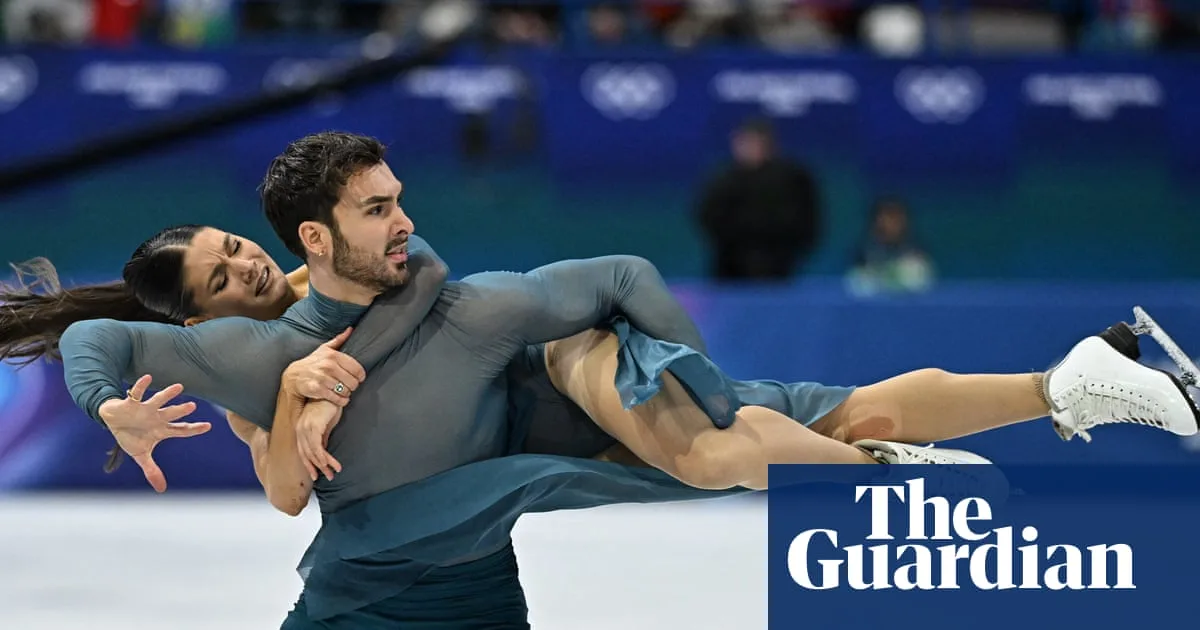
The International Skating Union (ISU) has defended the integrity of Olympic ice dance judging after a single judge's scoring gap became central to the outcome of the gold medal contest, insisting variations across panels are expected and that safeguards exist to prevent bias from determining results.
In a statement released on Friday, the governing body rejected suggestions that the judging system failed during the competition, in which France's Laurence Fournier Beaudry and Guillaume Cizeron narrowly defeated Americans Madison Chock and Evan Bates in one of the closest and most disputed finishes of the Milano Cortina Games. Under the ISU judging system, the highest and lowest scores for each element and programme component are automatically discarded before the remaining marks are averaged – a process known as a trimmed mean – which is designed to reduce the influence of outlier judging. ISU officials said that meant a number of the French judge's highest marks were effectively discounted in the final calculation.
The reassurance comes as scrutiny focuses on the scoring submitted by the French judge on the nine-member panel. In the free dance, the judge awarded the French pair nearly eight points more than the American team – a margin large enough that, had that score been excluded, Chock and Bates would have moved into the gold medal position. Under current rules, teams have limited avenues to challenge results unless the ISU itself elects to review judging conduct. There has been no indication that such a review is forthcoming.

The controversy has renewed debate about subjectivity in figure skating scoring. An online petition calling for the ISU and International Olympic Committee (IOC) to investigate the judging approached 15,000 signatures by Friday afternoon, reflecting widespread unease among viewers and some within the sport. Chock and Bates have largely avoided direct criticism of the judging panel, instead emphasising their pride in their performance and gratitude for fan support.
“We felt like we delivered our absolute best performance that we could have,” Bates said. “It was our Olympic moment. It felt like a winning skate to us and that’s what we’re going to hold on to.” Chock said the wave of public support helped soften the disappointment of finishing second after years of chasing an individual Olympic medal. Still, she warned that opaque judging outcomes risk damaging the sport’s connection with fans. “Any time the public is confused by results, it does a disservice to our sport,” Chock said.
The French victory also drew attention because the partnership is relatively new at the highest level of international competition. Fournier Beaudry switched national representation to France and made her international debut with Cizeron only last autumn, in the wake of assault and abuse allegations involving each of their former partners. The pair quickly established themselves as contenders by winning the European Championships earlier this season.