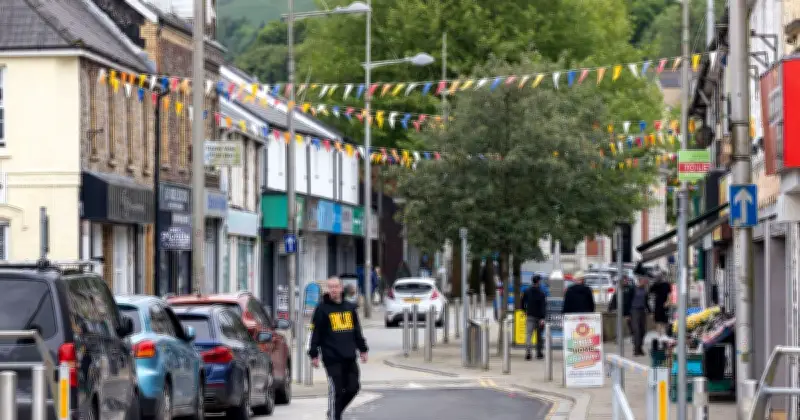
Blaenau Gwent, a former Welsh industrial hub, has been labelled the UK's Personal Independence Payment (PIP) capital after official figures showed it records the highest rate of disability benefit claims in the country. More than one in 30 residents across the district claim the benefit on mental health grounds, with 34.4% of total claimants citing psychiatric conditions. Overall, the area records 211 PIP claimants per 1,000 people – more than double the national average of 97 per 1,000.
Local traders voice frustration
Residents in the principal town of Ebbw Vale told a starkly different story on the ground despite the valley landscape drawing half a million tourists and pumping £43 million into the local economy every year. Local traders, afraid to give their names for fear of boycotts from benefit-claiming customers, said the culture of handouts has spiralled out of control.
One shop worker said: "I don't think the work ethic is there anymore. They're all out on a weekend driving around in a brand-new car paid for with their benefits, and during the week they're too ill to work." They added: "We had one customer who claimed she couldn't walk properly and used a wheelchair. When her claim was knocked back and she failed to get PIP, the next minute she was walking down the road in high heels. It makes me so angry because the system is so easy to take advantage of, and it's us taxpayers who have to foot the bill."
Another struggling shopkeeper warned the high tax burden is choking legitimate business: "There are quite a lot of people claiming who shouldn't be. I'm going to have to shut my shop soon. The rates we pay are too high and it's no longer sustainable."
Pensioners and former workers speak out
Pensioners in the town centre echoed the outrage, pointing out the growing generational divide. One retired woman in her 70s said: "I worked all my life since I was 15 until I retired, because that's what you had to do. These youngsters have it too easy. Meanwhile I've paid tax upon tax, and now after the budget I'll have to pay tax on my pension. It's like the world has gone mad."
Former steelworker and carpenter Robert Woodward, 78, said Ebbw Vale had never recovered from the closure of its steelworks in 2002. "Some people are genuine, but I think the vast majority see it as an easy way of living," he said. "I've seen one young man walk into the doctor limping with a stick, but once he was down the street the limp stopped and he could walk fine. The way to address both issues is to bring back National Service to straighten them out."
National spending and review
Nationally, the Department for Work and Pensions (DWP) spent £28.5 billion on PIP during the 2025-26 tax year. On its current trajectory, that annual bill is forecast to surge to £45 billion by 2030. Across the UK, roughly 35% of all new claimants are young adults under 35 citing anxiety or psychiatric issues. Basic PIP payments range from £76.20 to £114.60 per week, with mobility supplements of up to £80 per week.
Amid the mounting cost, ministers are reviewing the scheme, exploring options to tighten eligibility criteria, introduce means-testing alongside Universal Credit, and potentially replace cash bank transfers with targeted vouchers.
Residents cite poverty and lack of opportunity
Despite widespread frustration among working taxpayers, other residents insist the crisis stems from despair, isolation and deep-rooted poverty. Jessica George, 28, who receives PIP after escaping a violent relationship, said: "I suffer from anxiety and claim PIP, and it's very, very difficult. If it wasn't for my cousin, I wouldn't leave the house at all. I used to be a carer. If I didn't claim PIP, I wouldn't be able to buy food or pay rent. It's far less than minimum wage, but I don't feel able to work at the moment."
Jobseeker Morgan, 23, who sofa-surfs after becoming homeless, said young people face a complete lack of opportunity alongside rampant antisocial behaviour: "I've applied for 32 jobs and they've either said no or ignored me. Being homeless and unable to land a job has caused severe mental health problems. Lots of youths go around abusing locals, and that hostile environment creates anxiety for everyone." Ebbw Vale currently records 150 crimes per 1,000 residents, with antisocial behaviour accounting for more than 545 reported incidents in the past year alone.