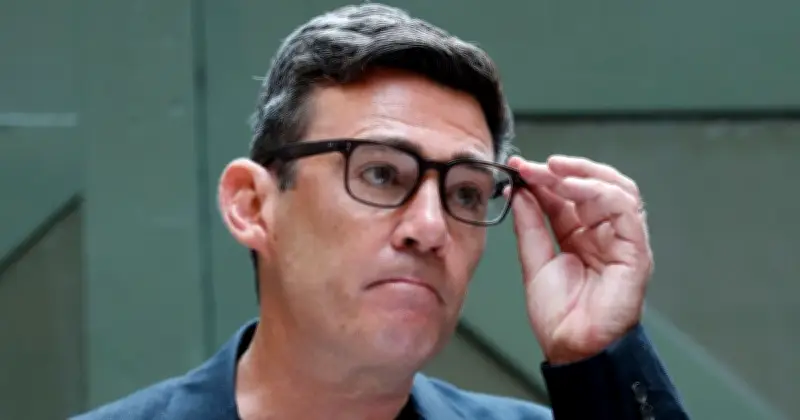
Andrew Neil has fact-checked Andy Burnham, alleging that remarks made about water and energy suggest the likely next prime minister does not know what he is talking about. The veteran journalist and broadcaster was responding to an LBC interview Mr Burnham gave on Thursday, July 2.
Burnham's Interview and Neil's Response
In a wide-ranging discussion with presenter Andrew Marr, the MP for Makerfield talked about the cost of living, water, and energy bills. He told Marr that Brits and businesses are paying too much for basics, adding this is 'certainly true' of energy. Mr Burnham added: 'What I would do, if successful, is lay out a plan for more public control over water, energy, transport so that over the period we can get those bills down, fares down and give people, give businesses, breathing space. Britain needs more breathing space, Andrew, I heard that on doorstep after doorstep in Makerfield. We need to be serious about putting more money back into people's pockets.'
In response, Mr Neil posted on social media: 'I’m starting to worry he doesn’t really know what he’s talking about. And has no time to learn. The price of water and electricity is already controlled by the state.'

Existing State Controls on Water and Energy
Mr Neil is not the first to wonder what Mr Burnham means when he says there should be more public control of Britain's water and energy sectors, which are already subject to far-reaching state controls. Currently, water and energy prices are set by the regulators, Ofwat and Ofgem respectively. Ofwat sets the prices water companies charge customers in England and Wales as part of a five-year process, known as the price review. This sees the regulator impose wholesale price limits for each water company as well as targets on fixing leaks, cutting pollution, and reducing water consumption. When it decides prices, Ofwat is meant to balance lower prices for customers with the need for water companies to meet their responsibilities towards the environment and cover the cost of their operations.
Prices water companies charge customers in Scotland and Northern Ireland are set centrally through the Strategic Review of Charges and the Northern Ireland Price Review. The Government is already looking to overhaul how water is regulated in its Clean Water Bill, which includes plans to crack down on sewage spills, increase accountability for water company bosses, and set up a 'super regulator' to replace Ofwat and the Environment Agency with a single regulatory body by 2029.
Burnham's Stance on Public Ownership
Public ownership of water companies was identified as an option by Mr Burnham while on the campaign trail in Makerfield. He told the Guardian newspaper that debt-laden Thames Water should be nationalised and state ownership of water companies was 'absolutely an option'. Mr Burnham said the water industry is run mainly in the private rather than public interest, with shareholders never losing and bill payers never winning. However, the Government under Sir Keir Starmer argued that nationalising the sector would cost too much.
As for energy, prices for people in England, Scotland, and Wales are capped by Ofgem. It puts a limit on the amount energy providers can charge per unit of gas or electricity. Reviewed every three months, the current price cap, spanning July 1 to September 30, is £1,862 per year, or roughly £155 per month.
Government Actions and Unanswered Questions
Energy Secretary Ed Miliband recently completed a review of the role of Ofgem, which is already answerable to parliament. A report produced by the Department for Energy Security and Net Zero includes pledges to modernise Ofgem and strengthen consumer protection. Mr Burnham has yet to confirm what he means by greater public control or how his own ideas differ from existing government proposals aimed at benefiting households.