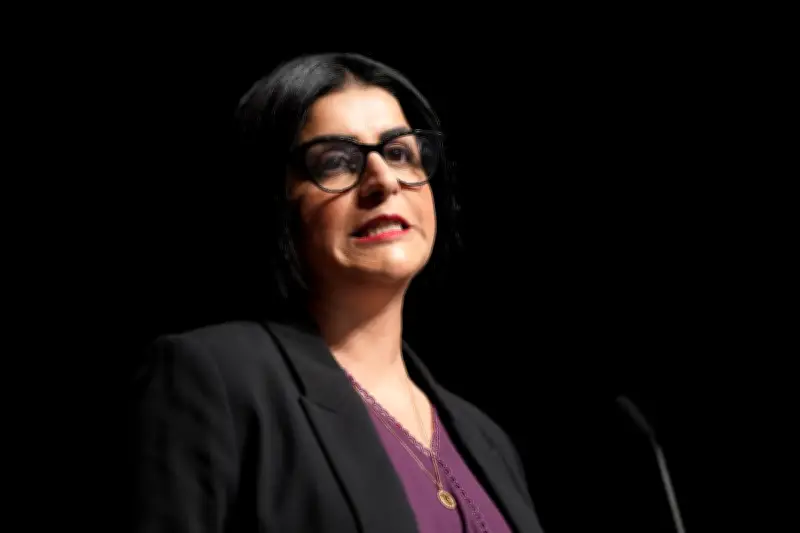
Home Secretary Shabana Mahmood will launch a new police impartiality standard as she warns that perceptions of “two-tier policing” are eroding public trust in the criminal justice system.
In a speech to chief constables and police and crime commissioners on Wednesday, she will say the Government must tackle the “corrosive and growing perception” that different groups are treated differently by officers.
New impartiality standard
The new standard, to be developed by the College of Policing, will bring together guidance on impartiality and is intended to give both officers and the public greater confidence that people will be treated equally regardless of race, religion or other characteristics.
The Home Secretary is expected to say: “We must tackle head-on the corrosive and growing perception” of two-tier policing in this country.
“Now let me be clear: I know the vast majority of officers police impartially and that policing without fear or favour is their creed.
“But there have been examples of differential treatment and they have harmed policing, allowing people – often motivated actors – to whip up the idea that there is two-tier policing in this country.”
As part of the new standard, officers will be given guidance on scenarios such as wearing symbols on badges and lanyards. They will also be advised how to behave at community-led events.
Black officers and course correction
In the same speech, Ms Mahmood will lament the low levels of black officers in police forces. She will tell the National Police Chiefs' Council (NPCC) that it is “shameful”, 33 years after the murder of black teenager Stephen Lawrence, that the proportion of black officers remains virtually unchanged.
The minister will also warn against “misguided attempts at course correction” that lead to “differential treatment”. She will argue that some approaches intended to promote equality, such as the former police anti-racism commitment, have risked undermining confidence in impartial policing.
“We must also be wary of misguided attempts at course correction, where the pursuit of equality leads instead to differential treatment,” she is set to say.
“To the public, it was patently absurd to tell police officers that fair policing does not mean treating everyone the same.”
A More in Common poll found earlier this year that a third of Britons believe police treat people from ethnic minority backgrounds more favourably than white people. The poll noted this marks a doubling in the last two years.
Political neutrality and leadership
Ms Mahmood will urge officers to avoid becoming drawn into political activism. She will say: “Community engagement should mean going to a residents' association meeting and discussing local issues.
“It can be over tea and biscuits, or tea and samosas, but it doesn't mean engaging with activist groups and campaigners who are pushing an agenda and not representing a community.
“Leave the politics to the politicians – and we will leave the policing to you.”
The Home Secretary will also set out her response to the Police Leadership Commission, led by former Labour and Tory ministers. She will say 200 recruits will be put on a five-to-10-year path to superintendent. The fast stream will be open to serving officers, police staff and external entrants, whether or not they hold a degree.
Ms Mahmood will also set out plans to fast-track talented recruits – including from outside policing – to senior ranks to address sometimes “inadequate” leadership. The move is seen as an attempt to improve standards at the top of forces following findings in July that eight serving or former chief constables were under investigation for misconduct.
Ms Mahmood will say: “The conclusions of the Police Leadership Commission were candid and eye-opening. Police leadership is inconsistent and at times, it is frankly inadequate.
“This is the consequence of an earlier failure to invest in the development of future leaders.”
The speech to police chiefs comes amid the continuing debate over two-tier policing and the low numbers of black officers in forces across the country.