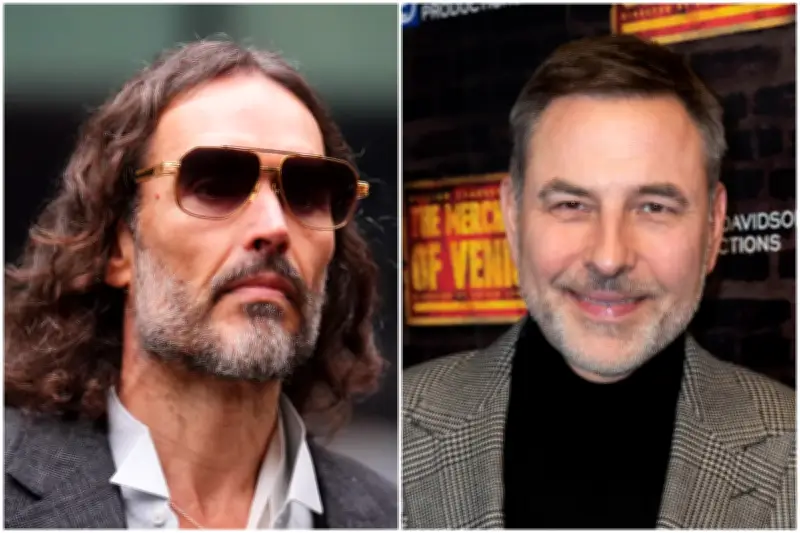
The government is set to force TV chiefs to improve safeguarding measures in the wake of the David Walliams and Russell Brand scandals.
Brand, 51, was found guilty of one count of rape and three counts of sexual assault last week, and was sentenced to 10 years and six months in jail at Southwark Crown Court.
Walliams, 55, has been accused by several women of sexual misconduct and abusing his position.
Allegations and Denials
Following allegations made as a part of a joint three-year investigation by the Guardian and ITV News, Walliams has denied claims that he was a “sexual predator”, and that he groomed schoolgirls and lured young women to both his dressing rooms and north London home.
TV bosses have been accused of enabling both men, with each said to have become so powerful that behaviour went unchallenged.
Downing Street said that the Walliams allegations were “deeply troubling”, and said there was “a pattern of behaviour that needs to change”.
Government Intervention
BBC Newsnight has now reported that Culture Secretary Lisa Nandy will tell a meeting of industry leaders next week that she will issue a legal crackdown in order to protect whistleblowers if their response to recent allegations is not robust enough.
Intervention could include forcing participation in the Creative Industries Independent Standards Authority (CIISA), which is currently voluntary.
Ms Nandy will urge industry leaders that they need to take responsibility and tackle issues of safeguarding on their own, but that the government might have to intervene.
She said she would "draw a line" in the sand, adding: “A decade and a half on from the revelations about Jimmy Savile, and ten years on from the MeToo movement, we must finally take meaningful steps to end abuse and harassment.”
Calls for Mandatory Measures
Women and Equalities Minister Bridget Phillipson said the Government should restrict the use of NDAs, telling Sky News that there was "scope to go further" to ensure the legal system was not "abused in order to silence women".
She said: "We cannot have a system where rich and powerful individuals, rich and powerful men, are able to silence women and stop things coming to light."
Can't Buy My Silence founder Zelda Perkins told BBC Newsnight that it should be "mandatory" for sectors to join CIISA.
She said: "There are no other regulatory bodies that are voluntary to join."
"It's still very wild west in the creative industries, people behave how they want," she added.
Comedian Lucy Beaumont, one of the investigation's whistleblowers, said a young TV worker told her that his job was to take young girls to Walliams' dressing room.
She said that one of Walliams' accusers was "in a really bad way", and that Walliams' lawyers had told her to sign a NDA to secure her silence, which stopped her from telling her family or a therapist.
An ITV spokesperson said: "We are completely committed at ITV to creating an environment where everyone is treated with respect."
Walliams has said he was "not a sexual predator" and had not "broken the law".
He said he "realised that at times I behaved thoughtlessly towards other people I had casual sexual relationships with" and said he regretted not always taking "people's feelings properly into account".