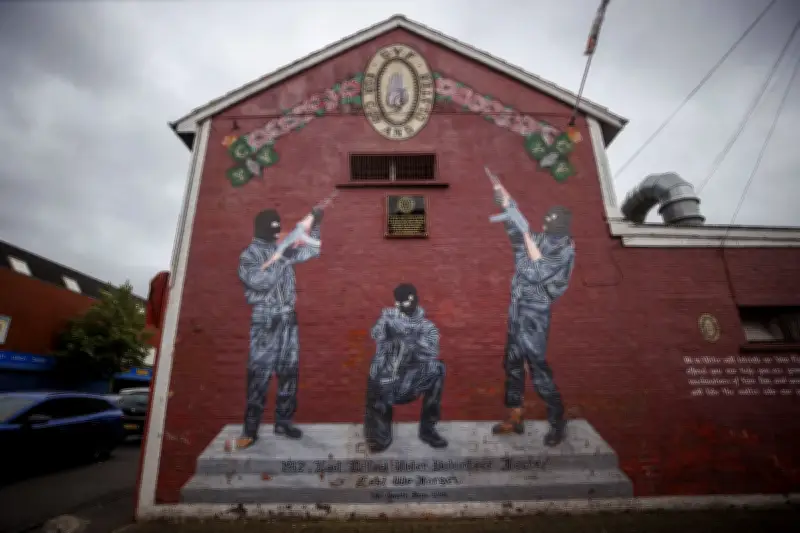
A new report has recommended that the UK and Irish governments establish a formal transition mechanism for paramilitary groups in Northern Ireland. The Independent Report On Paramilitary Group Transition To Disbandment found there is “sufficient merit” in such a process provided certain conditions are met, including no financial rewards for paramilitaries.
Report findings and engagement
The two governments last year appointed Fleur Ravensbergen to explore the merits of talks with paramilitary groups about disbandment. Ms Ravensbergen has taken part in a year-long scoping and engagement exercise, which included meeting representatives of loyalist and republican organisations. The initiative was criticised at the time by Northern Ireland’s Justice Minister Naomi Long as inappropriate.
The report said that manifestations of paramilitarism have changed but the “wider infrastructure associated with paramilitarism has proven more persistent than many had anticipated”. It stated: “Stakeholders described the increasing prominence of drug-related crime, extortion, illegal money-lending, exploitation and other forms of criminal activity in areas where a paramilitary presence remains.”
Threat and community impact
It said there is a “continuing national security threat from some dissident republican paramilitary groups which requires significant policing and security resources”. The report noted: “The nature, extent and impact of paramilitary influence vary considerably between paramilitary groups, communities and geographical areas. However, it is clear that residual paramilitary structures continue to cause harm in some communities.”
Ms Ravensbergen said her report was “not just about dealing with remnants of the past but also about reducing future risks”. She said: “Many stakeholders acknowledged that although good work has been done and progress made, something more is needed to advance progress towards ending paramilitarism. On the whole, I found that the majority were willing for the governments to explore something new, including direct engagement with paramilitary groups via a formal process, provided certain conditions were met.”
Recommendations and next steps
The report said the conditions were credible monitoring and verification of progress, a “robust” law enforcement and criminal justice response, and no financial rewards for paramilitary groups. Ms Ravensbergen added: “I have concluded that there is sufficient merit in and support for a formal process of paramilitary group transition. I found moderate but sufficient support for a formal process among stakeholders, significant willingness to engage among loyalist and republican paramilitary groups, and broad agreement across stakeholders regarding the outcomes that a transition process should seek to achieve.”
She noted: “In my engagements with paramilitary groups, there was limited support for the term ‘disbandment’ as the endpoint of a transition process. However, objections to disbandment appeared to be less about what transition should achieve and more about the wording.” The author said agreeing the transition process was more important than terminology.
Ms Ravensbergen said: “I believe that the risks of the persistence of paramilitary structures, continued drift and unmanaged fragmentation outweigh the risks associated with attempting a structured and time-bound transition process. Inaction is not a neutral option. My consultations suggest that a window of opportunity exists to pursue further progress, but that this may weaken over time. For these reasons, I recommend the establishment of an independent, time-bound transition mechanism without delay. The UK government and the government of Ireland should work together to develop this mechanism. Its purpose would be to provide a structured and accountable framework through which progress towards paramilitary group transition can be facilitated, monitored and verified.”
The report said the mechanism would have a number of core functions – an authorised point of contact, developing a common transition framework, and monitoring, verifying and reporting. Ms Ravensbergen also recommended strengthening neighbourhood policing, so that officers can maintain a “sustained focus on their core role within the communities they serve”. The report also calls for targeted and sustained initiatives aimed at benefiting young people in communities affected by paramilitary harm.
Northern Ireland Secretary Sir Chris Bryant said: “The report contains a number of recommendations, which I will take time to carefully consider and discuss with the Irish Government, the Northern Ireland Executive, community and policing partners. The main recommendation, detailing a possible mechanism for transition of paramilitary groups, is clear that any process must be complementary to existing efforts and accompanied by a robust criminal justice response. It is evident from the report that the implementation of any process will face challenges and will need the support from across the political community in Northern Ireland.”
He added: “Ending paramilitarism once and for all is essential to improving the lives of people in communities across Northern Ireland where these groups still hold influence. The UK Government remains resolute that there is never any justification for violence or criminality. Together with a strong criminal justice response, those communities who are held back by the harms perpetrated by paramilitary groups must be prioritised, and we will continue to support the Northern Ireland Executive in their efforts in this space.”