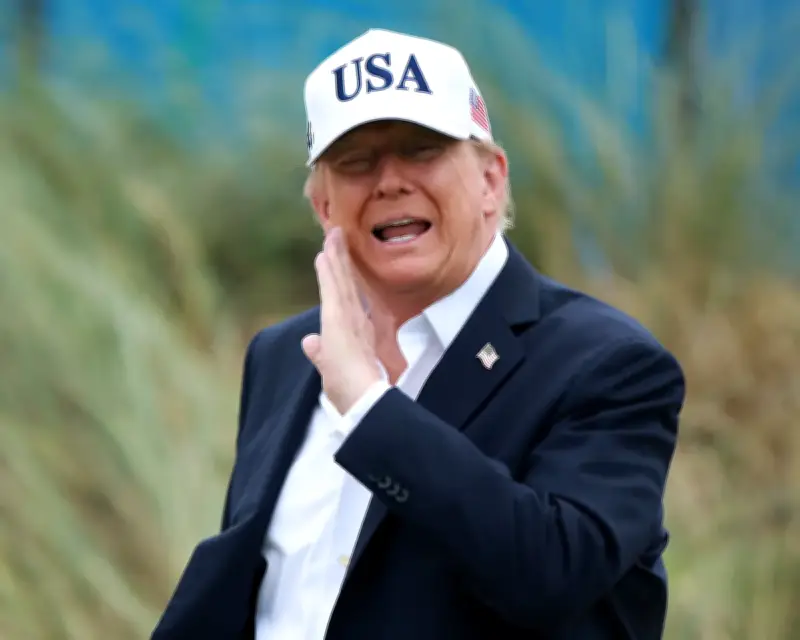
Donald Trump has reiterated his support for Irish unification and brushed off Andy Burnham's opposition to a referendum. "Everybody says that. Then things happen," the US president said on Sunday of the British prime minister's response.
He reaffirmed his enthusiasm for the unification of Northern Ireland and the Republic of Ireland. "It seems to me that one of the naturals of all time is to put them together."
Controversial comments
Trump caused consternation across both sides of the Irish Sea on Saturday when, at the start of a two-day visit to Ireland, he said he would "love" to see a united Ireland and "it may as well happen now".

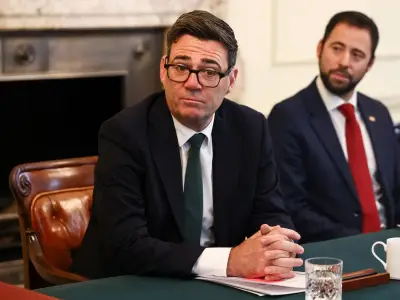
Downing Street said the prime minister still believed there was not the required support for unification to trigger a referendum, as set out in the 1998 Good Friday peace agreement. Two weeks ago, Burnham said a referendum was "off the table".
Irish nationalists welcomed Trump's remarks while the Conservative party and Northern Irish unionists condemned them.
Reaction from Doonbeg
Speaking on Sunday from Doonbeg, his county Clare golf resort that is hosting the Irish Open, Trump expressed delight with the controversy. "Many people agree. I made what I considered to be a fairly routine comment, I have had so much support on that."
Asked about independence for Scotland, he reserved opinion. "I won't talk about Scotland yet, I will save that."
Trump's unexpected intervention in the UK's constitutional future came on the eve of a meeting of the leaders of Plaid Cymru, the Scottish National Party and Sinn Féin in Cardiff on Monday. They are to discuss ways to strengthen cooperation for constitutional change.
Angela Rayner, the UK's communities secretary, played down the president's remarks. "Donald Trump is Donald Trump, and the president will say and speak his mind as he sees it," she told Sky News. The government was serious about the Good Friday agreement and would "continue on that path", she said.
Political fallout
Trump's comments were awkward for the Irish government, which prefers to discuss cross-border initiatives rather than unification. Last month the taoiseach, Micheál Martin, said that he "goes bananas" when his Fianna Fáil party colleagues call for a border poll.
Sinn Féin figures welcomed Trump's support for Irish unification. "They reflect the broad North American sentiment towards Irish unity and particularly the Irish diaspora towards Irish reunification," said Gerry Adams.
The party's former leader accused successive Irish governments of being "incredibly shortsighted" and failing to plan for unification. "There is no excuse for this."
Trump's comments also proved awkward for Northern Ireland unionists who have supported the president on other topics.
"Everyone is allowed a personal opinion even when it's wrong," said Ian Paisley Jr, a former Democratic Unionist party MP. "The political, cultural and economic reality is that Northern Ireland and its people are British and wish to remain so," he said.