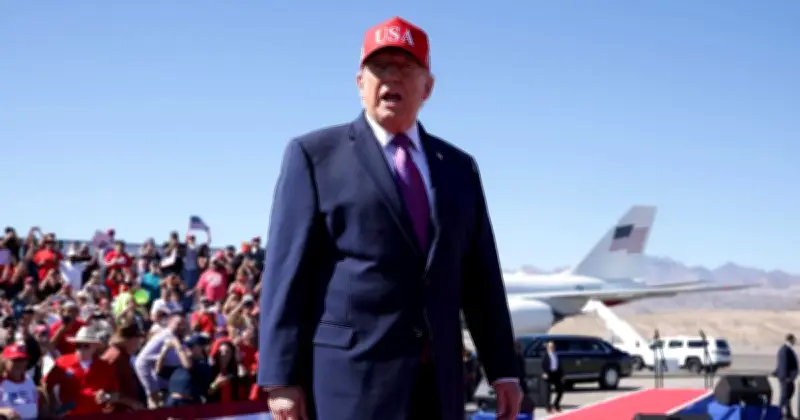
President Donald Trump conceded during a rally on Monday that he may have gone "too far" in eliminating Iran's leadership when he launched the nearly eight-month-long conflict against the Islamic Republic back in February. Removing the officials, he acknowledged, made it considerably harder to identify figures with whom the US could potentially negotiate as tensions spiralled.
Rally remarks in Youngstown
"We might have gone too far with the leaders because we don't know who the hell we're dealing with anymore," Trump told supporters gathered at a rally in Youngstown, Ohio.
"Nobody wants to be the president of Iran," he added, noting that several prospective candidates have been reluctant to take on the role.
Iran's leadership and the conflict
Iran's current president is Masoud Pezeshkian, who has held the position since July 2024 and is due to stand for re-election in 2028. Much like the American system, Iran's president is elected every four years and is restricted to two terms in office.
It remains unclear whether Trump intended to say "president" or whether he was in fact referring to a different position within the Islamic Republic's government.
During the initial strikes on 28 February, the US and Israel killed Supreme Leader Ayatollah Ali Khamenei and wounded his son, the new supreme leader, Mojtaba Khamenei.
Diplomatic obstacles and naval claims
The president went on to reaffirm his position that Iran is "the No. 1 state sponsor of terror" and that it must under no circumstances be permitted to acquire a nuclear weapon. He also repeated his assertion that Iran's entire navy is "at the bottom of the sea" while acknowledging the diplomatic obstacles he and his administration have encountered in their efforts to negotiate a deal with the Islamic Republic and halt the conflict he himself initiated.
Trump insisted that all 159 of Iran's naval vessels are "resting beautifully in the bottom of the sea."
The president's remarks about Iran's leadership mirror statements made by Vice President JD Vance earlier this month. The VP told Reuters that Washington remains unclear about how decisions are being taken within Iran's government and what the composition of its leadership appears to be.
He emphasised that any agreement between Washington and Tehran would demand the Islamic Republic make substantial reductions to its nuclear enrichment capability.