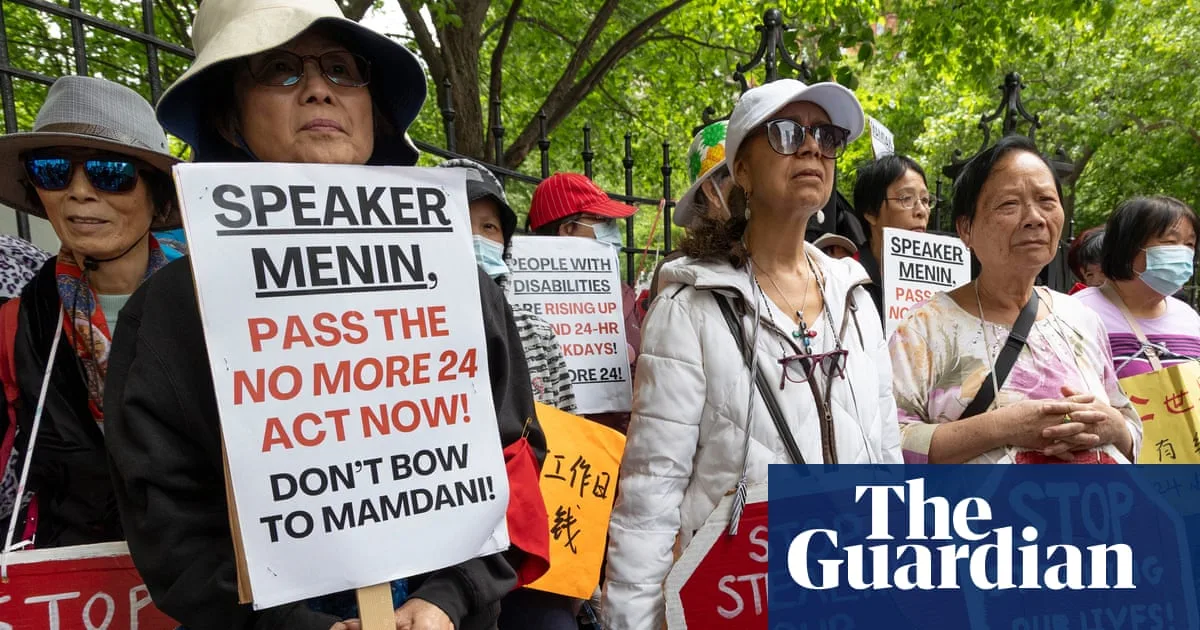
Home care workers in New York City are preparing for another hunger strike after the city council failed to vote on legislation that would end mandatory 24-hour shifts, a practice they describe as a labor rights violation and a public health crisis. Last month, 15 home health workers camped outside city hall for six days, refusing food until they secured a promise that the council would vote on the No More 24 Act. However, a month later, no vote has occurred, prompting workers to announce a renewed hunger strike on Friday.
Background of the Struggle
Since 2015, the Ain't I a Woman?! coalition, comprising home care aides, youth groups, and feminist organizations, has been fighting against poor working conditions through hunger strikes, lawsuits, and legislative efforts. Under current New York labor law, agencies assigning workers to 24-hour live-in shifts are required to pay only for 13 hours, with the remaining 11 hours classified as designated sleep and meal time. In reality, most aides provide care around the clock.
The No More 24 Act, introduced in 2022 and stuck in negotiations, would mandate splitting overnight home care assignments into two 12-hour shifts and cap weekly hours at 56. Agencies retaliating against workers who refuse 24-hour shifts would face significant municipal fines. Zishun Ning, an organizer with the Chinese Staff and Workers Association, expressed confidence that the movement is growing and will increase pressure for change.
Economic and Workforce Context
Home care is one of the fastest-growing sectors in the US, driven by an aging population. The Bureau of Labor Statistics projects over 70,000 new jobs in home health and personal care by 2033. In New York alone, the industry is worth $13 billion. Yet the workforce is highly vulnerable, primarily consisting of immigrants and women of color. Two-thirds of New York's home health care workers are immigrants, relying on these jobs for income and health coverage.
City Council Member Christopher Marte, who introduced the bill, noted that this is the only industry where people work 24 hours but receive only 13 hours of pay, often for 23 consecutive days. Workers face threats of job loss from agencies, according to Marte.
Personal Stories of Hardship
Lai Yee Chan, 71, entered home care after the garment industry collapsed post-9/11. By 2007, her agency, the Chinese-American Planning Council (CPC), pushed her into mandatory 24-hour shifts. Patients requiring 24-hour care cannot be left alone—they have advanced dementia, severe disabilities, or terminal conditions. Aides must turn bed-bound patients every two hours to prevent bedsores, assist with bathroom needs, administer medications, and soothe disoriented patients, leaving no time for sleep.
Chan's agency provided health insurance through 1199SEIU but required her to work at least 130 hours per month to cover her family of five. Her husband quit his job to care for their children while she worked live-in shifts. Despite the essential nature of the work, home care remains one of the lowest-paying fields, with a median annual wage of $34,900 as of May 2024.
Wage Theft and Legal Battles
Workers and advocates began filing wage-theft lawsuits as early as 2011, claiming they should be paid for 24-hour shifts. A 2015 Department of Labor rule extended minimum wage and overtime protections to home care workers, but agencies found loopholes. Workers are pressured to skip breaks, and some agencies pay flat daily rates regardless of hours worked. Chan received a check labeled “overtime” for $200, covering roughly 6,000 hours worked between 2007 and 2013, a clear discrepancy. She believes the agency exploited her lack of English proficiency.
Chan joined the Chinese Staff and Workers’ Association and began organizing. For two years, every Wednesday morning, coalition members—many in their 60s and 70s—gather outside CPC's glass tower, holding signs reading “Stop killing us,” to protest alleged wage theft of $90 million. CPC did not respond to requests for comment.
Political Obstacles
The No More 24 Act has only 16 co-sponsors on the city council, 10 short of the 26 needed for passage. It faces opposition from the Legal Aid Society and the Center for Independence of the Disabled New York, which argue that splitting shifts would double the required number of workers per household, and the supply is insufficient. After last month's hunger strike, the coalition secured a commitment from Council Speaker Julie Menin to bring the updated bill to a vote in May, though her office denies an absolute guarantee. A council spokesperson stated they look forward to phasing out the 24-hour workday.
Advocates claim Governor Kathy Hochul has pressured Menin to block the bill, threatening to withhold Medicaid funding. Hochul's office declined to comment. Mayor Zohran Mamdani, who campaigned on ending 24-hour shifts and co-sponsored the bill as an assemblyman, has been absent since taking office, sending a representative who said the mayor must consider those who want to work 24-hour shifts. Workers felt angered and disrespected.
Health Impacts and Future Action
Caixiong Liu, 69, who spent 18 years in home care, suffers from chronic back pain, insomnia, and memory loss due to years without uninterrupted sleep. She and fellow workers plan to strike again, setting up folding chairs, signs, and resuming fasting. Liu stated, “I don’t want the next generation of workers to go through what I did.”
The workers' determination underscores the urgent need for reform in an industry that, despite its growth, continues to exploit its most vulnerable employees. The upcoming hunger strike aims to pressure lawmakers to act on the No More 24 Act and end what workers call a “quiet public health crisis.”