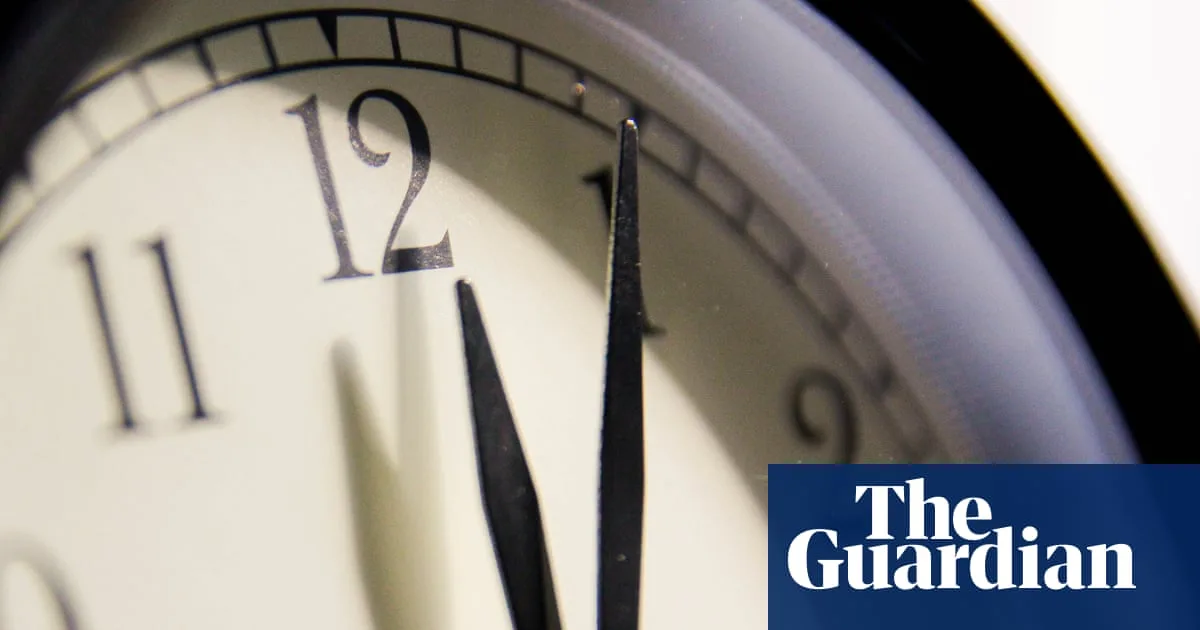
House Republicans Push to Make Daylight Saving Time Permanent
GOP Advances Bill to End Clock Changes

House Republicans on the Energy and Commerce Committee are reportedly planning to propose legislation to make daylight saving time (DST) permanent, which would end the practice of changing clocks twice a year. Lawmakers are once again pushing the Sunshine Protection Act, a measure that would extend DST—typically observed from March to November—year-round, as first reported by the Washington Post.

Renewed Push After Presidential Support

For years, bipartisan lawmakers have sought to make DST permanent to give Americans an extra hour of evening sunlight, a widely preferred practice according to an AP/NORC poll. Although previous efforts stalled, President Donald Trump revitalized momentum last year. In April, he wrote on Truth Social: "The House and Senate should push hard for more Daylight at the end of a day. Very popular and, most importantly, no more changing of the clocks, a big inconvenience and, for our government, A VERY COSTLY EVENT!!!"

Committee Hearing and Evidence

Matt VanHyfte, director of communications for the committee, stated to the Washington Post: "Addressing Daylight Saving Time has been a priority for a number of members for a while now. The Committee held a hearing last November and heard testimony that an extra hour of sun at the end of the day boosts economic activity, and there is evidence that changing time is a highway safety concern, with a surge of traffic fatalities occurring the week following time changes. The Committee led legislation that extended DST in 2007, and is examining ways to further address it now."

Wide Pickt banner — collaborative shopping lists app for Telegram, phone mockup with grocery list

Legislative Path Forward

The committee reportedly plans to attach the Sunshine Protection Act to a larger transportation-related legislative package. If all Republicans agree, it could advance to the House floor as early as this week, according to the Washington Post.

Opposition Concerns

While most Americans prefer DST for extra evening sunlight during warmer months, year-round DST would mean darker mornings in winter. Some lawmakers strongly oppose the change, citing disproportionate impacts on northern states and the Midwest. Senator Tom Cotton remarked on the House floor in October: "For many Arkansans, permanent Daylight Savings Time would mean the sun wouldn't rise until after 8:00 or even 8:30 a.m. during the dead of winter. Americans in northern states and on the western side of time zones would be even worse off. For instance, the sun wouldn't rise until nearly 9:00 o'clock during winter in Seattle. In Grand Rapids, the sun would rise as late as 9:15 a.m., and in Williston, North Dakota, they would not see the sun 'till almost 9:45 a.m."

Historical Context

The Sunshine Protection Act came closest to passage in 2022, when then-Senator Marco Rubio introduced it. It passed the Senate by unanimous consent but stalled in the House. Reintroduced in both chambers in 2023, it failed to gain significant traction.

Pickt after-article banner — collaborative shopping lists app with family illustration