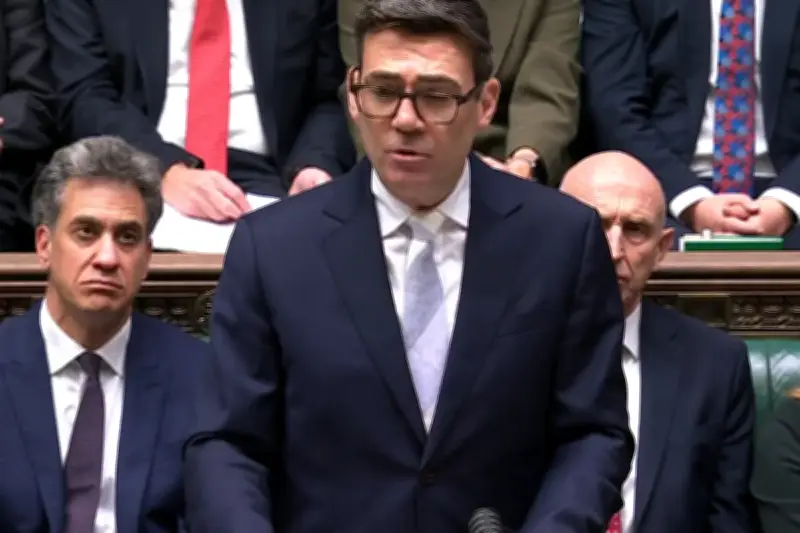
Andy Burnham has reignited the Brexit debate, insisting the UK's relationship with Europe must be revisited while adding it is "inconceivable" that Russia did not attempt to interfere in the 2016 referendum campaign.
The Prime Minister used a Commons statement on Monday to argue that Britain's post-Brexit arrangements are failing to deliver enough economic growth and that next month's UK-EU summit should mark the start of a deeper partnership with Brussels.
Political Storm Over Russia Claims
His intervention came amid a fierce political row over comments made on the Rest Is Politics podcast, where he said he had received a "clear answer" that Russia had interfered in the Brexit referendum.
The dual intervention has thrust Brexit back into the political spotlight at a time when growing numbers of London politicians, business leaders and voters are questioning whether the current settlement is working for the capital.
Mr Burnham told MPs that "sticking with the status quo is not good enough for Britain" and said it would be a "dereliction of duty" not to pursue closer co-operation with the EU.
"If we are serious about promoting growth, controlling immigration, upholding our values and security, it is a conversation we must have," he said.
UK-EU Summit Plans
The Prime Minister is hoping to secure a series of agreements at a UK-EU summit in Brussels next month, including a food and drink deal, greater co-operation on emissions trading and a youth mobility scheme.
Ministers believe the package could eventually provide a significant boost to the economy, while supporters argue the measures would begin to ease some of the frictions created by Brexit.
The debate has particular resonance in London, which voted overwhelmingly to remain in the European Union and has consistently recorded some of the strongest pro-European sentiment in the country.
The capital's financial sector, universities, tech businesses and creative industries have all raised concerns in recent years about barriers to trade, recruitment challenges and restrictions on working across Europe.
A youth mobility agreement would be especially significant for London employers in hospitality, culture and technology, sectors that have struggled with labour shortages since freedom of movement ended.
Reaction and Clarification
Mr Burnham's comments are also likely to be welcomed by City Hall, where Sir Sadiq Khan has repeatedly argued that Brexit has damaged London's economy and called for an open debate about Britain's future relationship with Europe.
But the Prime Minister's push for a closer European partnership risks being overshadowed by the row over his remarks on Russia.
Speaking to the podcast, Mr Burnham said he had asked officials upon entering Downing Street whether Moscow had interfered in the Brexit vote.
"I've had the clear answer that yes, there was," he said.
Downing Street has since sought to clarify that the Government is not questioning the legitimacy of the referendum result and has not claimed Russian activity changed the outcome.
In the Commons, Mr Burnham stopped short of presenting new evidence to support his claims but said it was reasonable to conclude Moscow had attempted some form of interference.
"It is a matter of record that Russian actors sought to interfere in the 2019 general election and we think it is inconceivable that this was the first time," he told MPs.
Conservative leader Kemi Badenoch accused him of implying the referendum result was illegitimate.
She pointed to comments made by former MI5 chief Andrew Parker in 2018, when he said he was not aware of evidence suggesting foreign interference had determined the referendum outcome.
Former prime minister Boris Johnson also entered the dispute, saying he had received assurances from the security services that there was "no evidence of any successful interference" in the Brexit vote.
The clash illustrates the political difficulties facing Mr Burnham as he seeks to reopen Britain's conversation about Europe.
While ministers insist they are not seeking to reverse Brexit or return to the EU, opponents argue that each new agreement risks drawing Britain closer to the bloc in practice.
Mr Burnham rejected that criticism, saying any future changes would be made only with public backing.
"At every stage, the British public will be the boss," he told MPs.