President Donald Trump has signed an executive order to rename Lake Ontario as “Lake America” in the United States, escalating his trade war with Canada. The order directs the Interior Department to update the lake’s name in the US geographic naming service.
Trump signed the order while sitting at the Resolute Desk in the Oval Office, with a large sign behind him showing a map of the Great Lakes. Over Lake Ontario, in big red letters, the map read “Lake America.” A second map next to the president carried the words, “Making The Great Lakes Even Greater.”
Trade war backdrop
The name change has been floated in recent days as the US announced it was imposing 50% tariffs on $20 billion worth of Canadian goods over the weekend after talks between the countries broke down. Canada responded this week by imposing retaliatory tariffs on $20 billion worth of American goods, including steel, dairy products, appliances and farm equipment.

Trump has been needling America’s neighbour since returning to the White House last year, suggesting the ally should instead be absorbed as the 51st state.
Reactions from Canadian and US officials
Canadian Prime Minister Mark Carney rejected the move, invoking the lake’s indigenous roots and noting that the name predates both Canadian Confederation and the US Declaration of Independence. “Canadians also know that naming reality means calling it Lake Ontario – then, now and always,” he wrote.
Nova Scotia premier Tim Houston dismissed the move in a social media post, writing: “We’re into some real foolishness now. It’s Lake Ontario, buddy.” New York governor Kathy Hochul wrote on X: “New York won’t be calling it that.”
Ontario premier Doug Ford brushed aside the prospect as “a lot of rhetoric.”
Name origins and legal scope
The name Lake Ontario comes from the Huron Indigenous people’s word “oniatari:io,” meaning “lake of shining waters.” The province of Ontario, founded in 1867, took its name from the lake.
There is no single international body that determines names of international bodies of water, and Trump has wide latitude over how the US government recognises geographic places.
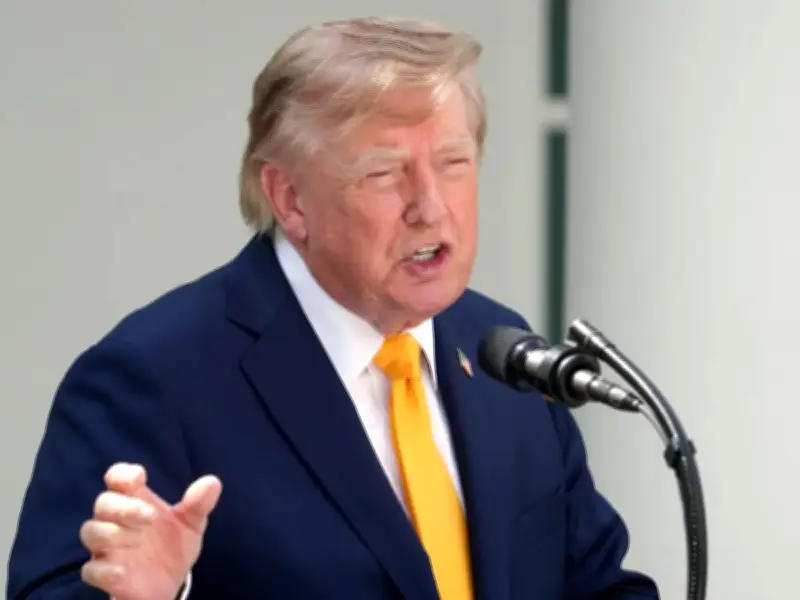
Trump said his action was not meant to send any particular geopolitical message, but added: “Canada’s been ripping us off for a long time” on trade and military issues. “They wanted to be treated like a state and they’re not a state,” he said. “We just can’t do that anymore.”
“We love the people of Canada,” Trump added. “I don’t think their representatives do, an appropriate job. Maybe they’ll change. I really don’t know. It doesn’t make much difference.”
Similar to Gulf of Mexico renaming
The move is reminiscent of his action last year to rename the Gulf of Mexico as the “Gulf of America.” Trump scribbled his name with a Sharpie pen on the executive order, then held it up for the cameras, saying: “And we filed all the necessary papers, documents, everything else.”
“We’ve notified all of the various people that we have to notify. So, we’ve done everything that you have to do,” he said. “And this is official, effective immediately.”
The executive order shows the changes are supposed to be made within 30 days. Trump also suggested his push to rename bodies of water may not be finished. “So, if you think about it, we have a gulf and we have a lake. Now, all we need is an ocean,” he said. “So maybe we’ll have to change the name of the Atlantic and/or the Pacific. Maybe we’ll change them.”