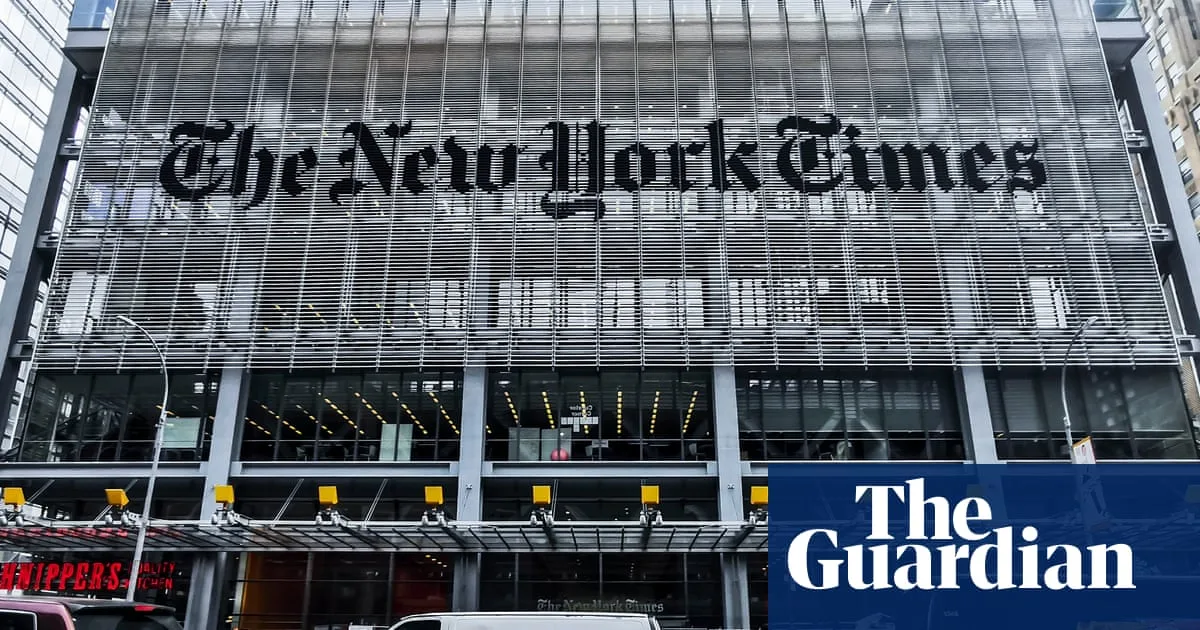
New York Times Accuses Pentagon of Defying Court Order on Press Access
NY Times Accuses Pentagon of Defying Court Press Order

New York Times Accuses Pentagon of Defying Judge's Press Access Order

The New York Times has launched a sharp accusation against the Pentagon, claiming it is deliberately disobeying a federal judge's ruling that aimed to restore press access to the building. This controversy stems from a legal battle over restrictive agreements that journalists were previously forced to sign or risk losing their credentials.

Court Ruling and Pentagon Response

Last Friday, Judge Paul Friedman issued an injunction that overturned much of the language in the Pentagon's "media in-brief" document, which had prompted nearly all journalists to surrender their press badges in protest. The judge specifically ordered that seven journalists from the Times have their badges reinstated. However, instead of complying, Pentagon chief spokesperson Sean Parnell announced on Monday night a new interim policy.

This policy includes permanently closing the designated workspace for journalists known as "correspondents' corridor" and relocating press facilities to an annexed building outside the Pentagon. Additionally, it mandates that journalists must be escorted into the building, a requirement that has never been imposed before in the history of Pentagon press relations.

Wide Pickt banner — collaborative shopping lists app for Telegram, phone mockup with grocery list

Legal Challenges and Media Backlash

In a strongly worded statement, lawyers for the Times argued that the Pentagon's actions constitute a contemptuous defiance of the court's order, both in letter and spirit. They highlighted that the revised policy retains provisions struck down by the judge, such as rules governing when reporters can offer anonymity to sources and barriers to entering the building without an escort.

The Pentagon Press Association, representing journalists covering the defense department, has also condemned the move, calling it a clear violation of the ruling. The association is consulting with legal counsel on potential next steps, emphasizing the critical need for press freedoms to inform the public during pivotal times.

Broader Implications for Journalism

While the lawsuit was filed by the Times, many other news organizations, including the Guardian and CNN, had hoped the ruling would allow them to regain access to the Pentagon. Last October, dozens of outlets chose to return their press passes rather than agree to strict new rules on information solicitation from defense employees.

Seth Stern, director of advocacy for the Freedom of the Press Foundation, supported the Times' challenge, stating that the revised policy fails to address core constitutional violations and merely adds superficial changes. He warned that it subjects journalists to punishment for performing their duties, undermining independent newsgathering.

Future Legal Proceedings

It is now likely that Judge Friedman will need to assess whether the Pentagon's new policies align with his initial ruling. Barbara Starr, a former CNN Pentagon correspondent, noted that while reporters undergo FBI background checks for credentials, the defense department retains authority to revoke them based on subjective reasons, such as disliking coverage.

Starr also expressed concern over the loss of physical access provided by "correspondents' corridor," which allowed journalists to quickly obtain updates from military officials. She argued that working from a remote building hampers this essential function, despite Parnell's assurance that the new press room would still be on Pentagon grounds.

In the meantime, most journalists from major news organizations remain without guaranteed access, though some have been permitted to attend briefings on Iran conducted by Secretary Pete Hegseth, albeit from the back of the room. This has led to a predominance of questions from conservative journalists and pro-Maga influencers, raising further questions about media diversity and transparency in Pentagon communications.

Pickt after-article banner — collaborative shopping lists app with family illustration




