
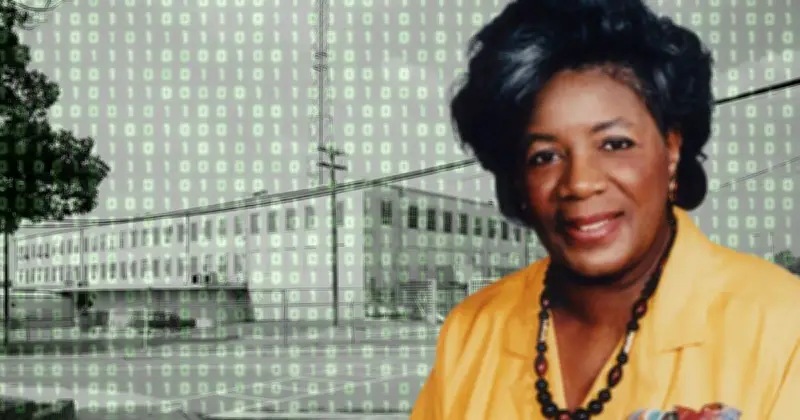
A clandestine all-black cadre of female codebreakers, segregated from their white counterparts by America's endemic racism, played a vital role in unlocking the USSR's nuclear secrets, according to a groundbreaking new book. Toiling away in a cramped and sweltering basement at Arlington Hall in Virginia, these women helped the US win the Cold War by secretly deciphering Russian communications.
Key Contributions to US Intelligence
"This group of black women made key contributions in exposing the Soviet nuclear programme," says Sarah Valentine, author of The Secret Codebreakers. "They uncovered information that helped guide US policymaking and military readiness. They found the location of secret Soviet cities being built to enrich uranium and plutonium, and make nuclear weapons." Their under-appreciated top secret work led directly to victory over the USSR and the end of the Cold War 30 years later, Valentine adds. However, because they were black women, undervalued by the US government, America never took full advantage of all they had to offer, and its intelligence gathering suffered as a result.
Harsh Working Conditions
During the Second World War, Britain had its secret women codebreakers at Bletchley Park, while America had its own clandestine operation at Arlington Hall, a former women's college in Virginia. While US cryptanalysts – all white men – worked in comfortable, well-lit offices, the all-black women codebreakers laboured over gruelling long hours in harsh conditions deep in the bowels of Arlington Hall, in a windowless, overheated, cramped and noise-filled basement. "They were given lower pay grades, had fewer opportunities for promotion than their white counterparts, and had strict quotas," says Valentine. "They each had to read and decode at least 200 intercepted Soviet messages a day: barely two minutes per message."
Deciphering Soviet Messages
Encrypted messages arrived on reels of paper tape punched with holes, which the women had to translate from a Russian commercial code similar to Morse code into Cyrillic, and then search for key words relating to scientific, military, trade or construction activity that might be linked to nuclear programmes. "The Russians wouldn't openly send messages ordering uranium to be delivered to a secret site, but they would send orders for tons of lumber and fencing, construction materials and housing, which the codebreakers could put together and realise the Soviets were building a new city that wasn't on any maps," explains Valentine.
Uncovering Soviet Nuclear Ambitions
As the Iron Curtain was drawn across Eastern Europe after the Second World War, America feared the Soviets would spread Communism across the globe. The US had ended the war by dropping two atomic bombs on Japan, but Arlington Hall's codebreakers uncovered mounting evidence that Russia was racing to build its own nuclear weapon. Ruthless Soviet secret police chief Lavrentiy Beria led Russia's nuclear programme and called an atomic bomb "Task 1." The Russians achieved nuclear fission in a laboratory on Christmas Day 1946, and the race was on. Stalin built Russia's first plutonium production plant – based on stolen US blueprints – at Chelyabinsk-65, a gated nuclear city that appeared on no maps, and where they developed the first Soviet atomic bomb. Arlington Hall knew all about it. "For the first time, the US knew what Stalin was building, and how fast he was building it," says Valentine.
The Venona Project and Espionage
The women also contributed to the Venona Project, which helped identify spies passing Allied secrets to the Soviets, unmasking British intelligence officer Kim Philby and British diplomat Donald Maclean. The white female analysts who worked on the project were recognised when Venona was declassified in 1995; the black codebreakers remained in obscurity.
Impact of Racism on Intelligence
Yet America's efforts to uncover Soviet nuclear ambitions were hampered by its own self-defeating racism, failing to fully utilise its black codebreakers. While Arlington Hall's white analysts were given the toughest encrypted codes to decipher; the black analysts were given what appeared to be the least productive messages intercepted from the Soviets: messages written in everyday Russian or using known commercial codes, which seemed innocuous. The black women codebreakers – all overqualified with university degrees – also worked in the most appalling conditions in the basement. America's spymasters called it The Snake Pit, The Black Hole of Calcutta, or Little Africa. But to the black women who worked there it was "The Plantation," with all the racial degradation the name implies. The basement rattled with the roar of dozens of clattering machines being fed intercepted messages on paper tape. Messages in Russian often arrived covered in muck and grime, purloined from rubbish bins. The white codebreakers had janitors clear up after them; in the basement the women had to clean their own trash.
Breakthroughs Despite Disdain
Yet despite the disdain heaped on them, the black women codebreakers – under the supervision of a black man, because sexism was also endemic – yielded the greatest breakthroughs in exposing the Soviets' atomic weapons plans. When Stalin halted all encrypted telegraphs in 1948, rightly suspecting US interception, the women's commercial message intercepts became the primary source of information about the internal workings of the hermetically sealed USSR. Maths teacher Iris Carr, with a master's degree, hired by Arlington Hall to stamp serial numbers on messages passing through the Plantation, uncovered 200 Russian tanks on the move. "We learned to read a Russian dictionary and we could pick up bits of information on different tapes," she said.
Legacy and Recognition
The work of the women in the unglamorously named Traffic Processing Division became even more critical as the US and Soviets competed to accumulate the most nuclear warheads. By the late 1950s, Arlington Hall was drowning beneath nearly 30 tons of intercepted Soviet messages on paper tape each month: 1.5 million messages. Computerisation began to take over the arduous sifting of "the wheat from the chaff," says Valentine, and a linguistic scanner codenamed Snowflake was invented to quickly identify some 3,000 key words hidden in messages. The words chosen were the result of the black women codebreakers' years of experience. "A group of underpaid Black women helped build its foundation, but ensured their own obsolescence," says Valentine. With automation, the women codebreakers were demoted to clerical tasks or dismissed. "Many quit, disillusioned after years of dedicated service."
Yet a rare few went on to senior roles. Ethel Just, a multilingual university professor, became the first of the black codebreakers to join an intelligence project with top secret clearance, tracking atomic energy production in Russia. Minnie Kenny, hired as a clerk, rose to become a decryption traffic division chief, and ultimately director of the Equal Employment Opportunity office, recognised by two presidents. The women's long-forgotten contribution is finally being acknowledged.
Joan Polaschik, former director of the US Foreign Service training academy that now occupies Arlington Hall, said: "The codebreakers who worked here saved countless American lives and shortened the war by what many historians estimate to be at least two years." Valentine notes, "They all swore a vow of silence, and never discussed their codebreaking work. Many of their families never knew, and they took their secret with them to the grave. It's time that these women receive the recognition they deserve."




