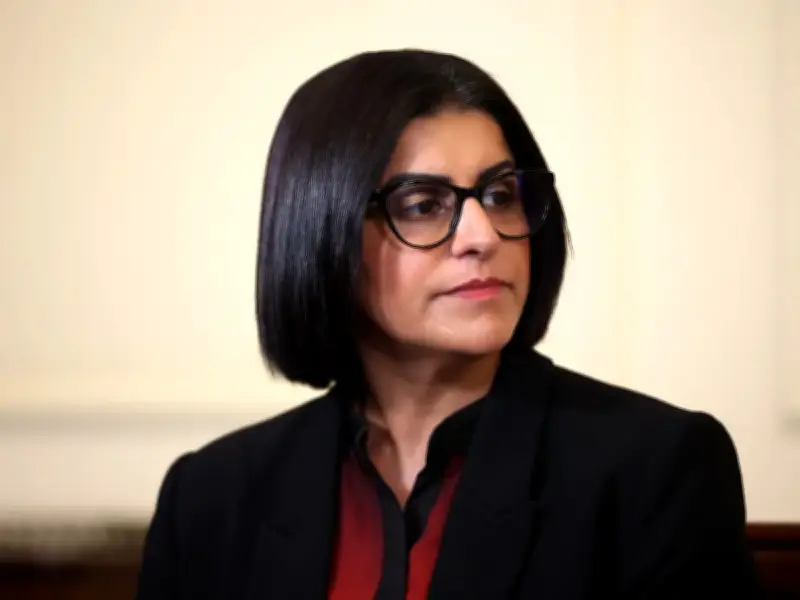
Home Secretary Shabana Mahmood has warned that she will impose a complete ban on people from Eritrea coming to the UK as a row over migrant returns escalates. VIPs and officials from Eritrea have already been blocked from getting fast-track visas after their government refused to back down. Ms Mahmood says she is considering a complete visa ban if tensions are not resolved.
Eritrea's Refusal to Co-operate
Nearly two in 10 small boat arrivals were from Eritrea in the 12 months to June, Home Office figures show. Human rights groups highlight the country as one of the most repressive in the world, accusing the government of unlawfully killing and detaining its critics.
Eritrea's diplomats have been banned from travelling more than 60 kilometres - 37 miles - outside of London without permission from the Foreign Office. Similar restrictions are in place for British officials in Eritrea's capital Asmara.
Home Secretary's Warning
Ms Mahmood said: "Eritrea has had every chance to accept the return of criminals and those with no right to be in the UK. Unlike other countries, it has refused."
"My message to the Eritrean government is simple: take back your nationals or face a complete ban on your citizens entering the UK. I will not hesitate to impose further measures on other countries refusing to co-operate."
Other Countries Agree Returns
Three other countries that have faced similar threats - Angola, Nambia and the Democratic Republic of Congo (DRC) - have since agreed migrant returns. The face-off comes after Eritrea abruptly withdrew returns co-operation earlier this year. The government is pushing for it to accept failed asylum seekers and foreign criminals.
It has announced that the nation's preferential visa processing for VIPs and government officials has been scrapped. The Home Office said there would be a total visa shutdown if the Eritrean government does not change course. It accuses Eritrea of refusing to engage constructively.
Rising Arrivals and Human Rights Concerns
The number of arrivals from Eritrea has risen in recent years, and its nationals now account for the largest share of people crossing the Channel by small boat. Latest data show 18% of small boat arrivals are Eritrean, followed by Sudanese (13%), Afghan (12%), Somali (12%) and Iranian nationals (11%).
Eritrea is ruled by an authoritarian government led by Isaias Afwerki - who has been in charge since the country's last elections were held in 1993. A 2025 report on the nation by Human Rights Watch details concerns about forced conscriptions, religious oppression and sexual violence by the armed forces.
It says: "The Eritrean government maintained an iron grip on its population at home and abroad. It continued to repress the population’s human rights, including freedom of opinion, religion, and expression, and forced some children and much of its adult population into indefinite military/national service."
The report goes on: "Arrests are frequently made without warrants or notification of charges, and many Eritreans, notably perceived dissidents, government critics, human rights defenders, religious leaders, and journalists, are subjected to enforced disappearance for years or even decades. Some are held in solitary confinement in undisclosed locations, while others are thought to have been killed or died in detention."