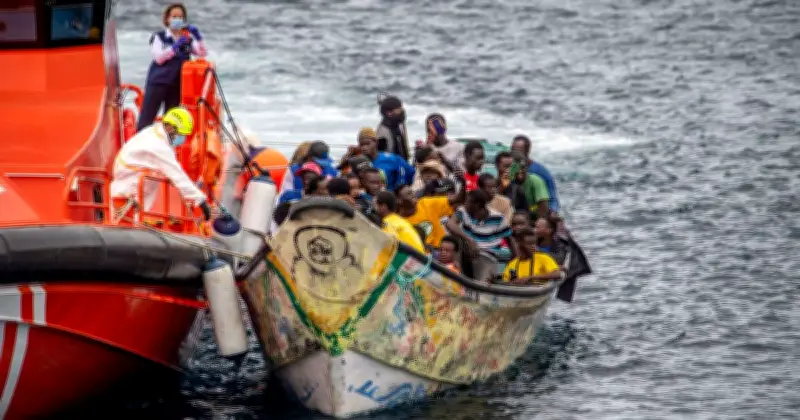
Spanish authorities have declared a migration emergency in the Canary Islands after nearly 7,500 migrants arrived by small boat in the first 10 days of November, triggering street protests on the island of El Hierro. The figure is equivalent to more than half of the island's 12,000-strong population.
Spain's Interministerial Commission on Immigration made the official declaration on Tuesday afternoon, November 10, following an urgent meeting. Madrid agreed to release more than €16 million to fund emergency accommodation, healthcare and transfers to mainland Spain, according to Canary Islands President Fernando Clavijo. Local leaders, however, have described the intervention as "too little, too late", warning that the situation is "absolutely unsustainable".
El Hierro under pressure
El Hierro, the smallest and most remote of the main Canary Islands, has borne the brunt of the Atlantic crisis. Since October 1, when daily rescues resumed after a quiet summer, 12,056 people have reached the archipelago in six weeks - more than triple the 3,708 arrivals recorded during the entire first half of 2026.
Last month alone, the UN Refugee Agency (UNHCR) logged 6,200 arrivals across 65 boats, a 417% increase over the same month last year and the highest monthly toll since 2024. With more than 2,000 migrants currently remaining on El Hierro, local services are completely overwhelmed.
Local services and economy strained
El Hierro has just 30 hospital beds, and officials have warned they have reached capacity and can no longer refer patients to neighbouring Tenerife. In the fishing village of La Restinga, home to 673 residents, locals say the volume of migrant boats has blocked fishing vessels from entering and leaving the port. The diving industry has collapsed from 11 centres to four, devastating local hospitality businesses.
Madrid has committed €15.2 million (£12.7 million) to expand state-run reception centres and fund transfers off the island, plus an extra €1 million (£836,000) for the Red Cross to provide urgent medical care on El Hierro. The Spanish government will also deploy the Guardamar Caliope rescue vessel, meaning three of Spain's five operational Guardamar ships are now stationed in the Canaries, while boosting police numbers and fast-tracking the transfer of unaccompanied minors to the mainland.
Government response and EU talks
Despite welcoming the funds, President Clavijo insisted a stricter contingency plan is needed, demanding more security personnel, heightened Maritime Rescue capacity and direct financial compensation for crippled local businesses and residents. Spanish Foreign Minister Jose Manuel Albares is pressing the European Commission to secure a unified response from all 27 EU member states, stressing that the Canary Islands constitute a critical "external border" of the bloc.
Brussels noted it has already handed Spain €90 million (£75.2 million) from a €144 million (£120.4 million) emergency pot and confirmed Madrid can tap into the EU Solidarity Fund for relocations. Mr Clavijo argued the current deployment of 250 Frontex officers is insufficient, calling for a much larger, rescue-focused mission in Canary Islands waters.
Spanish Interior Minister Fernando Grande-Marlaska travelled to Dakar to pledge €500,000 (£418,000) to the Senegalese Navy to help stem the flow of boats at the source. Clavijo claimed recent departures spiked due to reduced coastal surveillance during the Dakar 2026 Youth Olympic Games and election campaigning in The Gambia.
The surge in numbers has been accompanied by fresh tragedy on one of the world's deadliest migration routes. According to the UNHCR, at least 39 people drowned after a migrant boat capsized off the coast of Senegal on November 6, just days after seven others died on a vessel bound for Lanzarote. UN officials confirmed that the majority of those risking the perilous crossing are fleeing conflict and instability in Mali, Burkina Faso, Sudan and Somalia.