The Victorian Labor government is facing a possible electoral wipeout after 12 years in office as the state heads to the polls on Saturday, with polling consistently pointing to a Coalition victory.
The final Newspoll, released on Thursday, showed the Coalition 15 points ahead on a two-party-preferred basis. If replicated across the state, that swing would translate into 67 seats for the Coalition, comfortably above the 45 needed to form a majority government. The Liberals and Nationals currently hold a combined 29 seats.
Labor's defeat could be historic
The scale of Labor's defeat remains unclear. Some polls have suggested the party could fall behind One Nation into third place, with its primary vote only marginally ahead of the Greens.
“Right now, definitely, it's going to be a Coalition government, but how Labor, the Greens and One Nation are going to go – that's going to be a lot more chaotic,” said Ben Raue, an electoral analyst and founder of the Tally Room.
Raue said One Nation's prospects will depend heavily on which party it is competing against in each seat. One Nation is targeting 12 lower house seats and will field candidates in all lower house seats. In contests with the Liberals or Nationals, One Nation would fare “very badly” because about 80% of preferences from other parties would flow to the Coalition partners, he said.
Seats at risk across the state
On Friday, Labor campaign sources said they were bracing for a “wild night”, with three- and four-cornered contests expected across the state. Internal research suggested the party could lose up to 10 seats to One Nation, prompting former premier Steve Bracks to urge voters not to abandon Labor.
One Nation's state leader, Warren Pickering, tempered expectations, telling reporters on Friday: “We have effectively got one state member, anything more than that is a success. We have already won.”
Kos Samaras, a former Labor strategist who is now a pollster with Redbridge, said Labor was at risk of losing more than 30 seats – a figure he described as conservative. The party currently holds 54.
“If they come out of this with 20 seats, it's a really good result,” Samaras said. “Below that, without stating the obvious, it's a massive problem.”
Leaders make final pitches
Samaras said Labor was likely to lose several regional seats, including Ripon, Bendigo East – held by former premier Jacinta Allan – Bendigo West, Eureka and Wendouree. The party could also lose seats across the Geelong region that it has held since 1999, including Bellarine, Geelong, Lara and South Barwon.
In Melbourne's south-east, Carrum and Frankston were also at risk of switching from Labor to One Nation. Further out, Labor was not in contention in Bass, Hastings and Pakenham, where the contest was shaping as a fight between the Liberals and One Nation, he said.
In the north-west, Melton, Sunbury and Sydenham were also potential One Nation gains. Meanwhile, the Liberals are expected to pick up eastern suburbs seats including Ashwood, Bayswater, Box Hill, Glen Waverley and Ringwood. The Liberals are even confident in the premier's own seat of Niddrie and neighbouring Essendon.
Labor's inner-city seats of Footscray, Northcote and Pascoe Vale were each a “coin toss” between the party and the Greens, Samaras said. But Greens sources are confident about the seats, as well as Prahran, which it lost to the Liberals at a 2025 byelection.
Samaras said the margins in many seats would be fragile. “The Coalition is going to win 55 to 60 seats but someone only has to breathe in the wrong direction and they lose 20,” he said.
The premier, Ben Carroll, made his final pitch to voters on Friday, saying while Labor had “made some mistakes”, it was the only party on the side of workers in the middle of a cost-of-living crisis. “We won't fight against you. We won't make cuts. We certainly won't say one thing and then, after several million people have voted, then go and do another,” he said, in reference to the Coalition's pre-budget costings on Thursday, which detailed a plan to privatise the sewage system.
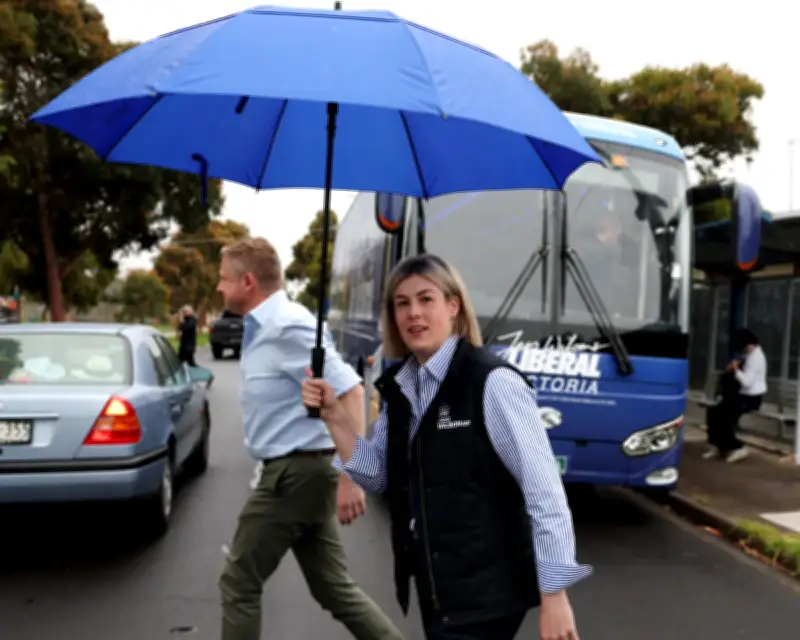
The Coalition leader, Jess Wilson, called the poll a “a referendum on four more years of Labor”. “Tomorrow Victorians have an opportunity to change the direction of the state we all love and we have the plan to get started,” she said.
If elected on Saturday, she will become Victoria's youngest leader since federation and the first woman to be popularly elected as the state's premier – a feat neither Allan nor Joan Kirner achieved.