Democrats had a strong midterm result, with big wins in Ohio, Georgia, Iowa, Maine and Texas showing the potential for a majority coalition that reaches beyond traditional liberal strongholds. That is a good sign for the party's chances in 2028.
The story of the midterms was affordability. Surveys showed the economy was the top issue, with a third of voters citing cost-of-living concerns as their number one issue, and nearly 40% of voters claiming their personal financial situation has worsened over the past year. Voters do not approve of Donald Trump's economic management.
That is good for Democrats in the short term, but voters kicking out the party in charge does not mean they have been convinced by progressive appeals, nor that they will stick by the party in 2028. In 2024, an affordability election, Democrats lost.
Troubling signs despite victories
Despite the victories, the midterms revealed a few troubling signs for Democrats. Populist, pro-worker candidates in purple districts such as Sherrod Brown, Brian Poindexter and Bob Brooks had a great showing in blue-collar districts, overperforming expectations, but these candidates are few and far between.
Only 47% of voters without a college degree voted for Democrats, compared with 51% for Republicans. That is an improvement over 2024, but there is a long way to go.
Democrats did win the lower- and middle-income brackets ($30,000-$99,000 per year) with 53%. But the party performed best among higher-income voters, with about 60% of those making more than $300,000 voting blue. These are worrisome signs that despite affordability concerns, the party's reputation among working-class voters is still in rough shape. Repairing it should be the major priority for the next two years.
Affordability is not an economic program
It is good that Democratic candidates were able to hammer Republicans on their failures to address pocketbook issues, but it is no substitute for an economic program that can actually address the problems. There is a danger that, thanks to the success of affordability politicking, Democrats will neglect building a credible and ambitious economic program.
Fixing the lopsided, K-shaped economy will require major new investments in domestic infrastructure, industrial policies to revive manufacturing, crackdowns on corporate gouging, and new means to generate public funds. Worryingly, despite populist-sounding rhetoric, many affordability ideas proposed by leading liberals point in the opposite direction.
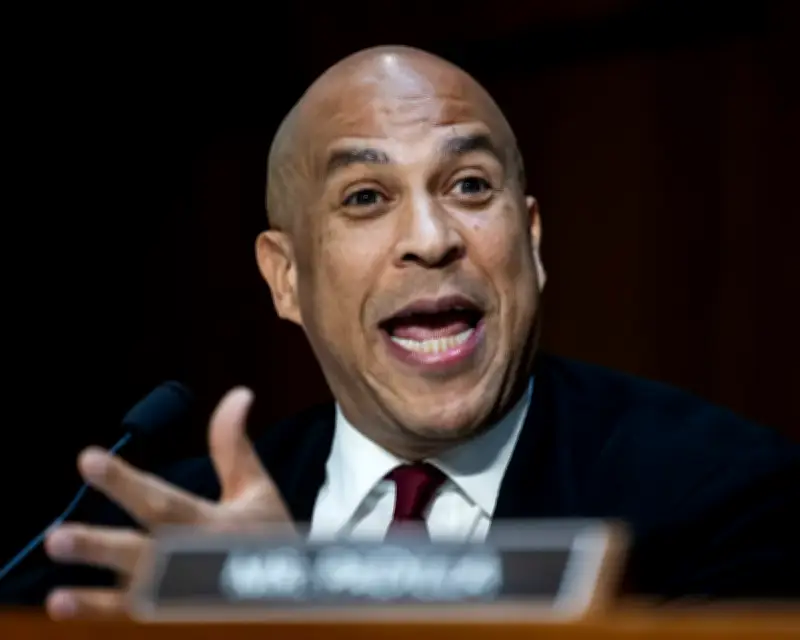
Senator Cory Booker campaigned to exempt all residents making under $75,000 from federal income tax, which would mean a $5tn tax cut. This kind of cash-in-hand promise can win blue-collar votes in a cost-of-living crunch but will not win their loyalty in the long run. Democrats need to address affordability as a wage and job crisis, not just a price problem, meaning it is an expensive problem to fix.
A better message would be to pledge to balance the budget on the back of rich tax cheats, big pharma, Silicon Valley and Wall Street, all of whom have grown fat off taxpayer largesse, and reinvest the lost revenue in American industry, infrastructure and the American worker.
The revolt against globalism
There is a danger that in reaction to Trump's tariffs, Democrats might ignore the worldwide working-class revolt against globalism. In 2016, liberals were blindsided by Trump's attacks on free-trade, and in 2024 Trump again capitalized on Democratic aloofness by attacking Biden's border failures. Both issues suggest a hunger for a step back from hyper-globalization.
Despite a decade of experience, Democrats spent no effort making a positive case for a post-free-trade, post-neoliberal economy. According to the Wall Street Journal, Democrats spent more than $58m on ads bashing tariffs and exactly $0 on making a positive case for a new trade agenda. Trump's tariffs have failed to bring good jobs home, and few Republicans defend them today.
Without making a positive case for a world beyond free-trade, Democrats are unable to address one of the central concerns that propelled Trump to power. If the anti-tariff message hardens into an embrace of the economic status quo ante, Democrats will be in trouble.
The same goes for immigration. While cost-of-living was the dominant concern, immigration was number three on the list, and it remains among the only issues where voters still trust Republicans more. Democrats are right to decry the brutality and illegality of Ice tactics, but they should not conflate anti-Ice sentiment with a sudden embrace of liberal border policies. Working-class voters want humane border enforcement and a path to citizenship for peaceable residents. If Democrats cannot make the case that they can reduce illegal immigration, they will suffer.
Reflecting working-class values
Democrats are still far from working-class voters on many moral-cultural issues. While leading progressives have signaled a retreat from the liberal-to-the-max approach of the recent past, as evidenced by AOC's admission that "Woke 1 was crazy," the shift is tactical and superficial, designed for political expediency.
As Jared Abbott and Joan Williams show in a report from the Center for Working-Class Politics, the "biggest single contributor" to winning blue-collar voters "is embracing cultural positions that resonate with the working class." Working-class voters are not uniformly conservative on social issues, and in many cases they have moved significantly to the left in recent years.
However, professional-class voters are far more socially liberal than the working class as a whole, and many operatives in Democratic politics come from professional-class, uniformly liberal social worlds. They simply do not know many blue-collar people or their views and values. That is a liability.
If professional-class progressives fail to reckon with how different their views are from those of working-class voters on gender, abortion, crime, climate, immigration, and other issues, and adjust their appeals, they will fail.
Democrats have been gifted a victory thanks to Trump's economic mismanagement. They ought to accept it with humility and spend the next two years hammering out a political vision that can win voters' loyalty for the long haul. There is time to demonstrate to working people that Democrats can represent both their values and their economic interests.
This means big new investments in American infrastructure to provide high-wage jobs, a new post-global plan for trade to rebuild American manufacturing, expanding Medicare and social security, providing new programs for young families, better public schools, free community college and trade programs, and a slew of new workplace rights. Democrats need candidates that can marry working-class populism with progressive economic policies to reach deep into Trump-country and win over enough independents to deliver a commanding majority in 2028. That work starts now.