
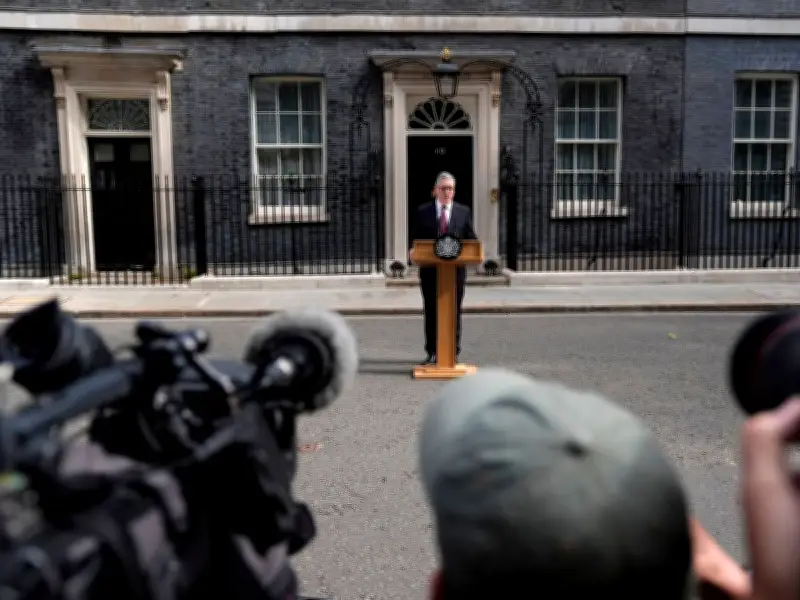
On the second anniversary of Labour's 2024 General Election victory, the political landscape has been totally transformed. Nowhere is this more stark than in the North East, where local election results saw Labour wiped out in many traditional heartlands. After the July 4, 2024 election, Labour controlled Downing Street, the first North East mayor Kim McGuinness, every parliamentary seat in that mayoral area, and five of seven councils. ChronicleLive set four key challenges to measure progress annually, with this being the second report card.
It will also be Sir Keir Starmer's last report as PM, following disastrous local elections. Reform now controls County Durham, Sunderland, South Tyneside and Gateshead—areas Labour held for their entire histories. In Newcastle, Labour has only two councillors. Facing a similar wipeout at the next general election, the party persuaded Sir Keir to step down. Greater Manchester mayor Andy Burnham is likely to become the first Prime Minister to have completed the Great North Run. He has promised greater powers for regions like the North East and a more confident, optimistic tone.
Reduce child poverty
The rise in child poverty in the North East was a major failing of the last government. Labour came to power saying it would tackle the issue. Last year we gave a C-. The removal of the two-child benefit cap—the single biggest measure experts agreed could reduce child poverty—has been significant. Other measures include extending free school meals to thousands more children and establishing school breakfast clubs. At a local level, North East mayor Kim McGuinness set up a child poverty reduction unit. This is a good start, not job done, but real strides were made. Overall grade: B.
Revive the Levelling Up agenda
Labour abolished the 'levelling up' phrase, saying it wanted 'hard yards of governing in the national interest' rather than 'gimmicks and slogans'. After a tricky first 12 months, when significant funding went to the Oxford-Cambridge-Arc, the rhetoric improved. Chancellor Rachel Reeves said the North was one of two areas for economic growth, giving more funding to mayors like McGuinness for housing and infrastructure. The government backed Northern Powerhouse Rail, including the Leamside line. We upped last year's C+ grade slightly, but we are in 'words not action' territory. Local election results show impatience for change. Overall grade: B-.
Improve transport infrastructure
Promises on transport have been reasonably strong. The pledge to build Northern Powerhouse Rail, including the Leamside line, was warmly welcomed, though delivery worries remain. Funding to extend the Metro to Washington could be transformational. However, scrapping dualling of the A1 in Northumberland is a major blot; record tragic accidents show the upgrade is urgent. Last year we gave a B, and it just about hangs on. Overall grade: B.
Restore hollowed-out local services
Labour promised 'a decade of national renewal' after austerity weakened public services. Sir Keir got two of the ten years, and by common agreement, not enough change has happened. Labour points to lower NHS waiting lists, lower immigration, and a slight dent in court backlogs. But North East councils recently warned of a £200m blackhole in budgets, and annual multimillion-pound cuts continue. Last year we gave a D; there is no reason to improve that. Overall grade: D.




